Most people think severe weather tracking belongs exclusively to multi-million dollar government facilities and veteran meteorologists staring at massive radar screens. They are wrong. When a young engineer steps up to solve a problem that has baffled scientists for decades, conventional wisdom takes a back seat.
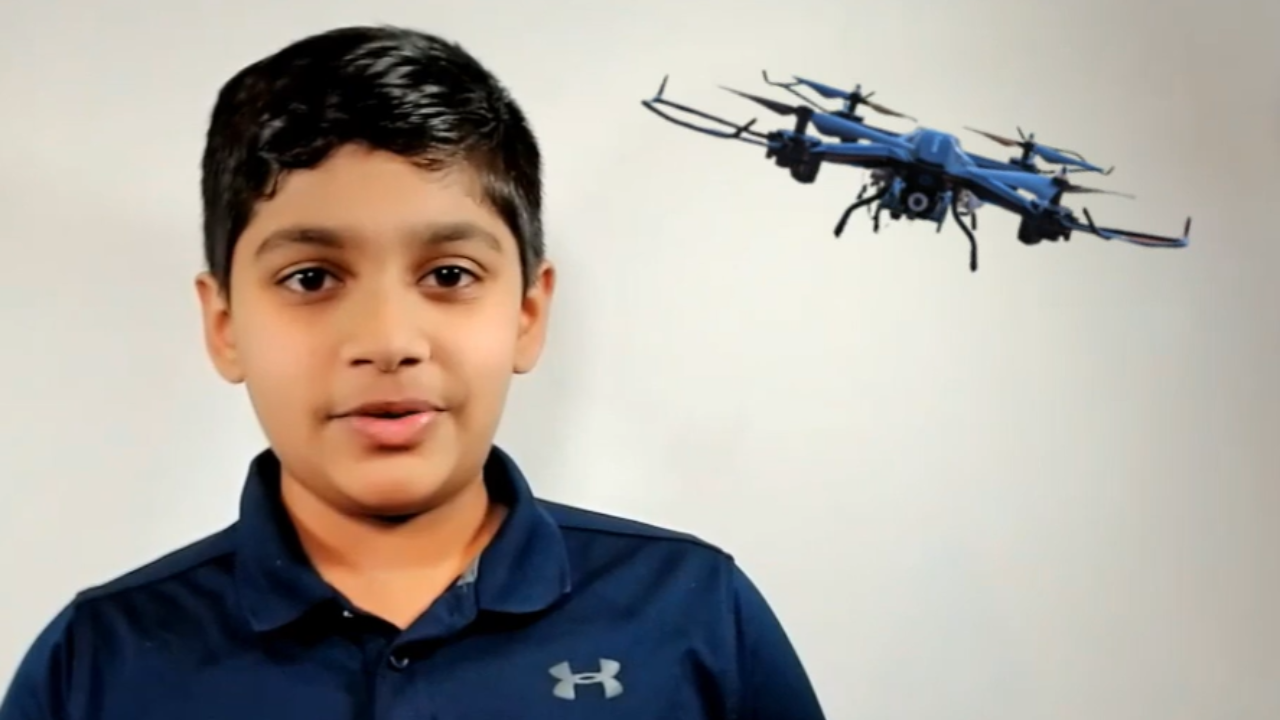
Meet Anirudh Rao. He is eleven years old. While most kids his age are busy with video games or school sports, he's building a hardware and software prototype designed to tackle one of nature's most violent phenomena. Living in Colorado means dealing with roughly 50 tornadoes a year. That reality turns severe weather from a textbook topic into an immediate, everyday concern. Instead of waiting for someone else to fix a broken system, he decided to build something better.
The Real Problem With Tornado Warnings Today
Let's talk about the hard numbers. Right now, the average warning time you get before a tornado touches down sits at a meager 13 minutes.
Thirteen minutes isn't much. It is barely enough time to grab your family, hustle to the basement, and lock the door. If you are stuck on a busy highway or working in a large commercial building, those minutes evaporate before you can even process the alert. People die simply because the warning window arrives too late.
Meteorologists rely heavily on radar networks like NEXRAD, which scan the atmosphere from fixed ground locations. But radar has a blind spot. As the curvature of the Earth forces radar beams higher into the sky as they travel away from the station, low-level atmospheric changes close to the ground often go unnoticed until a funnel cloud physically forms. That delay costs lives.
Rao looked at this exact gap and asked a straightforward question: What if we stopped relying entirely on distant radar towers and instead placed sensors right where the storm is brewing?
Inside the Revere Prototype System
That question turned into Revere, a prototype system that combines autonomous drone technology with specialized atmospheric sensors.
Building a functional weather-tracking rig requires mastering multiple disciplines that usually terrify high schoolers, let alone an 11-year-old. Rao had to dive headfirst into:
- Drone flight dynamics and hardware integration
- Programming languages for automated data collection
- Atmospheric physics, including barometric pressure drops and temperature shifts
The Revere system relies on a network of mobile sensors and aerial drones designed to measure infrasound, atmospheric pressure, and temperature fluctuations in real-time. Infrasound—low-frequency acoustic waves produced by severe storms long before they spawn a tornado—acts as an early signature. By deploying agile drone platforms closer to developing convective cells, the system aims to pick up these subtle environmental cues much earlier than traditional stationary equipment.
If the prototype scales successfully in real-world conditions, it could theoretically push average warning times from 13 minutes up to 40 minutes. Forty minutes changes everything. It turns a frantic scramble into an orderly evacuation.
Beyond the Hardware: Education and Outreach
Inventing a piece of life-saving technology is impressive, but keeping it locked in a garage helps nobody. Rao understands this better than most adult tech founders.
He didn't just build a drone; he hit the road. Through science festivals, community workshops, and public speaking engagements, he has interacted with more than 4,000 students and community members. He teaches them the fundamentals of severe weather science, basic artificial intelligence, and 3D printing.
He also works with the Children's Kindness Network, organizing programs that blend environmental stewardship with empathy. His public profile has blown up, landing him recognition like the International Eco-Hero Award from Action for Nature, the National STEM Champion title, and appearances on major media platforms like NBC Nightly News Kids Edition and The Jennifer Hudson Show.
Yet, the accolades matter less than the underlying mindset.
What We Can Learn From This Approach
Too often, adults wait for permission, funding, or complete certainty before tackling big problems. We assume innovation requires a PhD or a venture capital seed round.
Rao proves that perspective is entirely backwards. Curiosity, coupled with basic coding tutorials and off-the-shelf hardware components, can take you a remarkably long way. You don't need a corporate lab to start questioning why current systems fail. You just need a willingness to look at an old problem, accept that the status quo is unacceptable, and start tinkering in your garage.
Severe weather isn't going away. Climate volatility is ramping up storm frequencies across the globe, meaning communities will face sharper, more unpredictable threats in the coming years. Relying solely on legacy infrastructure is a gamble we shouldn't be making.
Take a cue from the next generation. Stop waiting for someone else to solve the engineering nightmares in your backyard. Pick a problem, open a laptop, and start building.