Prime numbers refuse to play by the rules. You can find them hiding everywhere across the number line, yet their distribution looks totally chaotic. Mathematicians have obsessed over this randomness for centuries. Now, something strange is happening. Algorithms are joining forces with human intuition to finally decode prime number mysteries, and the results are changing how we look at math.
People often assume that computers will just replace researchers. That is completely wrong. Algorithms don't care about the beauty of a proof or the philosophical weight of an equation. They crunch data. When applied to number theory, machine learning models look at massive sets of numerical data—like the Riemann zeta function—and point out weird correlations that humans might stare at for decades without noticing.
Here is what actually happens behind the scenes.
The Division of Labor in Number Theory
Algorithms spot the smoke, but humans have to find the fire. When a machine learning model highlights a potential pattern in prime distribution, it doesn't mean a theorem has been proven. It means the computer found a statistical anomaly.
- The machine's job: Process millions of computations, test conjectures against massive data sets, and flag hidden structural shapes.
- The human's job: Decide if those shapes actually mean anything, formulate the theoretical proofs, and choose which problems are even worth solving in the first place.
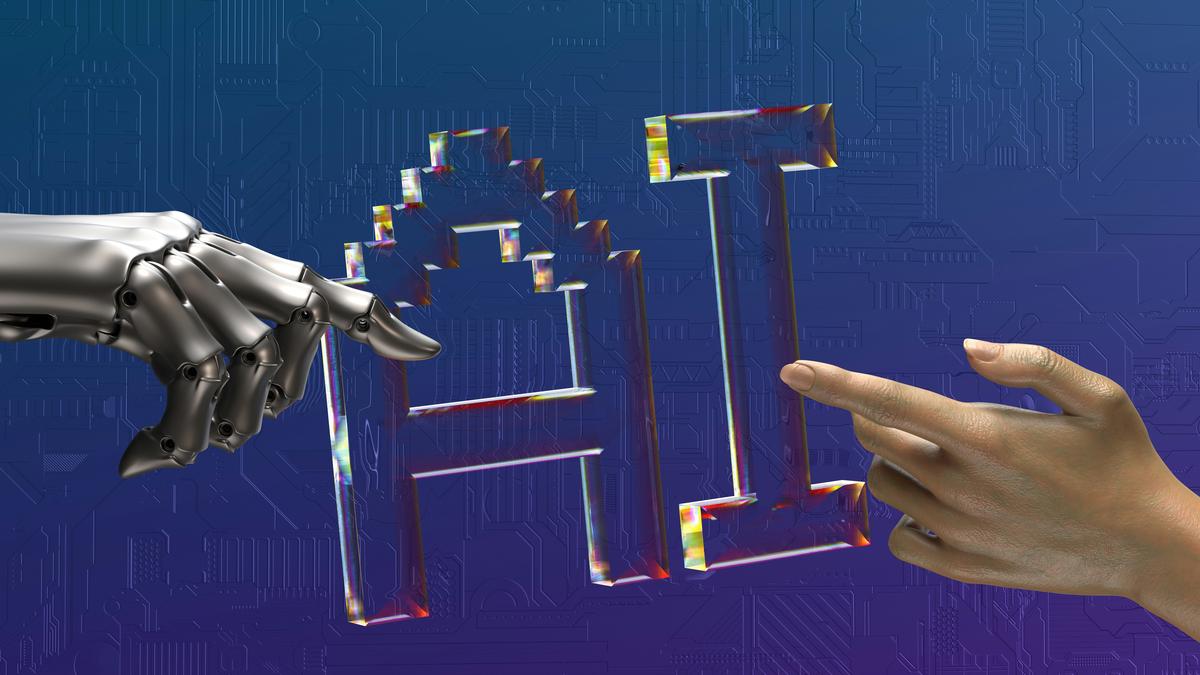
Without human direction, a computer running raw calculations is just burning electricity. Without computational power, a mathematician is stuck doing manual labor that takes lifetimes. It's a messy partnership, but it works.
Why This Changes Cryptography
Most people don't realize that your online security relies entirely on the unpredictability of primes. RSA encryption works because multiplying two massive prime numbers is easy, but factoring the resulting product back into primes is brutally hard for standard computers.
When researchers use advanced computational models to explore number structures, security experts get nervous. Could an algorithm suddenly crack encryption wide open? Probably not anytime soon. Finding abstract patterns in pure mathematics is a far cry from breaking a 2048-bit key. Still, understanding the deep architecture of primes forces cryptographers to stay alert.
The Limits of Machine Learning in Pure Math
Let's be honest about what algorithms cannot do. They cannot exercise intuition. They don't have sudden moments of inspiration while staring out a window. Computers operate inside the boundaries of their training data and objective functions.
Mathematicians working with these systems often note that models can hallucinate false mathematical directions just as easily as they find valid ones. You cannot blindly trust an output. You have to verify every single step using rigorous, traditional logic. If you skip that part, your entire proof collapses.
The future of mathematical discovery isn't about machines taking over departments. It's about building a tighter feedback loop between human creativity and raw computing power.
Start looking at open-source mathematical databases or experiment with Python libraries designed for symbolic math if you want to test these concepts yourself. Build your own small scripts to visualize prime gaps. See the chaos firsthand.