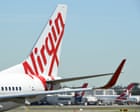
Airservices Australia recently defended its decision to sit on a mandatory safety report after a Virgin Australia jet had to slam on the brakes during a takeoff roll at Sydney Airport.
If you think a close call between two Boeing 737s on a crowded runway demands immediate public disclosure, the country's airspace manager disagrees. Rob Sharp, the chief executive of Airservices Australia, argued that the terrifying incident didn’t cross the legal threshold for mandatory immediate reporting. Why? Because the planes were still over a kilometer apart when air traffic controllers rescinded their clearances.
That logic leaves passengers wondering what counts as close enough to panic.
The Anatomy of a Sydney Airport Runway Scare
The incident unfolded around 10:00 am on a Sunday, marking a chaotic period for Australia's busiest aviation hub. Virgin Australia flight VA555 received clearance for a full-length departure on Runway 34L. As the crew applied takeoff power, they noticed a Qantas flight crossing their path from Taxiway Lima.
Both flight crews were simply following directions given by air traffic control.
The Virgin pilots reacted quickly, reducing thrust and bringing their aircraft to a halt on the active tarmac. At the exact same moment, air traffic controllers realized the compounding error and cancelled the departure clearance. The distance between the two commercial jets shrank to roughly 1.3 kilometers before the situation stabilized.
For Airservices Australia, that 1.3-kilometer buffer was enough to justify keeping quiet for days. Sharp noted that because the aircraft remained stationary and controllers acted quickly to fix the mistake, the event fell outside the strict parameters that trigger an immediate emergency alert.
A Pattern of Near Misses
The defense might hold more weight if this happened in isolation. It didn't.
This runway incursion was the third serious safety event at Sydney Airport in less than three weeks. Earlier that same Sunday morning, a Jetstar pilot had to brake abruptly to avoid hitting a massive Qatar Airways aircraft being towed across the tarmac. Just weeks prior, two Qantas-related flights nearly crossed paths under conflicting air traffic control permissions.
Three major system breakdowns in a fortnight create an alarming trend. The Australian Transport Safety Bureau (ATSB) stepped in to launch a full investigation, questioning not just the operational failures in the tower, but the delay in reporting. While the ATSB was eventually notified, the lag time raised eyebrows among transport watchdogs who believe transparency should trump corporate risk management.
The Human Element in the Control Tower
Airservices Australia insists that the tower wasn't staffed by rookies. Sharp pushed back against early suggestions that a training exercise caused the chaos, clarifying that an experienced and qualified air traffic controller issued the conflicting clearances while undergoing a routine endorsement process.
Yet, staffing strains remain an open secret across the aviation industry. Finding and qualifying air traffic controllers takes years of intensive training. When airports face heavy traffic surges alongside workforce shortages, the margin for error shrinks dramatically.
ATSB Chief Commissioner Angus Mitchell made it clear that investigators will look beyond individual cockpit or tower actions. They are examining systemic pressures, tower manning levels, and airport scheduling density.
What Happens Next for Australian Aviation
Airservices Australia has promised cooperation, stating they are open to reviewing flight data and updating protocols if necessary. But public trust is fragile. Travelers boarding a domestic flight expect runway paths to be clear by design, not saved at the last second by alert pilots looking out the windshield.
If a 1.3-kilometer near-miss on a busy Sunday morning doesn't warrant an immediate red flag, the threshold for concern needs a serious rewrite.


