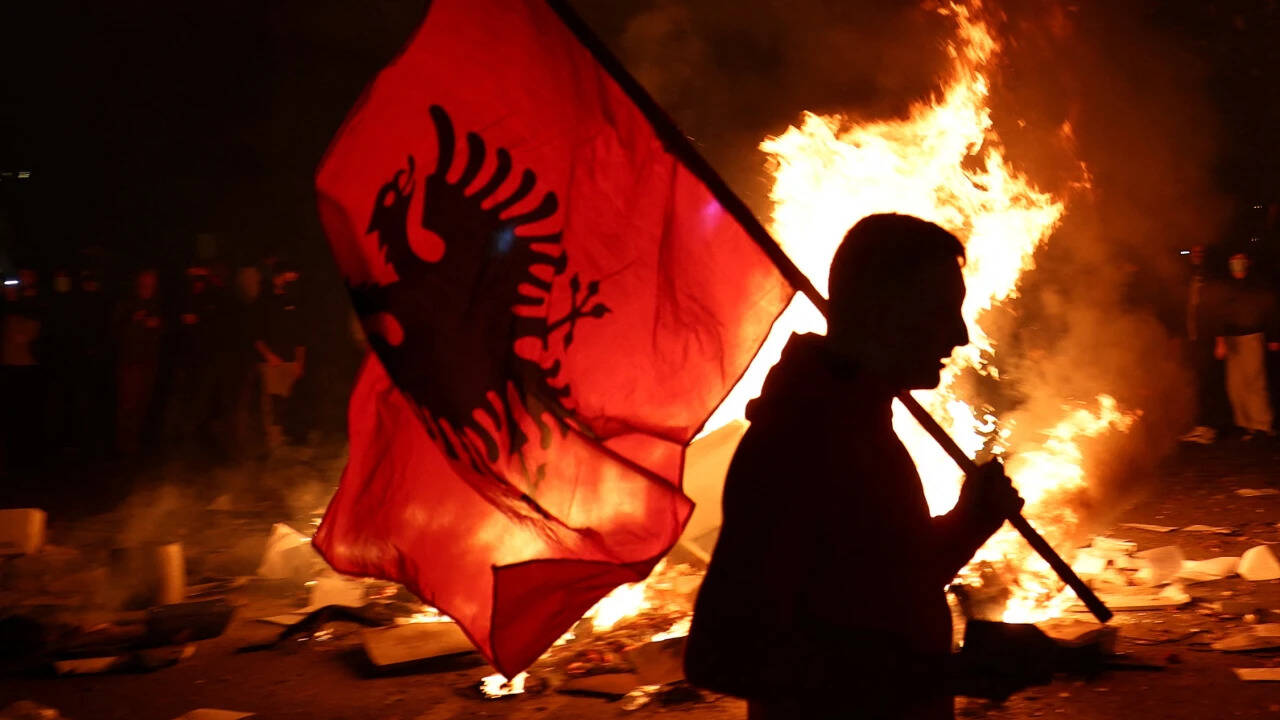
Protests don't usually turn a city into a war zone overnight. But when economic pressure collides with deep-seated institutional frustration, things snap. Last week, anti-government demonstrations in Tirana escalated dramatically after a local police station was set ablaze, triggering a fierce response from the administration and drawing national attention to a fragile political landscape.
Prime Minister Edi Rama didn't mince words. He drew a hard line in the sand, stating clearly that while public assembly is a constitutional right, arson and physical destruction cross an unforgiving boundary. But how did Albania get to this point, and what does this escalation mean for the country's immediate stability?
The Breaking Point on the Streets of Tirana
The unrest isn't an isolated flare-up. Clashes between demonstrators and law enforcement have simmered for days, fueled by a cocktail of grievances. University students demanding better campus conditions joined hands with citizens furious over persistent corruption and high living costs.
When a crowd descended on a police station and set it on fire, the nature of the protests shifted. It crossed from civilian dissent into outright criminality in the eyes of the state.
"Protests are a right, whereas violence is a crime," Rama declared during a public address, making it clear that his administration refuses to negotiate with political groups that fail to explicitly condemn property destruction.
Behind the Student Frustration
To understand why young people are putting themselves on the front lines against riot police, you have to look at the economic reality on the ground. Tuition costs, bleak job prospects, and a sluggish path toward European Union integration have left an entire generation feeling stranded.
Students like 22-year-old science major Leka Sina put it bluntly to reporters: "We will continue our movement until Rama resigns. We are not criminals, we want social peace and better living conditions."
Yet, students find themselves trapped in a cycle they didn't create. While peaceful marches voice legitimate public anger, radical factions use the cover of the crowd to throw stones, smash storefronts, and target state assets.
The State Response and Mounting Injuries
The government's heavy-handed response has done little to calm the temperature. Police have deployed water cannons, tear gas, and rubber bullets across multiple hotspots in the capital.
The human toll keeps rising. Authorities report that roughly 300 individuals have sustained injuries during the clashes, with more than half of those casualties coming from the ranks of the police force itself. When law enforcement and citizens are both bleeding in the streets, democratic dialogue breaks down completely.
What Happens Next
Rama has left the door open for talks, but with a strict caveat: he refuses to engage with any political entity refusing to distance itself from violence.
The opposition, meanwhile, smells blood in the water and accuses the government of authoritarian overreach, weaponizing police forces against peaceful citizens.
Fixing this isn't going to happen through a single press conference or a temporary curfew. The Albanian government has to address the root causes of public fury—jobs, education, and anti-corruption reform—before the streets cool down permanently. Until systemic changes happen, that red line the Prime Minister spoke of is going to keep getting tested.