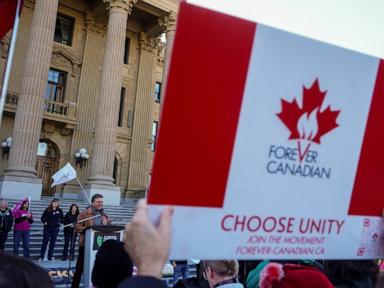
Western alienation isn't a new concept in Canada, but it has rarely reached this level of political theater. Voters in Alberta are heading to the polls to decide whether to trigger a legal pathway toward independence. Prime Minister Mark Carney has spent his final campaign days rushing through Calgary and Edmonton, warning residents that a protest vote against Ottawa is a dangerous bluff that could fracture the nation when it can least afford it.
If you live outside of Canada, you might look at this referendum and wonder how an oil-rich province got to the breaking point. The answer comes down to decades of mounting frustration, post-pandemic political shifts, and a tense geopolitical climate involving trade friction with the United States.
What the Alberta Referendum Actually Asks
Let's clear up a major misconception right away. This ballot is not a direct vote on whether Alberta leaves Canada tomorrow.
Instead, the main question asks voters to instruct the provincial government to begin a complex legal and constitutional process. If the "yes" side wins, it forces formal steps toward a future, separate binding referendum on actual separation. If the "no" side wins, Premier Danielle Smith has stated she wants the issue considered closed.
Beyond that single question, the ballot features nine other proposals. These cover everything from provincial immigration controls and proof-of-citizenship mandates for local elections to alterations in how judges and senators are selected. Smith herself has endorsed voting to remain a province, arguing that the vote is a necessary lever to force Ottawa to respect provincial sovereignty. Critics within her own United Conservative Party call that strategy a reckless gamble.
The Roots of Western Alienation
To understand why thousands of Albertans are entertaining the idea of a breakaway state, you have to look at the economic engine room of the country. Alberta holds the fourth-largest proven oil reserves in the world. For generations, many residents have felt that federal environmental regulations, restrictive energy policies, and the equalization payments system take wealth out of the province while offering little in return.
Ottawa makes the rules. Alberta pays the bills. That is the core grievance.
The momentum behind this vote didn't appear out of thin air, either. It accelerated significantly after the COVID-19 pandemic. Activists who organized against public health restrictions and vaccine mandates built sophisticated political networks during events like the 2022 Freedom Convoy. Those networks didn't dissolve when restrictions ended. They pivoted toward separatism, pushing the movement from the political fringe right into the mainstream legislature. An independence petition earlier gathered hundreds of thousands of signatures before courts intervened over First Nations consultation requirements.
Carney and the National Unity Defense
Prime Minister Mark Carney has taken a very personal approach to fighting the referendum. Growing up in Edmonton, Carney has leaned into his local roots while delivering sharp warnings at packed rallies.
Carney argues that a fractured Canada is exactly what foreign adversaries and trade opponents want. With ongoing economic tensions involving the United States and repeated commentary from Washington about Canada's future, Carney has framed provincial unity as an absolute necessity for survival. He pointed to projects like the proposed Pacific Link pipeline as proof that economic cooperation between Ottawa and Edmonton can deliver thousands of jobs without destroying the federation.
Yet, separatist organizers aren't buying the olive branches. They dismiss federal promises as temporary political maneuvers designed to deflate a genuine populist movement.
What Happens Next
High voter turnout has defined this election cycle, with more than 1.35 million people casting advance ballots. That massive engagement proves that regardless of the final tallies, the debate over Alberta's place in the confederation won't vanish overnight.
If the province votes to stay, federalists hope the result puts the matter to bed for a generation. If the separatist camp secures an unexpected victory, Canada enters an unprecedented constitutional crisis that will drag on for years through courts, negotiations, and bitter domestic infighting.
Watch the early vote counts closely. The numbers will tell us whether western alienation is peaking or just getting started.