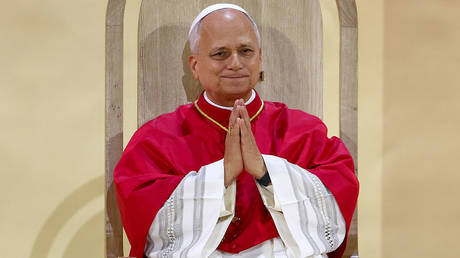
Silicon Valley keeps inventing new gods and asking everyone else to bow down. Now, artificial intelligence developers are taking their existential worries straight to the Vatican.
You read that right. Anthropic executives didn't just spend months consulting religious scholars behind closed doors about whether their chatbot Claude has feelings. They actually went looking for a theological blessing on machine consciousness. Pope Leo XIV took one look at the pitch and swatted it down. His encyclical made it clear: algorithms don't have bodies, they don't feel pain, and they certainly don't have souls.
The collision between big tech evangelism and thousands of years of traditional theology tells us a lot about where the industry is heading. Spoiler alert: it's getting weird.
The Search for a Silicon Soul
If you've spent any time tracking AI labs, you know the vibe. Engineers and founders talk about neural networks with a kind of breathless reverence. They aren't just building software products anymore. They talk about creating minds.
Anthropic co-founder Chris Olah got particularly concerned about this. Reports surfaced showing that Anthropic leaders met with religious figures from various traditions to discuss "moral formation" for Claude. They even showed off "emotional vectors"—internal patterns designed to simulate traits like love, fear, and anger.
Why talk to priests and rabbis about code? Simple. Tech companies want validation. If you convince the world that your product is sentient, you change the entire regulatory game. You move from building a glorified calculator to parenting a digital child.
Critics call it clever public relations. Others call it outright marketing hype designed to distract from labor displacement and copyright lawsuits. Either way, it's a massive gamble.
The Vatican Pushes Back
Pope Leo XIV wasn't buying it. In his encyclical Magnifica humanitas, the Pope argued that treating statistical computations as conscious beings erodes genuine human dignity. He pointed out the messy reality behind the servers, noting the human toll of extracting rare earth elements for computational flow.
When Olah read the text, he was reportedly so disturbed by the Vatican's hardline rejection of machine sentience that he almost backed out of a scheduled appearance at a Vatican event. He went anyway, but the friction was obvious.
The Catholic Church has plenty of historic skepticism toward rapid technological shifts. But this time, the disagreement runs deeper than standard Luddism. It touches on the definition of existence itself.
The Church maintains a bright, uncrossable line between biological beings with free will and silicon chips running matrix multiplication. Only rational beings capable of moral choice can sin, suffer, or experience genuine spiritual states. To say a language model feels grief is, from a theological standpoint, category error at best and blasphemy at worst.
Why This Debate Actually Matters
You might think this is just rich tech executives tilting at philosophical windmills while normal people worry about grocery prices. But the debate has teeth.
When major labs start treating their models as entities worthy of moral consideration, accountability shifts. If Claude is "conscious" or capable of suffering, who is responsible when it messes up? Does mistreating a chatbot matter morally? It sounds like sci-fi nonsense, but it directly impacts how companies lobby lawmakers for AI safety regulations.
If you frame AI safety around the internal emotional vectors of the model, you distract from the real-world harms happening right now. We see massive copyright theft, widespread worker displacement, and the flood of low-quality AI content drowning the internet.
Silicon Valley wants a theology because it elevates their product above standard corporate accountability. They want us arguing about whether a chatbot feels lonely instead of asking who profits from the automation wave.
Don't fall for the trap. Claude is a sophisticated arrangement of weights and biases trained on human text. It doesn't need a baptism. It needs better guardrails, honest data practices, and realistic guardrails from actual humans who have to live in the world it's changing.
Stop worrying about whether algorithms have souls. Start paying attention to who is cashing the checks.
Pope Leo warns AI could cost us our 'humanity'
This video captures Pope Leo XIV discussing the ethical dangers of artificial intelligence and why humanity must remain at the center of technological progress.