A 44-year-old London taxi driver sitting in a Cypriot jail cell just triggered a massive shift in how Britain handles foreign espionage.
Rashad Sultanov, a dual British-Azerbaijani national from Islington, thought his activities flying under the radar in the Mediterranean would stay hidden. He was wrong. Arrested by local authorities in Cyprus on July 17, Sultanov is now the central figure in the very first overseas application of the UK's National Security Act. Metropolitan Police counter-terrorism command accuses him of conducting hostile surveillance on RAF Akrotiri—Britain's premier airbase in the Middle East—and funneling operational details directly to Iran's Islamic Revolutionary Guard Corps.
This isn't just a standard spy thriller subplot. It marks a brutal awakening for Western intelligence agencies dealing with localized proxy networks.
Inside the Akrotiri Surveillance Operation
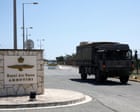
RAF Akrotiri isn't an ordinary military post. Located on the southern coast of Cyprus, it has long served as the main staging ground for British air operations across the Middle East. In recent months, the base has faced direct kinetic threats. Back in March, an Iranian-manufactured Shahed-type drone managed to strike facilities on the base, causing minor physical damage.
That attack occurred against the backdrop of escalating regional conflicts involving US and Israeli campaigns against Iran. When hostile drones are zeroing in on British sovereign base areas, hostile reconnaissance on the ground becomes an urgent matter of life and death for service members.
According to the Crown Prosecution Service and the Met Police, Sultanov allegedly mapped out layouts, security rhythms, or operational vulnerabilities at Akrotiri between May 11 and June 22 of last year. He then allegedly packaged that intelligence for the IRGC. British detectives caught up with him months later, working in close coordination with Cypriot law enforcement to execute the detention. Extradition proceedings are currently dragging him back toward a British courtroom.
The National Security Act Crosses Borders
Passed to replace archaic Official Secrets Acts, the UK's National Security Act 2023 was designed to give police teeth against modern state threats. Critics initially wondered if the law would only apply neatly within domestic borders.
Commander Helen Flanagan, head of counter-terrorism policing in London, put those doubts to bed. She noted publicly that this case proves investigators can stretch the law's reach extraterritorially whenever a British military asset abroad faces hostile state operations.
That distinction matters. Britain retained Akrotiri and Dhekelia when Cyprus gained independence back in 1960. Legally, they are sovereign base areas. By applying domestic counter-terrorism statutes to actions committed on foreign Mediterranean soil against a military enclave, the UK government is drawing a hard line. Spying on British forces anywhere on earth now carries immediate domestic legal consequences.
The Broader Shadow of the IRGC in Europe
You cannot look at Sultanov's arrest in isolation. It sits inside a wider, colder reality. Law enforcement officials across Europe note a sharp uptick in Iranian intelligence operations utilizing proxies, criminal underworld figures, and dual nationals.
While a large portion of these covert cells have historically targeted dissidents or Jewish community centers within European cities, pivoting toward direct military reconnaissance against active coalition airbases signals a major escalation. Intelligence services have had to adapt quickly, moving from passive monitoring to aggressive pre-emptive disruptions.
London officially designated the IRGC as a severe threat to national security, banning the powerful paramilitary organization outright. When a state actor is formally labeled in that manner, every individual passing data to them becomes an immediate target for counter-terrorism units.
What Happens Next
Sultanov remains held in custody in Cyprus while legal teams fight through the procedural weeds of the UK-EU Trade and Cooperation Agreement extradition framework. Once he lands in London, he will face severe charges under the 2023 statute.
Expect tighter security protocols across all British overseas military installations. The era of assuming remote bases are insulated from local espionage networks is officially over.