Cleaning out an old family attic rarely yields anything more than dust and forgotten junk. But back in the early 1990s, an Italian farmer named Claudio Grossi stumbled upon a dusty sack of seeds left behind by his great-grandfather near Parma. He didn't expect them to grow. The kernels were dry, cracked, and decades old.
Grossi basically tossed them onto a pile of manure out of sheer curiosity and forgot about them. They sprouted anyway. What emerged from that casual experiment wasn't just a nostalgic throwback. It was a remarkably resilient strain of heritage grain that's forcing agricultural scientists to rethink how we fortify modern food supplies against severe climate stress.
The Mystery of the Seven-Eared Stalk
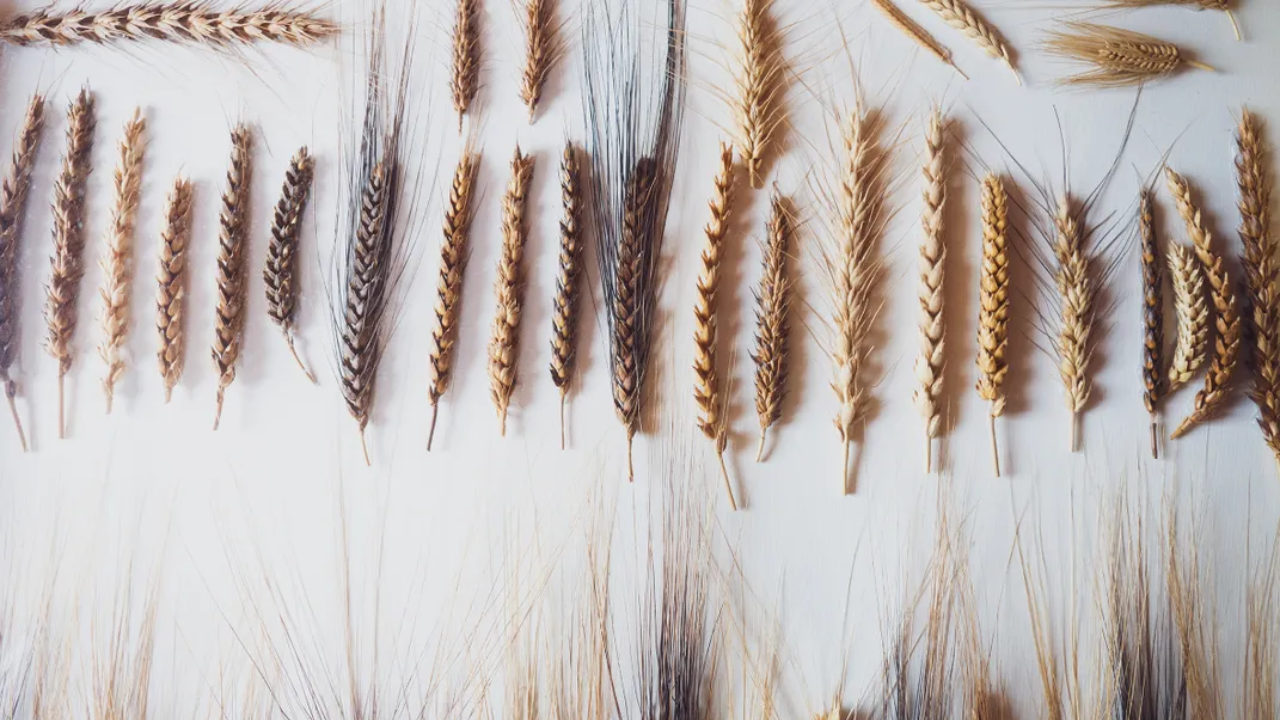
When the mystery seeds germinated, the resulting plants didn't look anything like the uniform, knee-high dwarf wheat dominating modern farming. These stalks shot up to roughly six feet tall, towering over typical commercial crops. Even more striking was the head of the plant. Each stalk produced seven distinct ears—one long central spike surrounded by six smaller ones.
If that imagery sounds familiar, it's because it mirrors the famous biblical dream interpreted by Joseph in the Book of Genesis, where seven full ears of grain grew on a single stalk. Grossi, a practicing Catholic, couldn't ignore the parallel, dubbing the find grano del miracolo or miracle grain.
Of course, ancient scripture didn't plant the seeds. Food-science researchers at the University of Parma eventually identified the plant as Triticum turgidum, commonly known as poulard wheat. Historically cultivated across the Mediterranean, Turkey, and Egypt long before industrial agriculture homogenized the global food supply, Grossi’s great-grandfather had simply preserved an older farming tradition in a burlap sack.
Why Modern Agriculture Has a Monoculture Problem
To understand why this attic discovery sparked genuine scientific interest, you have to look at how modern farming operates. Today's global food supply relies on a painfully narrow selection of high-yield commercial crop varieties.
Sure, these engineered strains maximized calorie output for decades. But that uniformity creates a massive vulnerability. When every farmer plants the exact same patented seed variety, entire agricultural regions share identical weaknesses. Hit them with an unseasonable heatwave, an unprecedented drought, or a new plant pathogen, and the results are catastrophic.
We saw this play out starkly during severe droughts in places like Sicily, where conventional wheat fields withered away entirely before harvest while small plots of heritage grains managed to survive. Genetic diversity acts as an insurance policy for the planet. If one variety folds under brutal weather extremes, a hardier traditional strain might still produce food.
Putting Ancient Wheat to the Test
Grossi didn't just grow a novelty plant in his backyard; he tested its real-world viability. He quickly noticed that his miracle wheat possessed traits modern breeders spent fortunes trying to replicate.
It required far fewer chemical fertilizers and synthetic herbicides than commercial crops. Its sheer height allowed it to shade out competing weeds naturally. Most importantly, it thrived under drought conditions that stunted standard wheat.
Researchers studying the grain found some fascinating nutritional differences, too. Laboratory analyses revealed higher concentrations of iron and phosphorus compared to standard commercial varieties, alongside lower gluten levels and beneficial amino acids like lysine, tryptophan, and arginine.
Baking with it, however, proved to be an entirely different hurdle. Commercial wheat flour is engineered for industrial bread machines and predictable gluten elasticity. Dough made from poulard flour behaved stubbornly, refusing to rise properly and tending to collapse mid-bake. Grossi had to partner with local artisanal bakers who relied on traditional hand-kneading methods, taller wicker baskets, and lower mixing speeds to get the dough to hold its shape.
The resulting bread wasn't a fluffy white loaf from the supermarket aisle. It delivered a dense, earthy, nutty flavor profile with a natural sweetness totally foreign to mass-produced bread. Eventually, local organic grain mills picked up the strain, supplying artisanal bakers who valued flavor and resilience over sheer industrial speed.
The Real Limits of Heritage Grains
Let's clear up one major misconception right away. This discovery isn't a magical silver bullet that will instantly solve global food insecurity or replace commercial agriculture overnight.
Heritage crops come with serious trade-offs. Those towering six-foot stalks that make the plant great at outcompeting weeds also make it terribly vulnerable to heavy rain, hail, and high winds. A fierce summer storm can easily flatten an entire field before the grain fully ripens. To combat this, Grossi had to plant the heritage wheat alongside shorter, sturdier modern varieties that could act as structural support.
Furthermore, heritage flours require completely different handling techniques, meaning industrial bakeries cannot simply swap out their supply chain overnight.
What We Can Learn From a Sack of Forgotten Seeds
The true value of Grossi's attic find isn't about ditching modern technology to farm like it's the bronze age. It’s about recognizing that generations of farmers before us spent centuries cultivating traits like drought tolerance, disease resistance, and mineral density that modern industrial farming traded away for sheer volume.
As climate pressures accelerate and water scarcity threatens traditional breadbaskets worldwide, agricultural scientists are looking backward to move forward. Reintroducing hardy heritage genetics into modern breeding programs might just give future farmers the tools they need when the next severe drought hits.
Stop looking at old farming traditions as obsolete. Sometimes, the answers to tomorrow's agricultural crises are already sitting forgotten in an old attic.