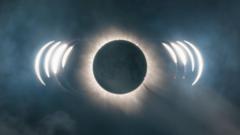
You have probably forgotten what daytime darkness feels like. If you were in the UK or parts of Europe back in August 1999, you might remember the eerie chill, the sudden quiet of birds, and thousands of people squinting through cardboard glasses at a muffled sun. That was the last time a solar spectacle of this magnitude hit close to home. Now, history is repeating itself.
On August 12, 2026, a major cosmic alignment will sweep across the globe, bringing the largest solar eclipse seen in over twenty-five years to several regions. Whether you plan to sit this one out or book a flight to chase totality, you need to know where the best views actually are, what the numbers mean, and why missing out this time around leaves you waiting a very long time for the next round.
Where to Find Total Darkness
If a partial eclipse does not interest you, you have to pack your bags. The path of totality—the narrow strip where the moon completely blocks the sun—touches very specific parts of the world this time.
Spain hits the jackpot. Cities like Bilbao, Santander, Valladolid, Burgos, Zaragoza, and Valencia will experience full totality just as the sun dips toward the horizon. Imagine a total solar eclipse meeting a golden sunset. That combination creates the legendary "diamond ring" effect right against the sea or landscape.
Iceland also gets front-row seats. The entire country experiences at least a partial phase, but the path of totality cuts right across parts of it, offering raw volcanic backdrops for the event. Remote parts of Greenland and a sliver of northern Portugal, specifically around the Montesinho Natural Park in Bragança, also catch total coverage.
If you are staying in Madrid or Barcelona, you will miss out on absolute totality by a fraction of a percent. Both cities hover near 99.8% to 99.9% obscuration. That sounds close, but astronomers will tell you that ninety-nine percent is basically zero percent when you want the full corona experience. You have to cross that final threshold into the shadow path.
What the UK and Ireland Will See
You do not strictly need to leave home to witness a staggering cosmic show. The UK and Ireland face a very deep partial eclipse on the evening of August 12, 2026.
According to data from the UK Health Security Agency and meteorological trackers, parts of the South West, Cornwall, and the Isles of Scilly will see roughly 95% of the sun covered. London, Edinburgh, Cardiff, and Belfast all hover around 91% to 93% obscuration.
The timing matters here. This is an early evening event. The moon starts taking chunks out of the sun around 18:15 local time, hits maximum coverage an hour later, and wraps up right before 20:00. It makes for an incredible commute home or an excuse to camp out on a local hill, provided the clouds cooperate.
Common Mistakes People Make During Big Eclipses
People mess up solar events in predictable ways. First, they trust the weather forecast too early. Micro-climates matter. If coastal fog rolls in, you move ten miles inland. Being stubborn ruins more eclipses than bad luck does.
Second, people buy cheap, unverified solar filters online. Do not do that unless you want permanent eye damage. Certified ISO 12312-2 glasses are mandatory for looking at any partial phase. If you are in the path of totality in Spain or Iceland, you can take them off only during the precise minutes of complete darkness. The second that diamond ring flashes back, the glasses go back on.
Third, people spend the whole time trying to film it on a smartphone. Your phone camera cannot handle the dynamic range without specialized filters. You end up with a blurry white dot on a black screen. Put the phone down for two minutes and look at the actual sky.
The Global Picture
North America gets a taste of the action too, though on a much smaller scale. Alaska acts as the best state for viewing, yielding nearly 28% obscuration in Anchorage, while eastern Canadian provinces like Newfoundland and Labrador pull in over 50% coverage. Major US east coast cities like New York and Boston see minor dips of 10% to 16%, which will look like nothing special unless you have instruments measuring the light drop.
Mark your calendar for late afternoon on August 12. Check your gear, pick your viewing spot, and hope for clear skies.
August 2026 solar eclipse guide
This detailed breakdown provides the exact regional paths, timelines, and obscuration percentages you need to plan your viewing strategy for the upcoming eclipse.


