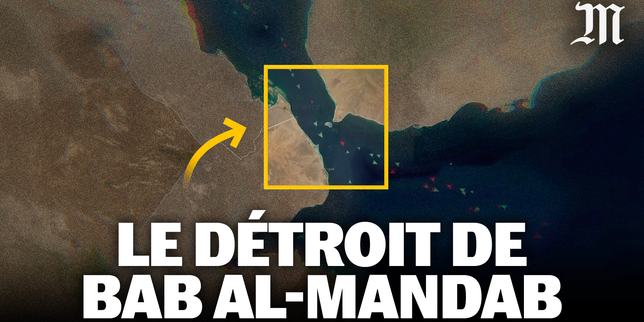
When the Strait of Ormuz locked down, the global energy market panicked. Now, attention shifts directly to the south. The Bab al-Mandab strait is rapidly becoming the ultimate geopolitical chokepoint as the conflict between Iran and the United States escalates. If you think the energy shock was bad in the Persian Gulf, you haven't looked at what's happening near the Red Sea.
The Backup Route Under Fire
For months, global shipping companies treated the Red Sea as a reliable detour. When the Iranian government restricted traffic through Ormuz, Saudi Arabia adjusted its logistics overnight. Ryad massively ramped up oil exports through its western port of Yanbu, pumping crude directly toward the Suez Canal via the Bab al-Mandab strait.
Smart strategy on paper. Total disaster in practice.
The Houthis in Yemen, acting as aligned regional proxies for Tehran, launched coordinated attacks against oil tankers in late July 2026. This wasn't random harassment. It was a calculated move to strangle Saudi Arabia's primary economic workaround. With the narrow passage measuring just thirty-two kilometers across between Yemen and Djibouti, ships have almost nowhere to hide.
Why This Chokepoint Changes Everything
Geography dictates trade. Nearly ten percent of global petroleum supply and a massive share of international container traffic squeeze through this exact corridor to link Asia with Europe.
If you cut this route, ships face a brutal mathematical reality. The alternative journey to bypass Africa via the Cape of Good Hope adds weeks to transit times and breaks supply chains completely. Freight costs soar, insurance premiums spike into the stratosphere, and consumer prices follow close behind.
Hesham Alghannam, a security analyst based in Riyadh, points out that proxy warfare allows Tehran to project power far beyond its immediate borders. The Iranian playbook relies on multi-front pressure. While regular naval forces lock down the Persian Gulf, regional allies target the southern entrance of the Red Sea.
The Stakes for Washington and Riyadh
Donald Trump's recent warnings that Washington will strike hard against Iranian positions underscore how quickly this theatre is expanding. The United States cannot afford a total blockade of international waters without risking an inflationary shock that hits American drivers directly at the pump.
Meanwhile, the Yemeni government has formally accused the Houthi movement of trying to impose illegal tolls and checkpoints on commercial vessels. It is extortion on a global scale, backed by ballistic capabilities and explosive drones.
Shipping executives now face an impossible choice. Risk a transit through waters patrolled by hostile militias or accept massive financial losses by rerouting entirely.
Watch the insurance rates. Monitor the tonnage passing through Yanbu. The real outcome of this war won't just be decided by airstrikes in the Middle East. It will be decided by who controls the water.


