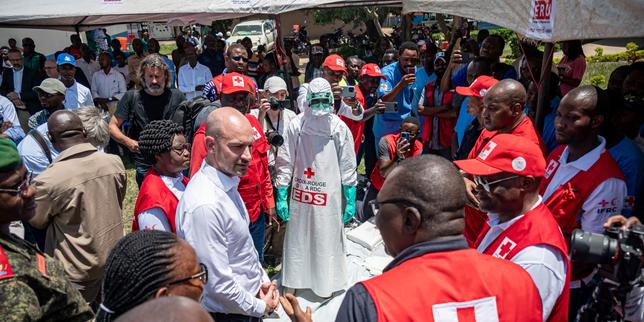
Announcements of massive international funds sound great on paper. Then the money vanishes into bureaucratic mazes while clinics on the ground run out of gloves. Right now, billions of dollars pledged to fight the devastating Ebola outbreak in the Democratic Republic of the Congo are raising hard questions about transparency, tracking, and accountability.
When international donors gather to pledge massive aid during a health crisis, they love the spotlight. But translating those grand pledges into actual medical supplies inside regions like the North-Kivu and Ituri is entirely different. Let's look at why those promised funds stall out and where the tracking systems break down.
The Gap Between Pledges and Disbursed Funds
International pledges rarely equal cash in hand. When organizations and global bodies announce multi-billion dollar packages, the public assumes funds immediately hit local accounts. That is not how global humanitarian financing works.
Pledges are often spread across multi-year commitments, tied to strict administrative conditions, or channeled through a dense web of intermediary agencies. In the current response across the DRC, local health authorities and independent bodies like Africa CDC have pointed out a glaring mismatch. Out of dozens of accredited international partners deployed for the Ebola response, only a fraction actually transparently report how much money they've received and where they spend it.
When millions or billions are promised by global summits, a significant portion gets swallowed by operational overhead, international logistics, security for expatriate workers, and administrative costs before treating a single patient.
Accountability Struggles on the Ground
Transparency isn't just an administrative buzzword; it's a matter of life and death when dealing with a hemorrhagic fever with a high fatality rate. According to figures highlighted by public health institutes in Kinshasa, tracking down the exact trajectory of aid reveals severe bottlenecks. Out of numerous organizations operating under official accreditation, only a small minority submit precise financial execution reports.
This opacity fuels deep local frustration. Doctors, nurses, and local community leaders watch international conferences generate billions in headlines while local treatment centers lack basic diagnostic tools and protective gear. When funds lack traceability, suspicions of mismanagement grow, eroding trust between affected communities and the response teams trying to contain the virus.
Why Traditional Aid Channels Fail Epidemics
We keep using rigid, slow-moving financing mechanisms for fast-moving pathogens. Ebola doesn't wait for grant proposals to clear committee reviews or for multi-stage auditing processes to conclude.
When international aid moves through too many bureaucratic layers, the delay creates a vacuum. Local healthcare workers end up staging protests or working unpaid while millions are supposedly being mobilized on their behalf. To fix this broken cycle, institutional donors must shift toward direct cash mechanisms and local resource management rather than routing everything through expensive international intermediaries.
If the international community wants to stop future waves of this epidemic, the focus must shift from how much money is announced at high-level summits to how fast those funds land in the hands of local medical teams who actually know how to fight the virus on the ground.