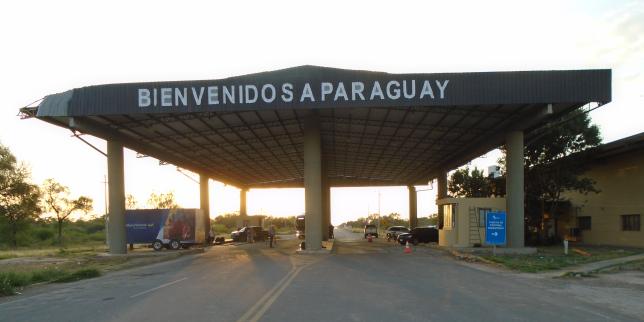
Borders on maps usually look permanent, carved into paper by politicians who never walked the ground. But sometimes, drawing the line takes nearly a century of bureaucratic headaches and diplomatic grit.
Bolivia and Paraguay just finished mapping the last stretch of their 742-kilometer shared border in La Paz. It sounds like a routine piece of geography news. It isn't. This moment marks the end of an 88-year administrative marathon that started in the wake of one of South America's bloodiest conflicts.
If you've ever wondered how long it takes to heal historical wounds after a war over phantom oil reserves, look right here. Eighty-eight years. That's how long it took to turn a messy ceasefire into a precisely marked reality.
The Long Shadow of the Chaco War
To understand why this boundary took nearly nine decades to finalize, you have to look back at the Chaco War. Between 1932 and 1935, Bolivia and Paraguay tore through their young male populations fighting over the Chaco Boreal. Both sides thought the remote, swampy brushland sat on top of massive oil deposits. They were wrong about the scale of the oil, but the human cost was devastating. Around 100,000 soldiers lost their lives to bullets, disease, and dehydration in the brutal heat of the semi-arid plain.
When the guns finally went silent, a peace treaty was signed in Buenos Aires in 1938. That treaty set the rough boundaries and laid out a framework for technical teams to go out into the wilderness and place markers.
The trouble was the landscape itself. The Gran Chaco is a massive, unforgiving expanse of thorny scrub, intense heat, and seasonal floods. Surveyors faced brutal conditions, shifting riverbeds, and sparse infrastructure. What started as a technical mapping project turned into a generational chore. Decades ticked by. Governments changed. Presidents came and went. Technical commissions kept working in quiet obscurity long after the public forgot why the line wasn't finished.
What This Agreement Actually Changes
So, what does this final sign-off in La Paz mean for everyday life?
First, it brings closure. Paraguay's foreign ministry pointed out a notable geographic quirk with this agreement: Paraguay and Bolivia now stand as the only nations in South America with completely, definitively demarcated borders on all sides. Every single pillar is set. Every coordinate is locked in.
Second, it changes how local authorities manage remote security and resource sharing. For decades, vague or unfinished patches of frontier created gray areas where smugglers, illegal loggers, and unauthorized cattle ranchers operated without clear oversight. When a border is a fuzzy concept on a map, law enforcement becomes a game of territorial ping-pong. Now, both nations have absolute clarity on jurisdiction.
You might think border agreements are just dry paperwork for cartographers, but they remove friction from trade and regional integration. When you run a cross-border logistics route or plan regional infrastructure like gas pipelines or highway connections, ambiguity kills investment. Investors hate uncertainty. A fully closed, legally ironclad border provides the kind of boring stability that sparks actual economic cooperation.
Why This Matters Beyond South America
We live in a world where territorial disputes are constantly erupting into open warfare, from Eastern Europe to the Middle East. Old maps are weaponized, and historical grievances are used to justify new invasions.
The story of the Bolivia-Paraguay border offers a different template. It proves that even after a catastrophic war that claimed tens of thousands of lives, adversaries can choose patience over perpetual conflict. It took them nearly a century, but they didn't go back to war over the remaining meters of brushland. They let the surveyors finish the job.
Next time you look at a globe and assume every country has its edges figured out, remember the Chaco. Real estate is messy, and getting it right takes time. But quiet, stubborn diplomacy can eventually finish what an army started.