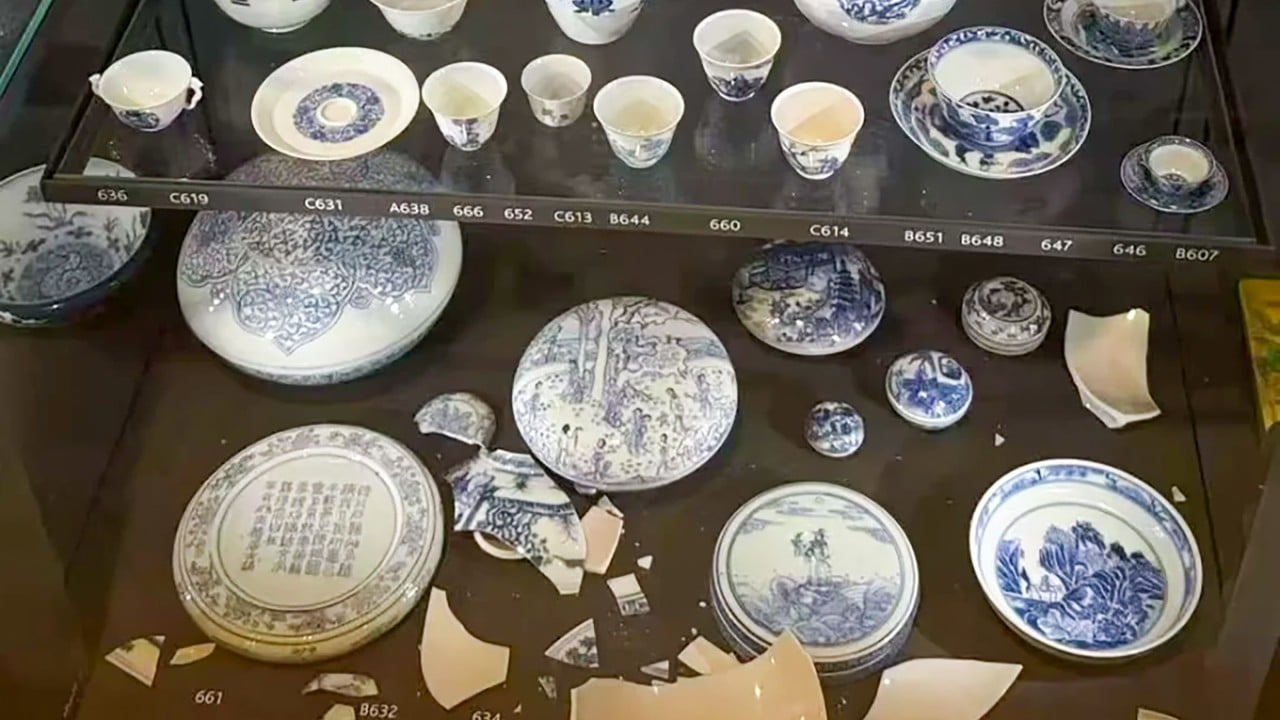
Another day, another high-profile mishap at the British Museum. This time, two priceless Qing dynasty porcelain artifacts from the famed Sir Percival David Collection have been damaged after a blue-and-white bowl slipped from its display shelf and smashed into another object below.
If you've been following museum news over the last couple of years, you know this isn't just an isolated clumsy accident. It highlights a recurring institutional vulnerability that keeps costing world heritage its physical integrity.
The Anatomy of a Museum Mishap
The incident took place in Room 95, home to an extraordinary collection of Chinese ceramics. According to reports from visitors and museum guides, a Kangxi-period blue-and-white bowl suddenly fell from its display mount, plunging onto a lower shelf and damaging a smaller box sitting right beneath it.
Visitors noticed the gallery unexpectedly shuttered its doors on a Sunday afternoon, only to reopen the next day with empty mounts and handwritten notes explaining that the items had been whisked away to the conservation lab.
The British Museum has confirmed the damage and stated that both pieces are now under the care of its specialist restoration team. But the question everyone is asking is simple: how does a secure display case fail to keep fragile, centuries-old ceramics in place?
Cracks in the Trust and the Sir Percival David Legacy
The Sir Percival David Collection is legendary. It features roughly 1,700 pieces of Chinese ceramics dating all the way from the third to the 20th century. For historians, collectors, and researchers, these objects are irreplaceable benchmarks for dating and understanding imperial Chinese kiln techniques.
When items of this historical magnitude suffer preventable physical damage, public reaction is fierce. Critics online haven't held back, pointing out that this accident comes hot on the heels of previous security and inventory scandals that plagued the museum. Back-to-back operational failures make it difficult for the public to trust that major institutions are guarding global history with the care it deserves.
Why Display Security Fails More Often Than You Think
Most people assume that world-class museums wrap every artifact in impenetrable, earthquake-proof bubbles. The reality on the museum floor is often far messier.
Display shelves rely on mounts, custom acrylic cradles, and friction fits. Over time, vibrations from heavy foot traffic, micro-settling of historic building foundations, or slight misalignments during routine maintenance can compromise these setups. If a shelf shifts by even a millimeter or if a mounting bracket loses its grip, gravity does the rest.
Furthermore, exhibition spaces face constant tension between aesthetic openness and physical protection. Curators want visitors to see delicate pieces without thick, distorting security glass getting in the way. That delicate balance often leaves historic objects exposed to structural vulnerabilities.
What Needs to Change Right Now
Institutions housing global cultural heritage need to stop treating structural failures as mere quirks of aging infrastructure. Upgrading display technology isn't optional anymore. Museums should implement active vibration-dampening mounts, laser-monitored shelf alignment systems, and independent structural audits for high-risk ceramic displays.
If the British Museum wants to repair its fractured reputation, fixing these two Kangxi-period pieces in the conservation lab is only half the battle. They need to overhaul the glass and steel holding up the rest of the collection before gravity strikes again.