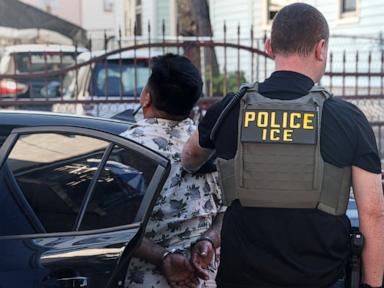
You put on the uniform. You swear an oath to defend the country. Then you find out federal agents are targeting your spouse or your aging parents for removal. It is a staggering contradiction that leaves active-duty service members entirely stranded between two conflicting federal priorities.
On one side, the Pentagon is leaning heavily into immigrant communities to fill critical military ranks. On the other side, immigration authorities are actively detaining and deporting the family members of those exact same troops. You cannot demand absolute loyalty from service members while simultaneously tearing their households apart.
The Reality on the Ground for Military Families
The numbers tell a grim story. Investigative reports reveal that dozens of spouses and parents of active U.S. service members have been detained during immigration crackdowns. At least half a dozen of them have already been pushed across the border.
Think about Annie Ramos. She is a Honduras-born wife of an Army staff sergeant. Immigration enforcement detained her as she tried to register for military benefits at her husband's base just days after they got married. That is not an isolated administrative glitch. It is the direct result of policies stripping away discretionary protections that used to keep military families safe from sudden deportation.
When a soldier worries about whether their spouse will be arrested at a grocery store or a base checkpoint, unit readiness plummets. The Army's own legal notices have explicitly noted that uncertainty over a family member's immigration status interferes with mission-essential duties. Personal terror at home destroys focus downrange.
Why the Pentagon Keeps Looking to Immigrant Communities
Despite the chaos created by immigration enforcement, the military continues to recruit heavily from immigrant populations. Nearly 50,000 foreign nationals currently serve in uniform, alongside roughly 125,000 foreign national veterans living in the United States, according to Congressional Research Service data.
Recruiting young Americans has been an uphill battle for years. To hit end-strength goals, the armed forces rely on green-card holders and immigrant communities who view military service as both an economic ladder and a profound duty to their new home.
Recruiters target these communities because the patriotism is real. But there is a massive disconnect between the branch offices signing up new recruits and the enforcement agencies rounding up their relatives. You end up with a system that welcomes the soldier but rejects the people who raised them or built a life alongside them.
The Policy Failure That Hurts National Security
Military programs like Military Parole in Place were originally designed to protect relatives of service members from immediate removal, offering temporary stability on a case-by-case basis. Stripping away or ignoring these safety nets creates a profound breach of trust.
Advocacy groups working to reunite deported family members of active-duty personnel report a surge in heartbreaking cases. When a Marine's father-in-law is stopped at a base gate and deported after visiting his grandchildren, it sends a chilling message to every other immigrant wearing the cloth of the nation.
If the defense establishment genuinely needs immigrant communities to maintain troop strength, treating those same communities as hostile targets makes zero strategic sense. Security requires cohesion, not internal sabotage.
Fixing this mess demands a coherent, unified approach across federal agencies. Until leadership stops the bureaucratic whiplash, the military will continue asking soldiers to risk everything for a government that turns around and deports their families.