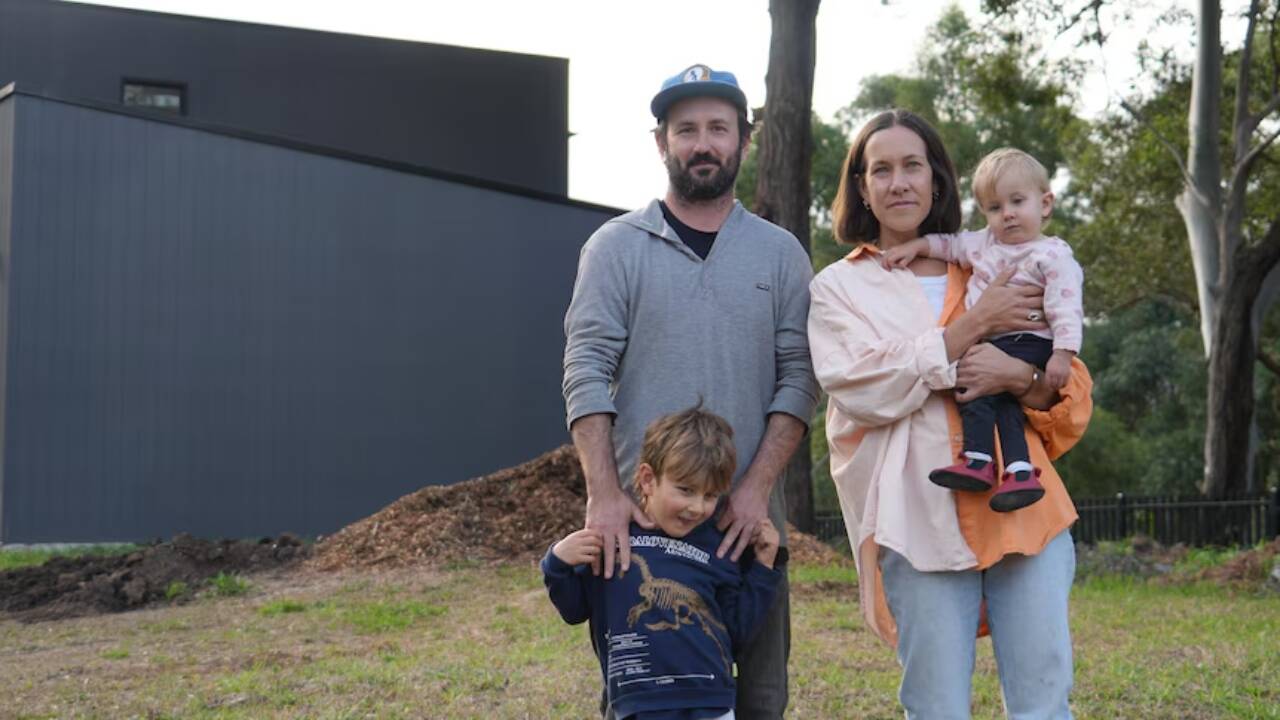
Buying land should mean you can build on it. Right? Apparently, local councils disagree. When Australian couple Caitlin Holme and Chris Robinson dropped money on a sprawling 1,840-square-metre block in Bulli in 2024, they had a straightforward plan. They wanted to build a second modular home to live right next door to family.
Two years later, they are caught in a bureaucratic nightmare. They are shelling out for both rent and a mortgage, staring at an empty patch of dirt where their home should be. Why? Because Wollongong City Council decided that placing two modular buildings on a single block legally transforms it into a "manufactured housing estate."
It sounds absurd. That is because it is.
The Trap of Modern Construction Red Tape
Modular and prefabricated housing is supposed to fix the housing crisis. State and federal politicians love talking about it. Government reports constantly push modern methods of construction, noting they can slash building costs by up to 20 percent and cut construction timelines in half.
Yet, local planning legislation often lives in the past.
When Holme and Robinson submitted their plans, they felt confident. After all, the exact same builder had successfully completed identical dual-occupancy projects elsewhere in New South Wales. But local zoning rules told a different story. The Wollongong Local Environment Plan permits only one such modern construction development per allotment. Put two on the same plot, and the council treats you like you are running a commercial caravan park.
When Subdividing Changes Nothing
Desperate to escape double payments, the couple hired a town planner. They jumped through hoops, officially subdivided the land, and resubmitted their blueprints.
The result? Total rejection.
They did everything right. They followed government advice to look outside congested city centers, embraced innovative building methods to save money, and respected local channels. Still, they hit a brick wall. They are stuck in planning purgatory, waiting for laws to catch up with reality.
Why Local Councils Are Out of Touch
Local governments are trapped by rigid definitions written decades before modular housing became a viable alternative to traditional brick-and-mortar builds. Planning definitions around manufactured homes were designed for commercial parks, not family backyards or modern dual-occupancy setups.
State ministers have acknowledged the glaring policy gaps. New South Wales building and planning ministers have pointed out these exact regulatory anomalies, promising upcoming reforms to establish a single approval pathway for all housing. They argue that a house should be treated as a house, regardless of whether it is prefabricated or stick-built on-site.
Promises don't pay monthly mortgages.
What Prospective Builders Need to Know
If you are thinking about buying land for a modular or prefabricated home, don't trust broad government hype alone. Local council rules can override state-level encouragement in a heartbeat.
Before you spend a single dollar on land or deposits, take these steps:
- Talk directly to the local duty planner, not just the sales reps from prefab companies. Ask specifically how they classify multiple modular buildings on a single title.
- Scrutinize local environment plans for zoning restrictions on modern methods of construction. Do not assume standard dual-occupancy rights apply to prefabricated structures.
- Factor in potential legal and planning delays that could stretch your timeline by years. Always budget for holding costs like rent and overlapping mortgage payments if things stall.
Stop assuming the system works logically. Until zoning laws completely eliminate the distinction between traditional and modular builds, innovative housing plans will keep crashing into red tape.