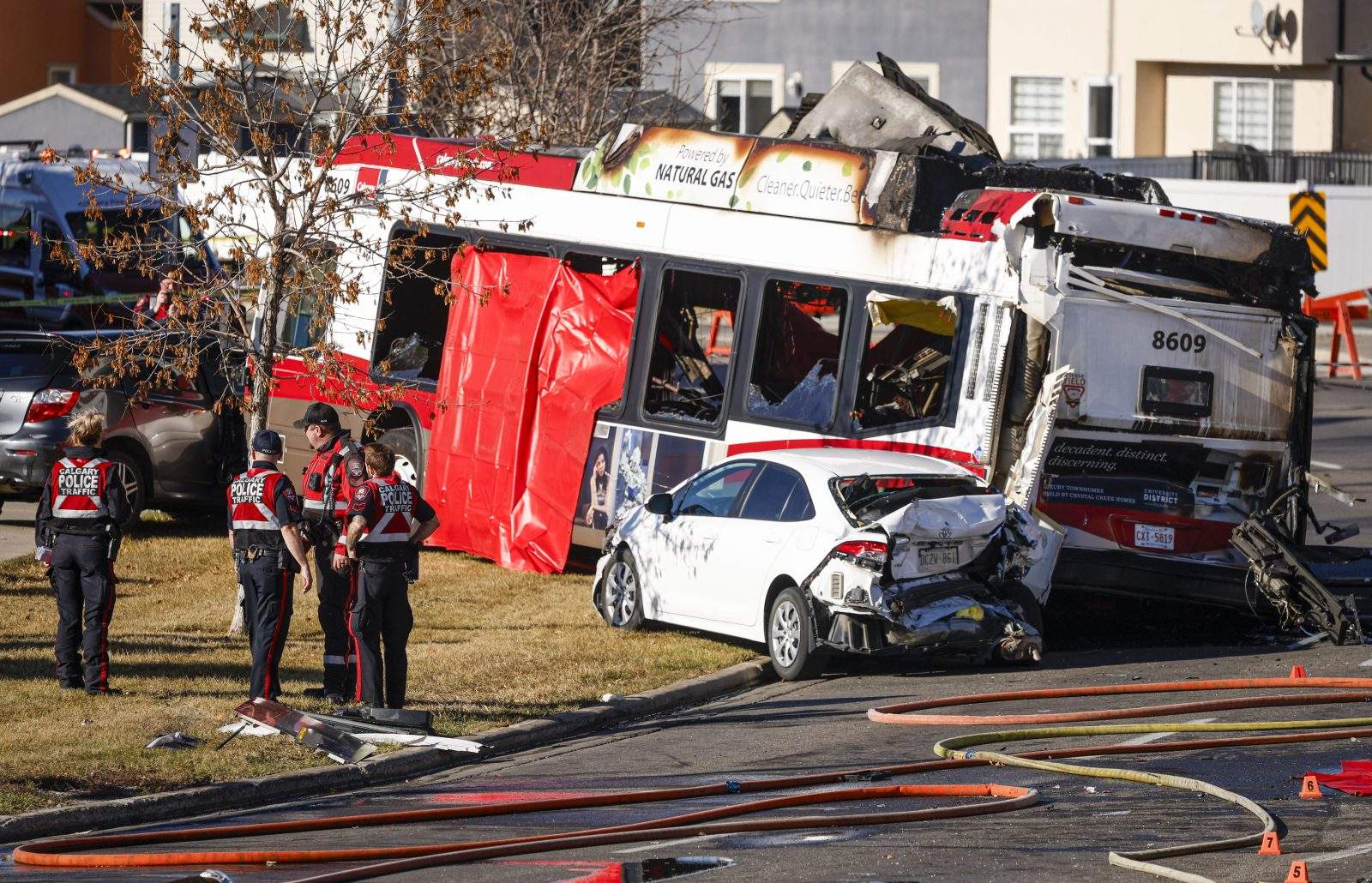
A horrific chain-reaction crash in Calgary left three people dead, more than a dozen injured, and an entire nation questioning the vehicles we trust with public transit. When a transit bus collided with multiple vehicles before slamming into a parked bus, a massive explosion and fire erupted. One of the vehicles involved ran on compressed natural gas. Panic followed instantly. People want to know if alternative fuel fleets are ticking time bombs rolling down city streets.
Experts are rushing to defend the technology. They call compressed natural gas buses extremely safe. Nearly a thousand of these units operate across Ontario, Alberta, and British Columbia right now. They have logged millions of miles over the last two decades. The manufacturing standards are strict. Heavy-duty tanks undergo rigorous testing to withstand extreme impacts. Leakage management tools and automatic shut-off valves are built right into the architecture.
Yet, looking solely at the fuel type misses the actual crisis.
The Real Danger Hiding in Plain Sight
Focusing entirely on natural gas tanks creates a convenient distraction. It lets transit authorities point to engineering certifications and statistical safety records while ignoring structural vulnerabilities that plague modern public transit.
Take seatbelts, for instance. Josipa Petrunic, president and CEO of the Canadian Urban Transit Research and Innovation Consortium, points out a glaring reality. The most unsafe part of a standard transit bus isn't the fuel cell or the engine block. It's the total lack of seatbelts for passengers.
We require every person in a private passenger vehicle to strap in. Children face strict car seat mandates. Commercial truck drivers adhere to strict restraint rules. Yet, city buses load dozens of standing or unbelted passengers into heavy cabins moving at high speeds through congested urban cores. When a sudden stop or catastrophic collision occurs, passengers become projectiles inside the vehicle.
How Transit Fleets Are Evaluated
Before any transit agency buys a new bus model, it must pass brutal evaluations. Models undergo Altoona testing in Pennsylvania, a notoriously grueling track assessment that simulates twelve years of heavy-duty wear and tear. Frame durability, structural integrity, and brake performance are tested to their absolute limits.
Calgary Transit procures its fleet through these exact certified channels. Their current fleet includes nearly two hundred and fifty compressed natural gas buses, making up roughly twenty percent of their total vehicles. Plans were already underway to swap out older diesel models for another hundred and fifty units.
Municipalities are under immense pressure to hit green targets. Transitioning away from diesel is an environmental imperative. Naturally, the public grows suspicious when a green technology vehicle catches fire in a dramatic fashion. But catastrophic failures require a rare alignment of worst-case variables.
Understanding the Chain Reaction
A transit crash of this magnitude should never result in passenger fatalities. That is the hard truth transit operators and municipal leaders must face.
A single system failure rarely causes a tragedy like the one in Calgary. A series of extraordinary events had to happen in tandem. The initial collision force, the specific angle of impact, the velocity of the moving vehicle, and the subsequent mechanical damage all converged into a worst-case scenario. Nova Bus, the manufacturer of the rear-ended unit, noted that speculating on root causes before a full forensic investigation concludes is premature.
Investigators are currently tearing apart the wreckage to map out the sequence. They are examining telemetry data, brake systems, fuel line integrity, and driver logs.
What Needs to Change Right Now
Public transit agencies cannot simply hide behind compliance certificates. Restoring commuter trust requires more than reassuring press releases about industry standards.
Municipalities need to reevaluate interior safety engineering. Retrofitting urban buses with passenger restraints is expensive and complex, but ignoring occupant kinematics is no longer acceptable. Cities must also step up driver training protocols for emergency response and collision avoidance, especially as fleets transition to heavier alternative-fuel vehicles.
Demand transparency from your local transit authority. Ask about vehicle maintenance schedules, alternative fuel safety protocols, and passenger protection standards on your daily commute.