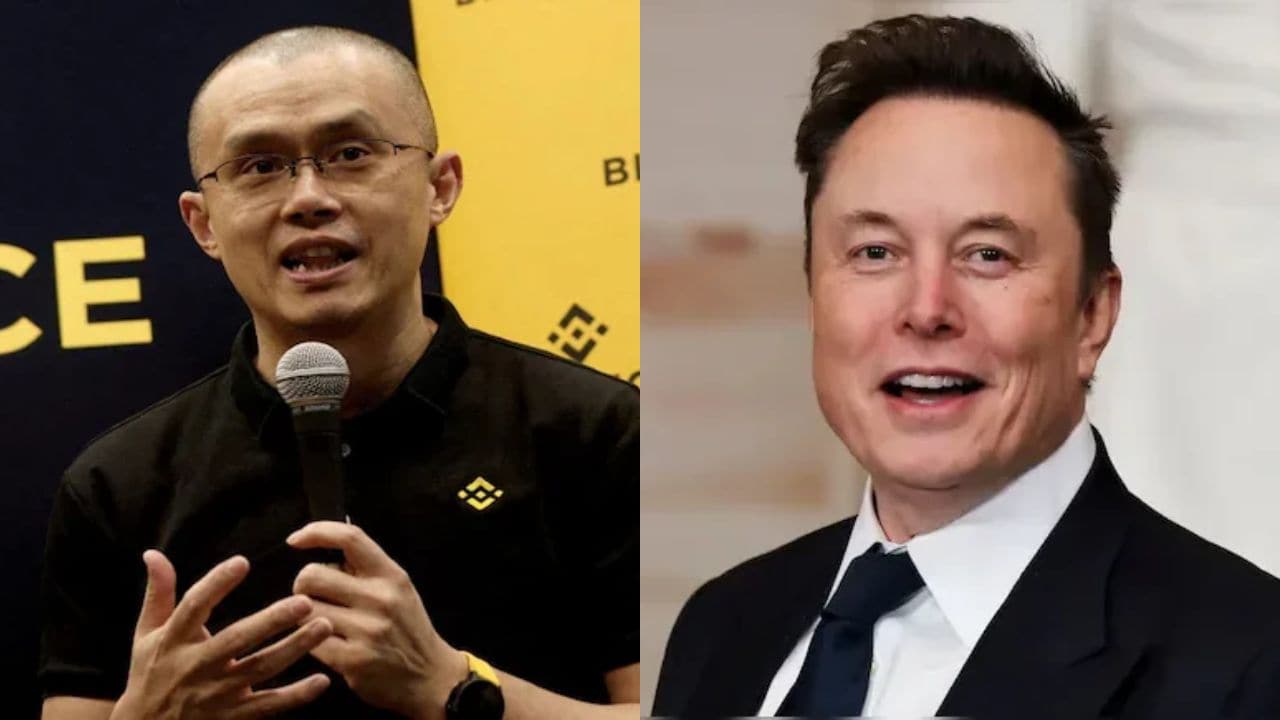
When the biggest cryptocurrency heist in history unfolds, you expect solidarity from tech billionaires. Instead, you get internet memes. Elon Musk couldn't resist dropping sarcastic comments on X as Binance reeled from a staggering $6.3 billion security breach. That prompted Binance co-founder Changpeng Zhao—widely known as CZ—to draw a hard line.
Public squabbles between Silicon Valley royalty and crypto titans rarely happen so bluntly. CZ did not just complain about the internet chatter. He fired back by reminding Musk of a billion-dollar financial tie that links their empires together. Meanwhile, you can explore other stories here: Why The Private Equity Generational Handover Changes Everything.
Inside the Billion-Dollar Tech Feud
The digital sparring match kicked off shortly after reports surfaced detailing the massive exploit. Attackers managed to drain roughly $6.3 billion from Binance in a matter of minutes. While investigators scrambled to trace funds and freeze roughly $3 billion of the stolen assets, Musk opted for online mockery. He posted phrases like "Everyday is Zeroday" alongside laughing and fire emojis in response to CZ's prior security warnings.
CZ saw the digital jabs and replied directly on the platform. To explore the bigger picture, we recommend the detailed report by Investopedia.
"Elon, have a lot of respect for you, but bad time to troll. Please stop," CZ wrote.
He didn't stop there. CZ immediately brought up history, pointing straight back to 2022 when Binance chipped in $500 million to help Musk finance his turbulent $44 billion acquisition of Twitter. Due to subsequent corporate restructuring, that initial cash injection morphed into SpaceX shares that are now valued at upwards of $1 billion.
"Would appreciate if you show a little support. Thanks!" CZ added.
Can Binance Absorb a $6.3 Billion Blow?
Whenever a loss of this magnitude hits a platform, panic spreads across the market. Skeptics instantly drew comparisons to the catastrophic collapse of FTX. People wanted to know if Binance possessed the liquidity to survive or if customer funds faced imminent danger.
Binance leadership moved fast to stabilize confidence. Binance co-CEO Yi He addressed market fears directly, noting that the company's annual revenues are robust enough to absorb the remaining shortfall without liquidating external equity holdings like their SpaceX stake. Executives clarified that roughly $3 billion has already been frozen, and corporate revenues will cover the confirmed gap. CZ later clarified that he never intended to offload the SpaceX shares, but mentioning them served as a sharp reminder of deep-pocketed cross-investments between traditional tech and crypto heavyweights.
How the Breach Actually Happened
Security forensics teams are still picking apart the mechanics of the attack. Initial disclosures from Binance executives pointed toward a sophisticated entry vector. While early chatter focused on a single compromised DevOps engineer laptop, later updates revealed a far more complex multi-layered intrusion into service containers that authorized unauthorized withdrawal transactions.
Industry analysts suspect sophisticated state-sponsored threat actors, such as North Korea's TraderTraitor collective, pointing to the velocity and scale of the extraction. Centralized exchanges remain prime targets for state-backed cyber units because a single lapse in internal endpoint security can unlock massive liquidity pools.
What This Means For Crypto Security Going Forward
When multi-billion-dollar exploits happen, finger-pointing becomes the default industry reaction. Musk treating a historic security failure as punchline material highlights the ongoing cultural friction between traditional tech leaders and cryptocurrency operators.
Yet, the episode underscores a harsh reality for digital asset platforms. Internal infrastructure hardening requires constant vigilance. Relying on perimeter defenses isn't enough when a single compromised credential or developer endpoint can jeopardize billions of dollars in user assets. Exchanges must move toward decentralized verification methods for administrative overrides to prevent automated draining scripts from executing unchecked.
Keep your security keys hardware-bound, audit your access controls daily, and don't expect sympathy from the timeline when things break.