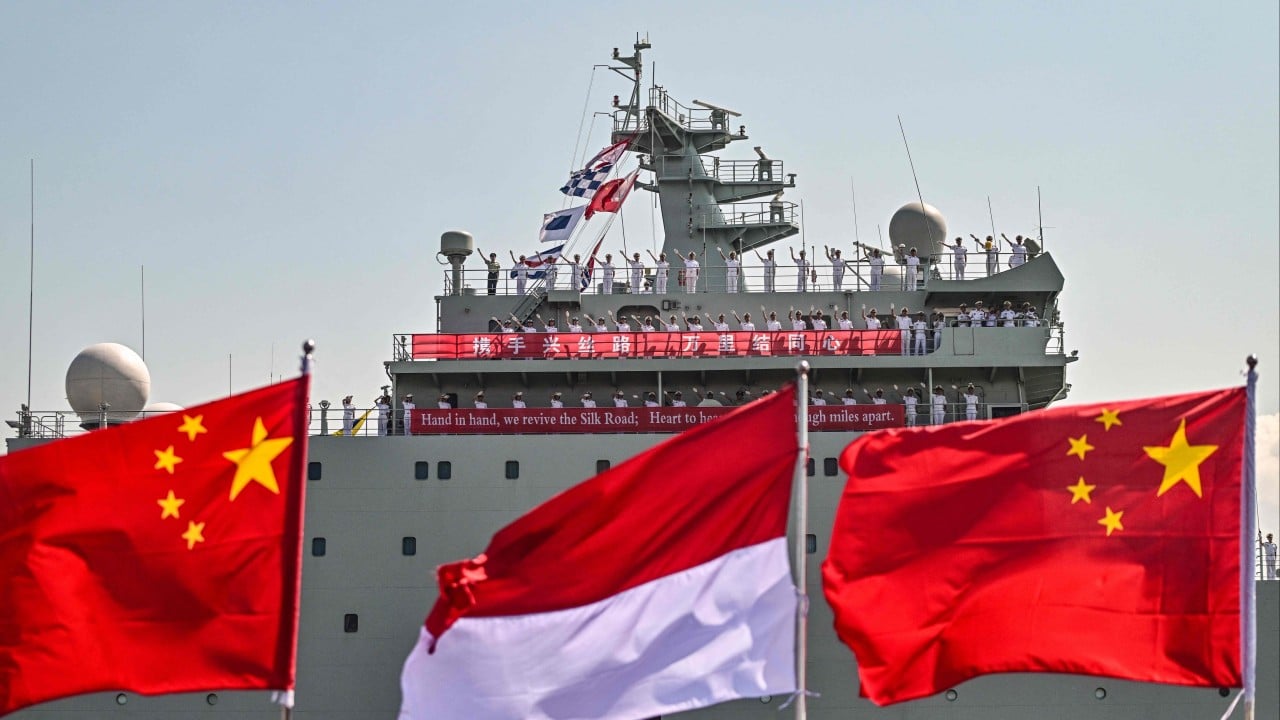
When the Chinese People's Liberation Army Navy and the Indonesian Navy decided to hold a joint maritime transit exercise in the waters east of Taiwan, it wasn't just another routine line on a defense schedule. It marked the first time the PLA has run an operation with a foreign military in that specific Pacific-facing zone.
If you look past the standard diplomatic statements, this move sends a sharp signal about shifting regional dynamics, quiet strategic alignments, and how middle powers like Indonesia navigate great power friction. Let's break down what actually happened and why regional capitals are reacting so strongly.
Breaking Down the Drill
The operation itself involved two primary vessels: the Chinese guided-missile frigate Honghe and the Indonesian Navy frigate KRI I Gusti Ngurah Rai. Fresh off a goodwill port visit by PLA Navy Task Group 83 to Surabaya, the two navies met up in the Philippine Sea east of Taiwan.
The curriculum was straightforward on paper. Crews ran through maritime communications using tactical signal codes, formation maneuvering, and at-sea replenishment before splitting up.
Jakarta's defense establishment was quick to frame the interaction through a different lens. Indonesian Navy spokespersons pointed out that the ship was returning from a transit following a visit to Russia, characterizing the maneuvers as standard passing exercises that are part of universal naval tradition rather than combat preparation.
Why Taipei Called It Political Manipulation
Taipei didn't buy the routine explanation. Taiwan's Mainland Affairs Council labeled the joint drills a dangerous provocation and a form of political manipulation.
The core anxiety in Taiwan stems from geography and jurisdiction. Waters east of Taiwan open directly into the Western Pacific, serving as a critical strategic buffer for the island. By conducting exercises with a prominent Southeast Asian partner in this exact corridor, Beijing is normalizing its operational presence there.
Taipei officials argued that the exercise aims to project a false impression to the international community that Beijing exercises direct jurisdiction over those specific Pacific approaches. It's a psychological chess match as much as a tactical one. China's coast guard and naval elements have steadily increased their footprint off Taiwan's eastern coast, turning what used to be rare events into a regular baseline.
The Indonesian Balancing Act
Indonesia sits in a tough spot, and understanding Jakarta's foreign policy doctrine explains why this drill happened at all. Indonesia practices a strict "free and active" foreign policy. They refuse to officially align with Washington or Beijing, preferring to trade with both and host military engagements with whoever is willing.
For Jakarta, sending a frigate to train alongside Chinese sailors keeps ties warm with its largest economic partner. At the same time, Indonesia has its own boundaries and disputes to worry about in the South China Sea, meaning defense diplomacy is calibrated to keep everyone guessing. They aren't trying to endorse Beijing's claims over Taiwan; they are managing bilateral ties with an ascending superpower while keeping their options open.
What Comes Next
Watch how other ASEAN members react to this precedent. If Indonesia normalizes joint transit drills with the PLA near flashpoints, other regional navies might feel pressure to adjust their own operational routines.
The waters east of Taiwan are no longer a quiet corridor. They are the new baseline for great power competition, and every joint maneuver written into a defense ministry press release carries twice its weight in geopolitical signaling. Keep your eyes on upcoming naval rotations in the Western Pacific because the rules of the maritime road are rewriting themselves in real time.


