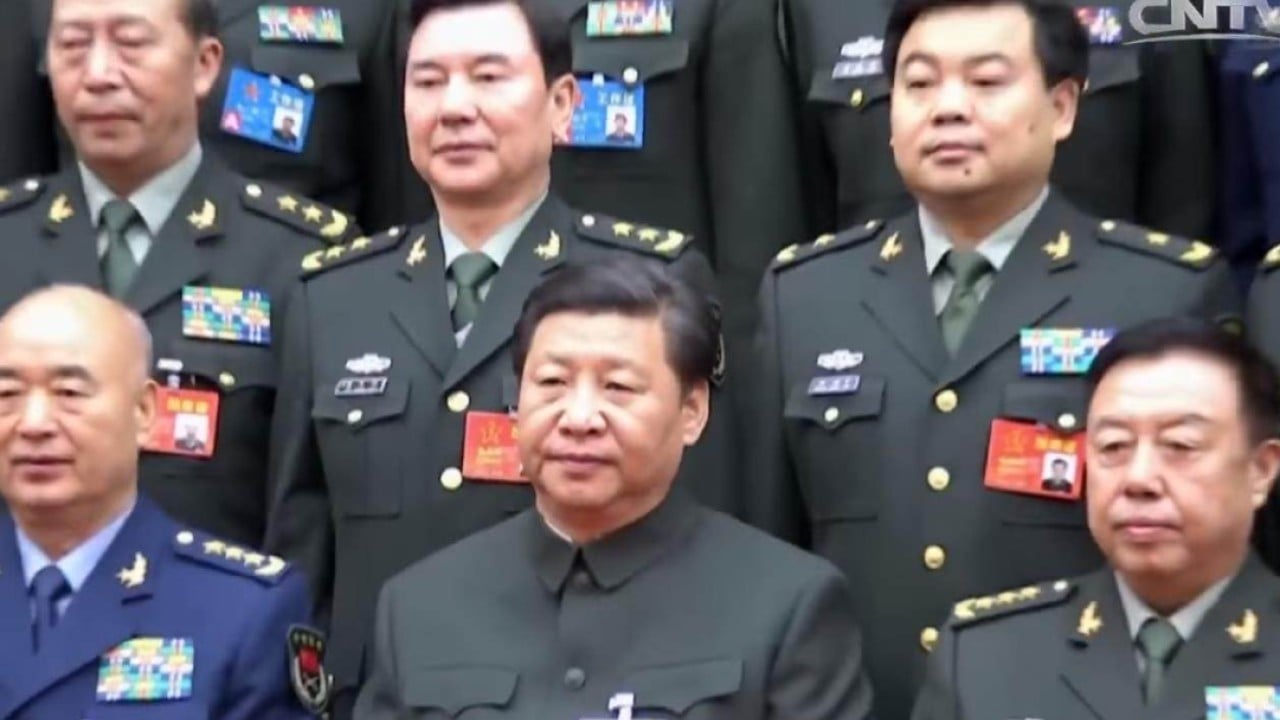
When an anti-corruption sweep reaches the upper echelons of a global superpower's military command, the shockwaves travel far beyond ordinary barracks. Beijing's ongoing purge within the People's Liberation Army (PLA) isn't just a standard bureaucratic reshuffle. It represents an aggressive, high-stakes tightening of political control that targets top-tier generals and prominent corporate chiefs alike. If you want to understand where modern statecraft meets raw institutional survival, look closely at who is falling out of favor and why the party is doubling down on loyalty.
The Scope of the Purge
The numbers tell a stark story. Recent announcements from state media outlets like Xinhua reveal a widening dragnet that has stripped dozens of senior figures of their Communist Party membership and military ranks. Generals and defense-linked corporate executives find themselves accused of severe political disloyalty, forming cliques, and severe disciplinary violations.
We aren't just talking about mid-level bureaucrats taking bribes for local permits. This campaign zeroes in on individuals who control strategic procurement, defense budgets, and heavy industrial output. When top military commanders and industrial leaders are simultaneously ousted, it exposes deep systemic vulnerabilities in how state contracts and military readiness have historically intersected.
Beyond Simple Bribery
Most casual observers assume these investigations stem entirely from financial kickbacks or embezzlement. Money changes hands, envelopes get passed, and investigators step in. But a closer read of official communiques points to something much heavier: political deviation.
The party's disciplinary bodies repeatedly stress violations of "political discipline and political rules". In plain terms, this means the leadership suspects personal networks of loyalty are superseding loyalty to the central command. When military officers build independent power bases or corporate chiefs use state-backed monopolies to advance private ambitions, Beijing treats it as an existential threat.
Think about how defense procurement works in a massive state-planned economy. Billions flow into research, hardware development, and logistics. Without absolute oversight, decentralized fiefdoms form naturally. The current campaign serves as a blunt instrument to smash those fiefdoms once and for all.
The Operational Paradox
Every major military purge carries a hidden cost. On one hand, removing compromised officers eliminates internal rot and sends a terrifying message to anyone tempted by corruption. On the other hand, cutting down experienced leaders creates immediate operational friction.
When top generals vanish overnight, institutional memory goes with them. Command structures stutter. Junior officers hesitate to make bold decisions out of fear that administrative missteps might be misconstrued as political disloyalty.
Observers outside China often debate whether these disruptions weaken or strengthen the armed forces long-term. Proponents of the campaign argue that a lean, disciplined force free from backroom dealing is ultimately more formidable. Skeptics counter that continuous high-level instability damages morale and disrupts long-term strategic planning. Both arguments hold weight, but the leadership clearly prioritizes ideological purity and absolute obedience over short-term administrative convenience.
What Comes Next for the State Apparatus
This relentless anti-graft drive shows zero signs of slowing down. As preparations ramp up for major political assemblies and future leadership transitions, the central authorities are clearing the board of any potential friction points. Corporate executives tied to defense supply chains will face even heavier compliance checks, while military commanders operate under a microscope where every promotion and procurement decision is scrutinized for hidden allegiances.
Loyalty remains the ultimate currency in Beijing. Those who miscalculate the cost of stepping out of alignment are finding out just how fast positions built over decades can vanish.