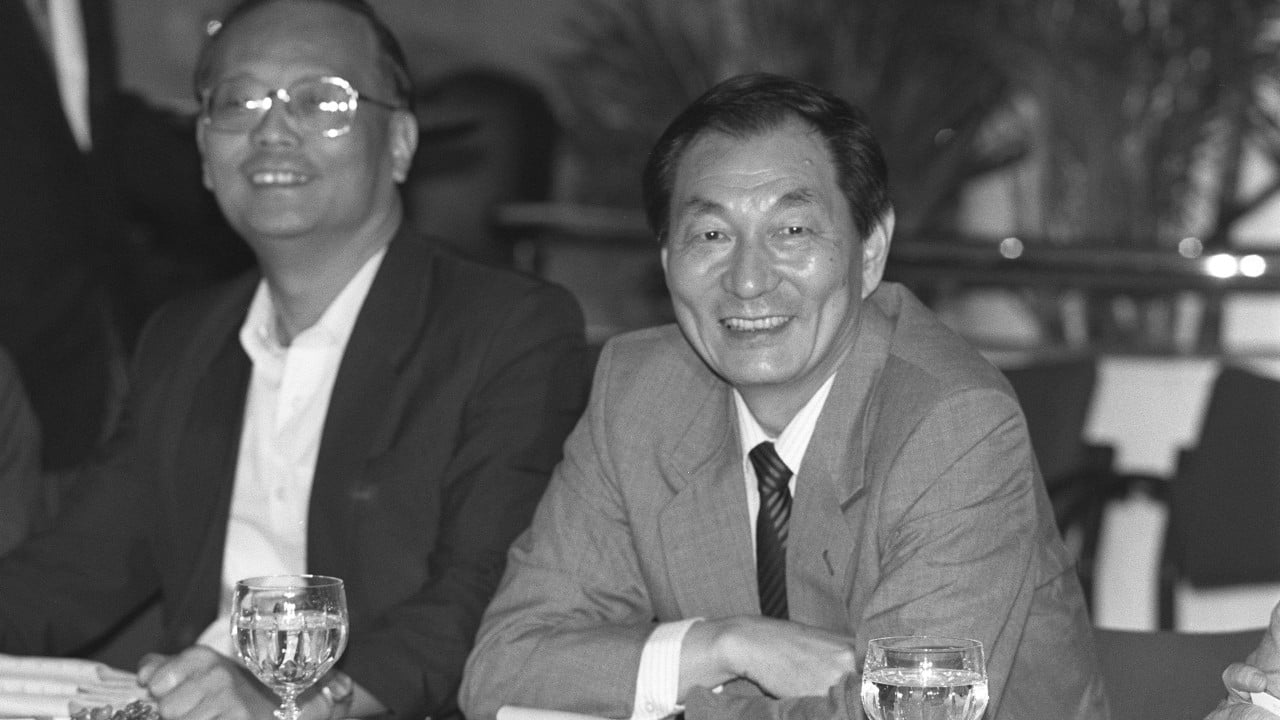
History remembers tough administrators differently from soft politicians. When Zhu Rongji took the reins as China's premier in 1998, he didn't care about making friends in boardrooms or winning local popularity contests. Armed with an engineering degree and an uncompromising attitude, he stared down hyperinflation, bloated state monopolies, and rampant government corruption with a famous vow to prepare one hundred coffins for corrupt officials—saving ninety-nine for targets and one for himself.
People often look at China's modern economic footprint and assume it built itself. That's nonsense. Much of the foundational architecture powering the world's second-largest economy traces directly back to Zhu's grueling tenure through the 1990s. Through collections of his own speeches, official records, and interviews, his policy blueprint remains an active masterclass in statecraft. You need to understand his core moves to make sense of where Beijing stands today.
Taming Runaway Inflation Without Breaking the Machine
Back in the early 1990s, China's economy was spinning wildly out of control. Prices spiked, speculation ran rampant, and the banking sector sat on mountains of toxic debt. Most traditional economists suggested gentle fiscal tightening. Zhu ignored them.
As central bank governor, he stepped in with raw administrative muscle. He slammed the brakes on speculative credit, recalled unauthorized loans, and forced state banks to actually evaluate financial risk. It wasn't pretty, and plenty of local officials screamed bloody murder. Yet, it worked. He engineered a rare economic "soft landing" that crushed hyperinflation and restored basic sanity to the national currency.
The Tax Overhaul That Centralized Power
If you want to find the engine room of Beijing's modern fiscal might, look at the 1994 tax-sharing reform. Before Zhu forced this change through, the central government was practically begging local provinces for spare change to fund national infrastructure.
He flipped the script. By dividing tax revenues cleanly between Beijing and regional governments, he flooded the central treasury with cash. Sure, this move accidentally planted the seeds for later local government debt reliance on land sales, but it gave the central state the financial muscle to build high-speed rail, fund massive disaster relief, and project global economic power. Without that radical shift, modern Chinese state capacity would look completely different.
Slaying the Dragon of State Monopoly
You can't talk about Zhu without addressing state-owned enterprises, or SOEs. By the mid-1990s, thousands of state-run factories operated as bottomless financial pits, kept alive by artificial state subsidies while producing goods nobody wanted.
Zhu made a ruthless call. His policy of "grasping the large and letting go of the small" meant cutting loose thousands of inefficient municipal and regional factories. Millions of workers lost their jobs overnight. Protests flared up. Political pressure mounted from old-guard hardliners who accused him of selling out socialism.
Zhu didn't blink. He absorbed the political fallout because he knew state coffers couldn't survive subsidizing dead weight. To soften the blow, he helped lay the bricks for a basic urban social welfare and pension safety net, but the structural surgery was severe and permanent.
Pushing China Into Global Trade
Getting into the World Trade Organization wasn't a walk in the park. For over a decade, international negotiators battered Beijing over market access, intellectual property rights, and tariffs.
As premier, Zhu personally drove the final, agonizing negotiations that landed China inside the WTO by 2001. Domestic critics warned him that foreign competitors would crush domestic industries overnight. Instead, Zhu bet that forcing Chinese companies to swim in the deep end of global competition would turn them into global heavyweights. He was right. WTO accession supercharged exports and integrated the country deeply into global supply chains.
Why His Pragmatism Still Echoes Today
Zhu despised empty political talk. He called himself an economic pragmatist who believed that numbers don't lie. When foreign investors complained about red tape, he told them straight up that they deserved fair treatment and that his only real demand was that they pay their taxes.
His legacy isn't clean or universally loved. The structural reforms he pushed created lasting vulnerabilities, including corporate debt bubbles and massive wealth gaps that modern regulators still struggle to fix. Yet his refusal to shy away from structural pain remains a rare trait in modern governance.
Stop expecting leaders to solve massive systemic crises with polite consensus. Zhu proved that systemic transformation requires an iron spine, a tolerance for immediate backlash, and a willingness to walk straight into political minefields.


