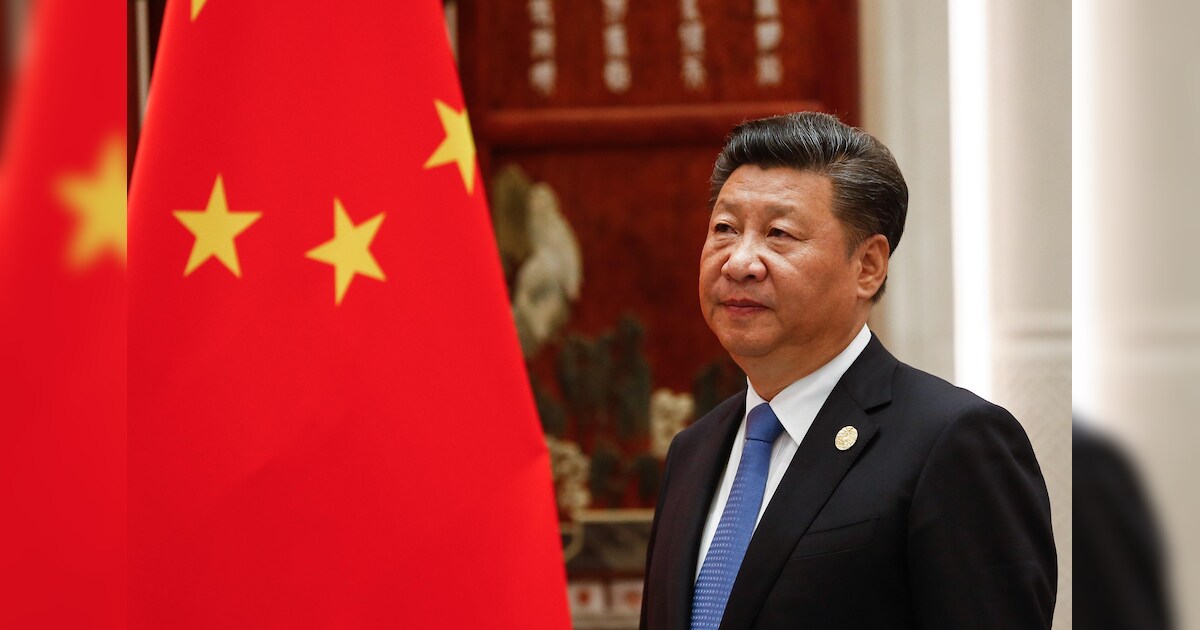
Xi Jinping’s ongoing military cleanup isn’t slowing down. In fact, it just reached deep into the historical archives of Beijing's border conflicts.
General Zhao Zongqi, the former commander of the People's Liberation Army Western Theatre Command who oversaw the tense 2017 Doklam standoff and the deadly 2020 Galwan Valley clash, has been officially stripped of his high-level political advisory posts. China’s top political advisory body, the Chinese People’s Political Consultative Conference, voted to strip Zhao of his membership on the Standing Committee of its 14th National Committee. He was also removed as deputy director of the ethnic and religious affairs committee.
State media agencies like Xinhua didn't provide any explicit reasons or launch details for his abrupt removal. But if you've been watching Beijing's power corridors over the last few years, you know the script. When senior military figures vanish or get stripped of titles without warning, a massive purge is usually underway.
The Shadow of Doklam and Galwan
To understand why Zhao's fall matters, you have to look back at his command record. Appointed as the founding head of the restructured Western Theatre Command in February 2016, Zhao held absolute operational control over Chinese military forces spanning Xinjiang, Tibet, and the entire disputed Line of Actual Control with India.
Under his leadership, Beijing adopted a fiercely aggressive posture on the border.
- The 2017 Doklam Standoff: Chinese forces under Zhao tried to push an operational road through the Doklam plateau, a disputed territory claimed by both Bhutan and China. Indian troops crossed the border near the Chumbi Valley trijunction to block the move, setting off a grueling 72-day eyeball-to-eyeball military confrontation.
- The 2020 Galwan Valley Clash: Coordinated Chinese intrusions across multiple points in eastern Ladakh escalated on June 15, 2020, into brutal hand-to-hand combat in the Galwan Valley. It marked the first fatal military clash along the frontier in 45 years. Twenty Indian soldiers lost their lives, while Beijing acknowledged just four PLA casualties, though independent intelligence estimates placed Chinese losses significantly higher.
US intelligence assessments later pointed directly at General Zhao, reporting that he personally authorized the aggressive frontline maneuvers with the intent to "teach India a lesson."
A Wider Upheaval in Beijing
Zhao isn't an isolated casualty. His ouster coincides with broader, systemic turbulence at the highest levels of the Chinese military. Around the same time, high-ranking officials like Zhang Youxia and Liu Zhenli were removed from the state Central Military Commission following intense probes into serious violations of discipline and law.
Over the last few years, Beijing has purged dozens of generals and high-ranking officers, sweeping through departments like the Rocket Force and top defense ministries. Critics and regional analysts argue that while Beijing routinely frames these actions as anti-corruption campaigns, they also serve as a blunt instrument to consolidate absolute loyalty toward Xi Jinping.
When a commander who once dictated aggressive foreign policy lines gets unceremoniously dumped from political bodies years after stepping down from active military command, it proves one thing. In Beijing's inner circle, yesterday's hardliner can quickly become today's political liability.