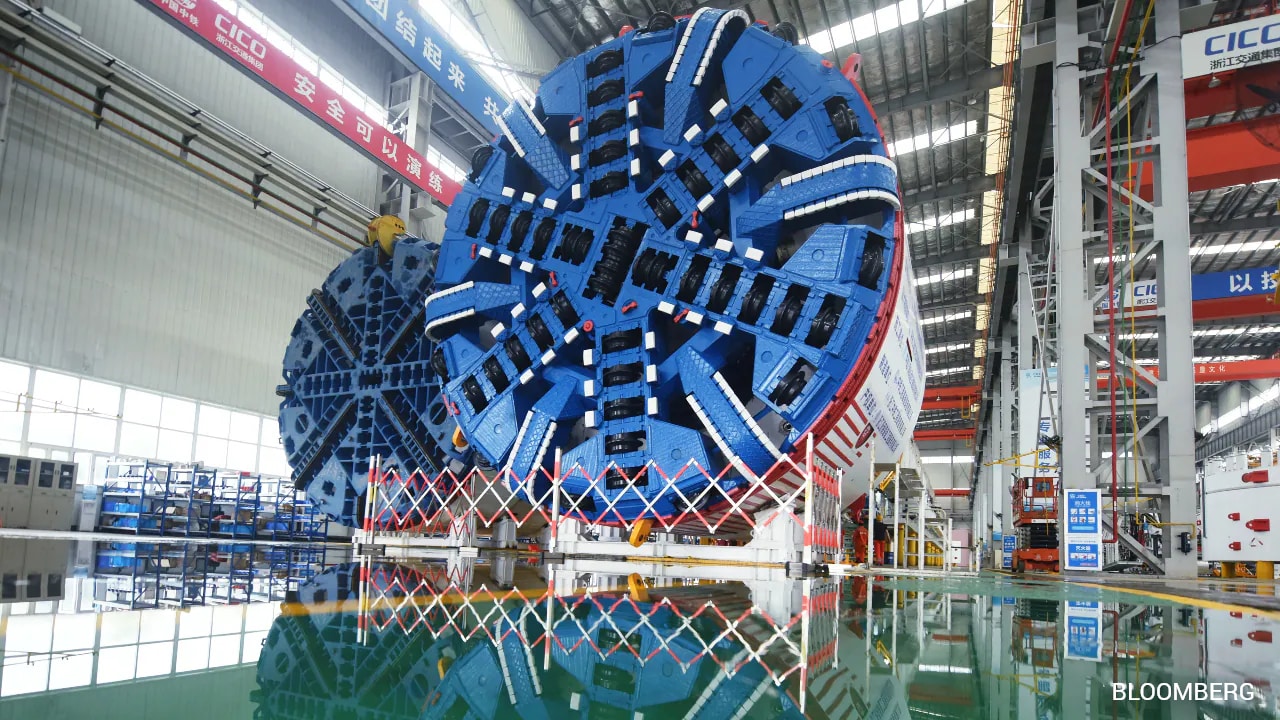
Big infrastructure demands big hardware. When you look at the complex network of mountain railways, urban metro lines, and strategic defense tunnels currently underway across South Asia, you're looking at massive reliance on specialized heavy machinery. Beijing's newly introduced export controls target colossal construction apparatus, specifically massive tunnel-boring machines (TBMs) that weigh thousands of tons. This policy shift changes the calculus for builders and project managers who depend on foreign imports to keep heavy construction moving forward.
The Real Bottleneck in Modern Mega-Projects
Building through fragile Himalayan rock or beneath dense urban centers isn't just about pouring concrete. It requires massive engineering marvels—machines that act as underground factories, cutting through stone while lining walls simultaneously. China dominates the global manufacturing pipeline for these high-capacity devices, supplying major shares of the excavation technology used worldwide.
When export licensing requirements tighten under dual-use regulations, the friction isn't theoretical. Project timelines face sudden administrative hurdles. Even though these rules don't constitute an outright global ban, the bureaucratic delays can paralyze time-sensitive engineering schedules. If you run a major tunneling project, waiting months for export clearance from Beijing can destroy your project budget.
Strategic Vulnerabilities Along the Mountain Frontiers
Geopolitics rarely stays separate from heavy industry. The Himalayan frontier has long served as a high-stakes zone where logistics dictate military readiness. Accelerating railway and highway links near disputed borders requires boring through miles of solid granite.
India is aggressively pushing to improve troop mobilization times and civilian connectivity in remote border sectors. That mission depends entirely on uninterrupted access to high-end excavation gear. When an external supplier controls the choke points on heavy machinery, national security intersects directly with commercial supply chains. Past friction points—such as customs holds on European-branded machines manufactured or routed through eastern supply lines—demonstrated how quickly trade tools turn into diplomatic leverage.
The Domestic Manufacturing Gap
Can local industries simply step in and build these beasts domestically? Not overnight. While mid-range construction equipment sees strong local assembly, critical components like high-capacity hydraulics, large-diameter structural bearings, and advanced control electronics remain stubbornly dependent on specialized global supply chains.
Competing with established overseas output on pure cost and scale is an uphill battle. Building heavy industrial capability demands deep-tier engineering validation, specialized metallurgical inputs, and years of iterative testing. Rushing past these steps leads to structural failures underground—a risk no sensible contractor takes.
Navigating Supply Chain Uncertainty
Project developers can't afford to sit passively waiting for trade policies to soften. Smart operators are shifting their sourcing playbooks right now. Diversifying procurement toward alternative global heavy engineering firms based in Germany, Japan, or the United States offers a viable path forward, even if initial capital costs run higher.
Contractors must audit existing supplier agreements immediately. Review force majeure clauses, check delivery extension provisions, and map out exact exposure to upcoming export licensing restrictions. Transitioning toward performance-based procurement specifications allows project owners to qualify alternative suppliers without getting locked into specific geographic dependencies.
Secure alternative supplier commitments today, restructure project penalty clauses to account for regulatory delays, and invest aggressively in local assembly joint ventures to secure long-term engineering independence.
China Imposes Export Controls on Tunnel Boring Machines to India
This video provides an in-depth breakdown of how Beijing's recent regulatory adjustments on heavy tunneling hardware impact regional trade dynamics and construction timelines.