Big infrastructure projects and high-stakes space programs don't usually hit the news cycle on the exact same day, but Beijing managed to do just that. If you are trying to figure out how geopolitical ambition collides with raw engineering reality, you have to look at two massive developments happening concurrently: a completed transit test on a multibillion-dollar shipping route and an explosive rocket failure off the coast of Hainan.
Let's break down what actually happened, why it matters, and what most casual observers miss about these twin milestones.
The 10.8 Billion Dollar Trade Shortcut
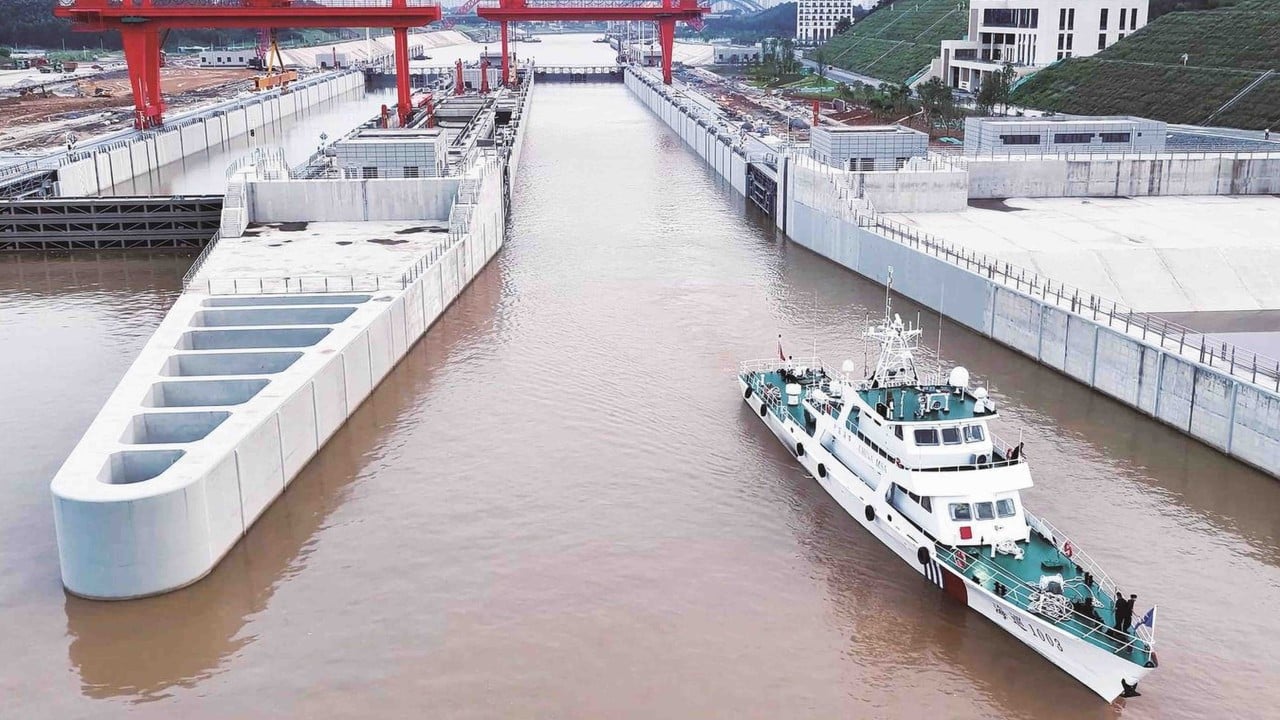
China just wrapped up its first full transit test on a massive 134.2-kilometer (83.4-mile) canal megaproject. Costing roughly 10.8 billion dollars, this engineering feat links an enormous inland region directly to Southeast Asia.
Why should you care? Because trade routes dictate economic power. For years, moving goods from China’s interior out toward Southeast Asian markets meant wrestling with complicated logistics and congested pathways. This canal changes the geography entirely.
By smoothing trade flows with key regional partners, Beijing is cementing economic ties that bypass older maritime bottlenecks. The project is sprinting toward a formal September launch. Local officials aren't just testing water depths; they are testing a new architecture of regional dominance. When supply chains shorten, economic gravity shifts. Southeast Asia is about to get a whole lot closer to China's industrial heartland.
When High-Speed Space Ambitions Hit a Wall
While engineers celebrated the water flowing through new locks, fire tore through the night sky over Hainan. A Long March-7A rocket, carrying the ChinaSat-4B communications satellite, blew up less than 90 seconds after lifting off from the Wenchang Space Launch Site.
Both the rocket and the payload vanished over the South China Sea.
Space watchers immediately jumped onto social media. Infrared tracking footage appeared to show the vehicle snapping near its upper section right around Max-Q—that brutal point in a launch where aerodynamic pressure peaks as a rocket violently accelerates through the lower atmosphere.
Even Elon Musk weighed in online, noting that rockets are notoriously hard to get right. He is right. But the stakes here go way beyond a single lost satellite.
This marks a notable speed bump for a space program running at a blistering cadence. When you push launch frequencies higher and higher to compete globally, manufacturing lines and quality control departments feel the squeeze.
Systemic Flaw or Isolated Blip
The core question investigators are racing to answer is simple: was this a freak local anomaly, or a systemic crack in the foundation?
The Long March-7A is a vital workhorse for putting heavy satellites into high-Earth orbits. It burns a liquid oxygen and kerosene mix, relying on tech that overlaps with other upcoming missions—including the lunar-bound Chang'e-7 scheduled for later this year.
If engineers trace the failure back to a specific, isolated component, the space program will brush it off and keep flying. If the root cause points to structural stress during Max-Q or shared engine vulnerabilities, expect a heavy wave of flight delays across both state and private Chinese aerospace firms. Commercial ventures like LandSpace have already started shuffling their test schedules in response.
Connecting the Infrastructure Dots
At first glance, a canal in Southeast Asia and an exploding rocket over Hainan look like two unrelated news briefs stitched together by editors. Look closer. Both stories highlight China's relentless drive to master physical space—whether that means carving paths through earth for container ships or punching holes through the atmosphere for orbital dominance.
Ambition of this scale rarely moves in a straight line. You get monumental triumphs on the water alongside fiery reminders of how unforgiving physics can be in the air. Keep your eyes on the September canal opening and the official findings from the rocket wreckage investigation. Those two events will define the true cost of Beijing's current growth tempo.


