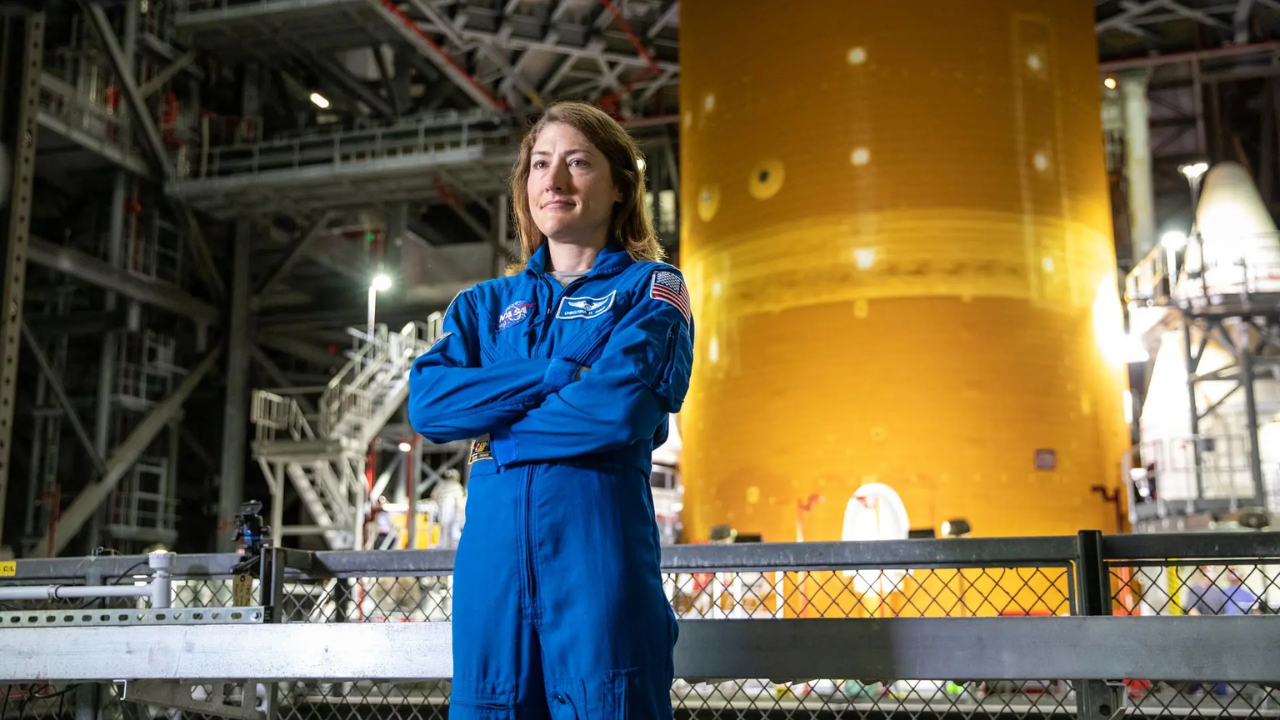
We glorify the people strapped inside the metal tube, but we often forget the architects who keep them alive. Christina Koch spent nearly a year orbiting Earth and flew around the Moon on Artemis II, cementing her status as one of the most capable astronauts of our generation. Now, she is trading her flight suit for a desk. Starting November 1, Koch takes over as NASA's acting deputy chief engineer, stepping in as Katherine Van Hooser retires after more than thirty-five years of service.
This move comes with a heavy bureaucratic and professional price. By accepting this elite management post, Koch transitions to management astronaut status, ending her eligibility for future spaceflight assignments. For space enthusiasts who wanted to see her command a lunar landing, it feels like a bitter pill. But looking closer at NASA's current trajectory, putting an engineer who has actually lived in space at the head of technical standards is a brilliant chess move.
What This Role Actually Means for Space Exploration
People see "deputy chief engineer" and assume it is a quiet desk job filled with endless paperwork and budget meetings. It is anything but that. Koch will directly oversee technical standards, engineering excellence, and mission readiness across crewed and robotic programs. When hardware fails or safety margins shrink, her office is where the final technical sign-offs happen.
Think about what NASA is trying to accomplish right now. The agency isn't just flying low Earth orbit loops anymore. Artemis missions are pushing toward sustainable lunar habitation, commercial space station transitions, and eventual crewed flights to Mars. Having an administrator like Jared Isaacman point out that Koch has seen systems work both on the blueprint and in orbit matters immensely. She understands the brutal reality of a thermal control loop failing at three in the morning because she has literally lived inside those pressurized tin cans.
The Cost of Moving From Cockpit to Management
Astronauts dream of flying until the medical board bars the door. Walking away from active flight status is not a decision anyone makes lightly. Koch spent years training for extreme environments, from scientific field deployments in Antarctica and the Arctic to developing instruments at the Goddard Space Flight Center and the Johns Hopkins University Applied Physics Laboratory.
By taking the deputy chief engineer position, she closes the door on piloting future lunar landers or commanding deep space habitats. Yet, the talent pipeline inside human spaceflight often faces a bottleneck. We produce phenomenal pilots, but we rarely put veterans of actual long-duration flight into high-level engineering oversight roles where they can rewrite the rulebooks. Her background includes three degrees from North Carolina State University—two bachelor's in electrical engineering and physics, plus a master's in electrical engineering—giving her the academic foundation to match her field experience. When North Carolina State dedicated Engineering Building II as Koch Hall, they honored someone who understood theory and practice equally. Now, the entire space agency gets to benefit from that exact mindset.
Inheriting a Legacy of Rocket Engines and Thermal Loops
Katherine Van Hooser leaves behind massive shoes to fill. Starting at Marshall Space Flight Center in 1991, Van Hooser built her reputation on liquid rocket engine turbomachinery, serving as chief engineer for the space shuttle main engine through its final twenty-one flights. She later acted as the first chief engineer of the Space Launch System Liquid Engines Element.
Koch inherits an engineering culture built on extreme conservatism and redundancy. When you are launching human beings past the Van Allen belts, a single miscalculation in a weld or a software handshake means catastrophe. Koch steps into this lineage at a time when commercial partners are moving fast and legacy agencies are trying to keep pace without cutting corners.
You can build all the rockets you want, but if the technical review boards are weak, missions fail. Putting someone with Koch's operational pedigree at the helm sends a clear message that safety and rigorous engineering standards remain non-negotiable, even as the cadence of launches accelerates. She won't be looking out the window at the blue curve of Earth anymore, but every spacecraft that clears the launch tower from now on will carry her fingerprints.