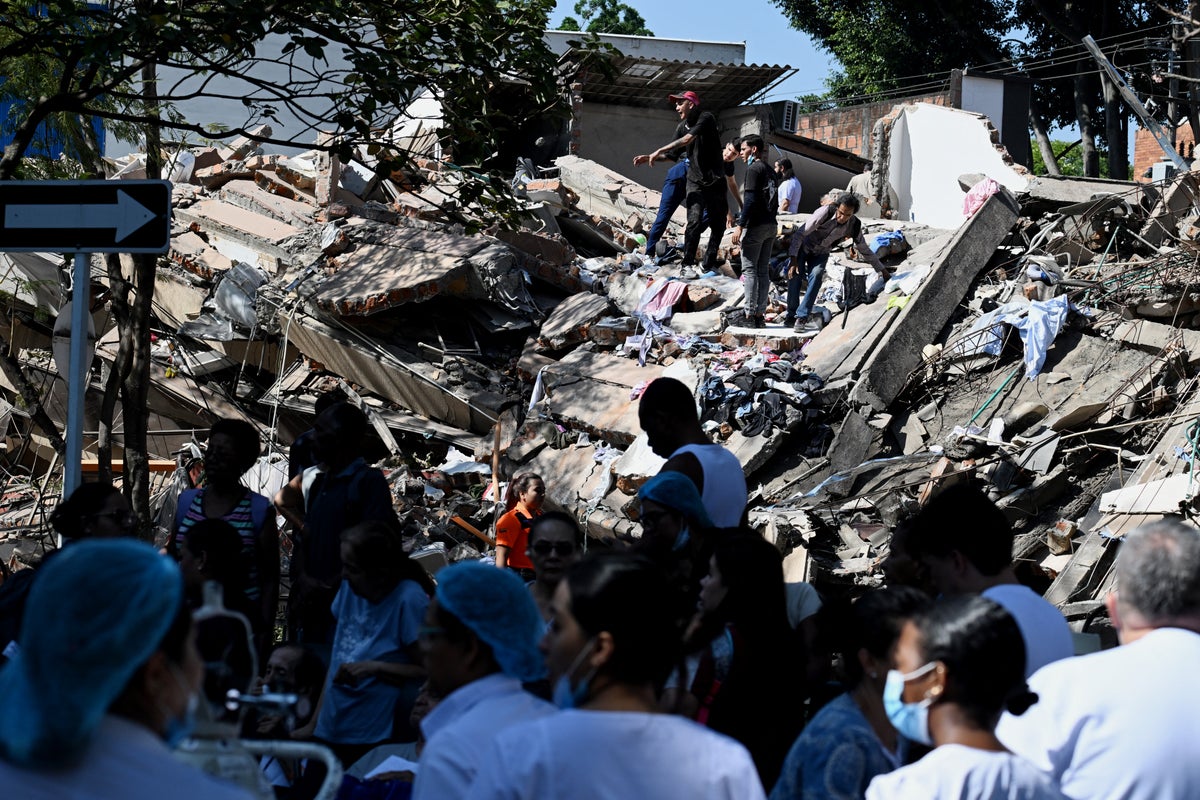
The ground gave way without warning on a Monday morning, sending shockwaves across western Colombia that rattled high-rises in Bogotá and triggered immediate panic from Cali to Quibdó. A violent 7.4-magnitude earthquake struck near the remote community of San José del Palmar in the Chocó region, leaving dozens dead, trapping residents under heavy concrete, and forcing a massive emergency response.
If you're trying to figure out what actually happened on the ground, you aren't getting the full picture from standard breaking news updates. Let's break down the reality of this disaster, why the damage spread so far, and what it means for the region moving forward.
The Epicenter and the Immediate Impact
The U.S. Geological Survey registered the tremor at an intermediate depth of roughly 66 to 70 miles, with its epicenter located about 250 miles west of Bogotá. Because of the depth, the seismic energy traveled massive distances, resulting in strong shaking felt by over ten million people.
Cities in the coffee region and Pacific coast took the heaviest blow. In Pereira, a section of the Matecaña International Airport passenger terminal roof collapsed, and structures crumbled into dense plumes of gray dust. In Manizales, a tower of the prominent neo-Gothic cathedral gave way, crashing down onto the nave. Down south in Cali, Mayor Alejandro Eder confirmed that at least twenty buildings collapsed immediately, leaving emergency responders scrambling to dig people out of the rubble.
Chocó Governor Nubia Carolina Córdoba-Curi confirmed serious injuries and structural devastation in the regional capital of Quibdó. As one of Colombia's historically underserved areas, the region faced immediate communication blocks and logistical nightmares as rescue teams tried to reach remote valleys cut off by landslides.
Why the Damage Spread Across Multiple Cities
People always ask how a quake centered in a small town like San José del Palmar can wreak havoc hundreds of miles away. It comes down to geology and geography. Colombia sits directly atop the infamous Pacific Ring of Fire, a massive arc defined by relentless tectonic friction.
The country's Andean geography plays a huge role too. Cities like Manizales are built directly into steep, landslide-prone mountain ridges. When an intermediate-depth earthquake hits, the seismic waves amplify across specific soil compositions and mountain slopes, causing older brick and masonry buildings to fracture instantly. While modern high-rises in Bogotá mostly suffered superficial cracks and evacuated safely, older infrastructure in western departments buckled under the horizontal shearing forces.
The Regional Anxiety After Venezuela
This disaster didn't happen in a vacuum. It hit just weeks after neighboring Venezuela suffered catastrophic back-to-back earthquakes of 7.2 and 7.5 magnitudes that killed thousands.
While those Venezuelan quakes were much shallower and caused localized total destruction, Monday's tremor in Colombia added immense psychological weight to a continent already on high alert. Newly inaugurated President Abelardo de la Espriella stepped into a national crisis on his first full business days in office, immediately establishing a Unified Command Post and heading directly to the affected zones to oversee relief operations. International allies, including the United States and Israel, quickly offered emergency support and structural rescue assets.
What Happens Next
Search and rescue operations remain active across Cali, Pereira, and the rugged Chocó terrain. Airports in several regional hubs including Manizales and Quibdó suspended operations temporarily while civil aviation authorities cleared runways and inspected terminal safety.
If you're tracking recovery efforts or looking to support humanitarian channels, focus on local civil defense organizations and verified municipal updates. The true toll of this disaster is still being tallied as crews push past blocked roads to reach isolated mountain communities.


