You think you know how local disputes escalate, but reality on the ground moves faster and hits harder than distant headlines suggest.
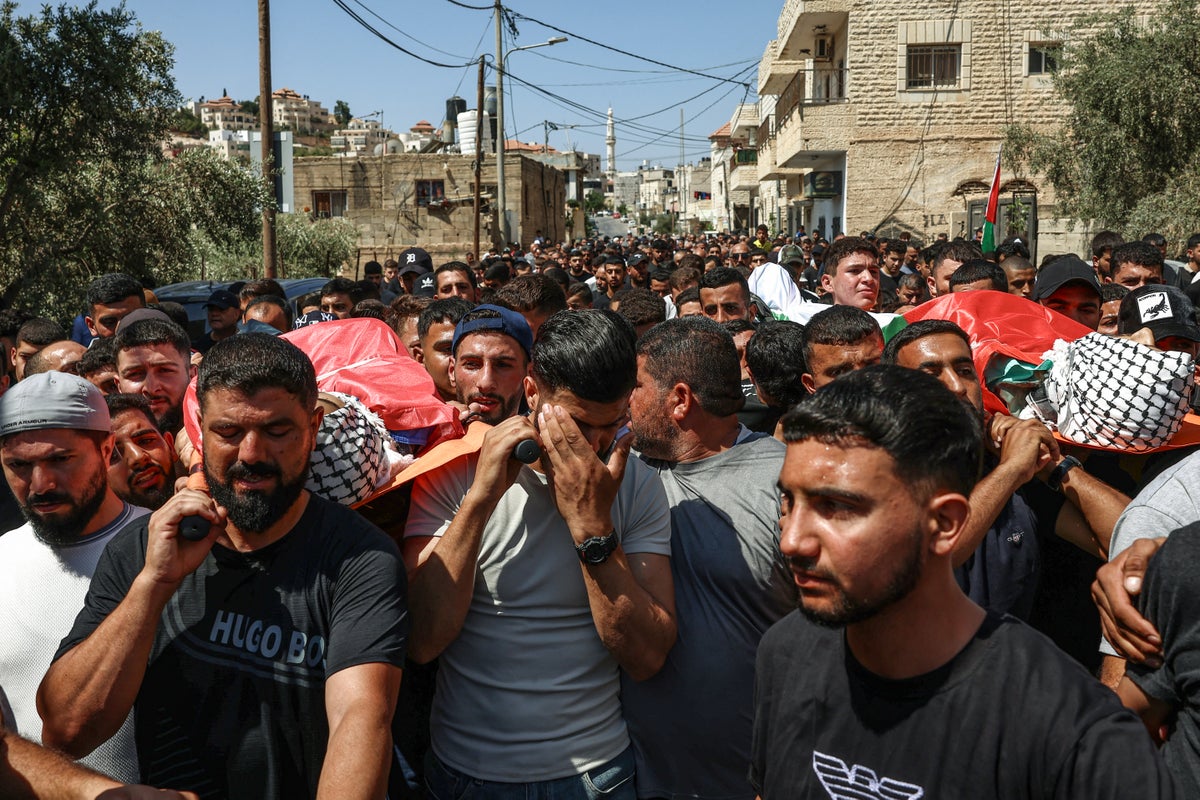
Take the recent events in the occupied West Bank village of al-Mughayyir near Ramallah. Two young lives ended over livestock. Khalil Abu Alia, a 16-year-old student, and Omar al-Nassan, 19, were shot dead when settlers—backed by military and police escorts—entered the village to take sheep from a local home. No official proof of ownership was presented. Just force, a group of armed arrivals, and the immediate eruption of a fatal confrontation.
If you want to understand why West Bank violence keeps spiraling out of control, you have to look past the abstract politics and examine the everyday mechanics of land and resource seizure.
The Anatomy of a Routine Escalation
It starts quietly. Settlers arrive at the edge of a Palestinian village under the watchful protection of military personnel. They claim ownership of local resources, whether it is grazing land, olive groves, or livestock. In al-Mughayyir, the target was sheep.
When villagers try to push back, grabbing whatever comes to hand—stones, cinder blocks, or shouts of protest—the response is swift and lethal. According to local accounts gathered by human rights monitors and international journalists, snipers climbed rooftops. Abu Alia was struck on the doorstep of his own home. Al-Nassan took two bullets, the final one through his back. Both bled out before reaching a hospital.
The official military explanation follows a predictable script. Troops claimed they fired on "key instigators" during a violent disturbance. But that framing ignores the baseline reality: armed actors entering private community spaces uninvited, backed by state firepower.
The Numbers Behind the West Bank Crisis
Statistics rarely capture human grief, but they reveal a grim structural trend. According to the United Nations Office for the Coordination of Humanitarian Affairs (OCHA), at least 79 Palestinians, including 19 children, have been killed in the West Bank by Israeli settlers or forces since the beginning of the year.
That is not a random spike. It is a sustained trajectory.
Teachers at local schools are preparing for a semester marked by empty desks. Waheed Abu Naim, a teacher at the al-Mughayyir boys school where Abu Alia was enrolled to start grade 11, noted that multiple students from a single school have now lost their lives to ongoing military and settler raids.
"We don't know how long these crimes are going to continue," Abu Naim shared with reporters. Opening a school year used to mean buying notebooks and organizing schedules. Now it means running security drills and grieving teenagers.
Why Property Disputes Are the New Frontline
Land acquisition in the West Bank has shifted from massive bureaucratic land grabs to direct, localized friction. Rights groups point out that pushing settler outposts right to the edge of Palestinian villages serves a strategic purpose. It creates constant friction points.
When livestock or land is contested, it triggers immediate local resistance. That resistance provides the justification for military intervention, leading to property loss, displacement, and casualties. It is a feedback loop where everyday rural life becomes a combat zone.
International reactions remain trapped in verbal condemnation. Officials talk of policy resets and potential sanctions on goods originating from settlements, but ground realities move too quickly for diplomatic timeouts. Every time a checkpoint expands or a group of settlers moves into a village perimeter, the temperature rises.
Pay attention to what happens next in these rural pockets. That is where the actual future of the region is being decided, one disputed pasture at aleece and one funeral at a time.