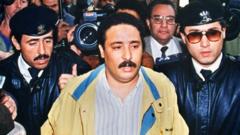
Al Amin Khalifa Fhimah is dead at 70. If that name doesn't immediately ring a bell, his association with the worst terrorist attack on British soil certainly will.
Fhimah was the Libyan man who stood trial alongside Abdelbaset al-Megrahi for the 1988 bombing of Pan Am Flight 103. While Megrahi went down for the murder of 270 people, a special panel of Scottish judges sitting in the Netherlands cleared Fhimah of all charges in 2001. His passing closes a major chapter in one of the most contentious intelligence mysteries of the modern era.
The Passing of an Acquitted Figure
Libyan Airlines confirmed Fhimah's death through a public statement posted online, offering condolences to his family. For decades, he lived quietly in Tripoli after returning home from his historic trial acquittal.
Back in 1991, both Fhimah and Megrahi were formally indicted by British and American authorities. Investigators pointed fingers at Fhimah because of his role as the Libyan Airlines station manager in Malta. Prosecutors claimed he helped tag the suitcase that carried the explosive device.
The court didn't buy the case against him. Evidence showed he wasn't even on the island during critical windows, and the prosecution failed to prove his direct complicity beyond a reasonable doubt. Megrahi wasn't so fortunate. He served years in a Scottish prison before his controversial compassionate release due to terminal cancer in 2009, dying in Libya three years later. With Fhimah's death, both men originally accused at the center of the international storm are gone.
The Unresolved Shadows of Pan Am 103
People often assume the Lockerbie case is fully wrapped up because convictions happened years ago. That assumption falls apart under scrutiny.
The bombing of Pan Am Flight 103 on December 21, 1988 remains a painful scar. The plane broke apart over the Scottish town of Lockerbie, killing everyone on board and 11 people on the ground. Families of the victims spent decades fighting for total accountability. They knew deep down that a two-man conspiracy theory didn't explain the vast web of state-sponsored operations during the late Cold War.
Skepticism surrounding the official narrative persisted long after the trial in the Netherlands. Critics argued that intelligence agencies suppressed vital evidence. Others pointed out that alternative theories involving different militant factions were never fully pursued in open court. Fhimah walked free, but the cloud of suspicion never entirely evaporated for many observers who watched the legal drama unfold.
Where the Legal Battle Stands Today
Legal proceedings related to the tragedy haven't actually stopped. Think the book is shut? Think again.
Another individual, Abu Agila Masud, faces trial in the United States for allegedly constructing the exact bomb that detonated inside the aircraft. Legal hurdles and repeated schedule shifts continue to plague that prosecution. Jury selection faced fresh delays, proving that the echoes of 1988 still reverberate through modern courtrooms.
Fhimah takes his secrets to the grave. Whether future court dates in Washington unearth new truths about how state intelligence apparatuses operated remains to be seen. For now, history records Fhimah as a man who beat the highest legal stakes of his generation, only to watch the world continue debating his true level of involvement until his final breath.


