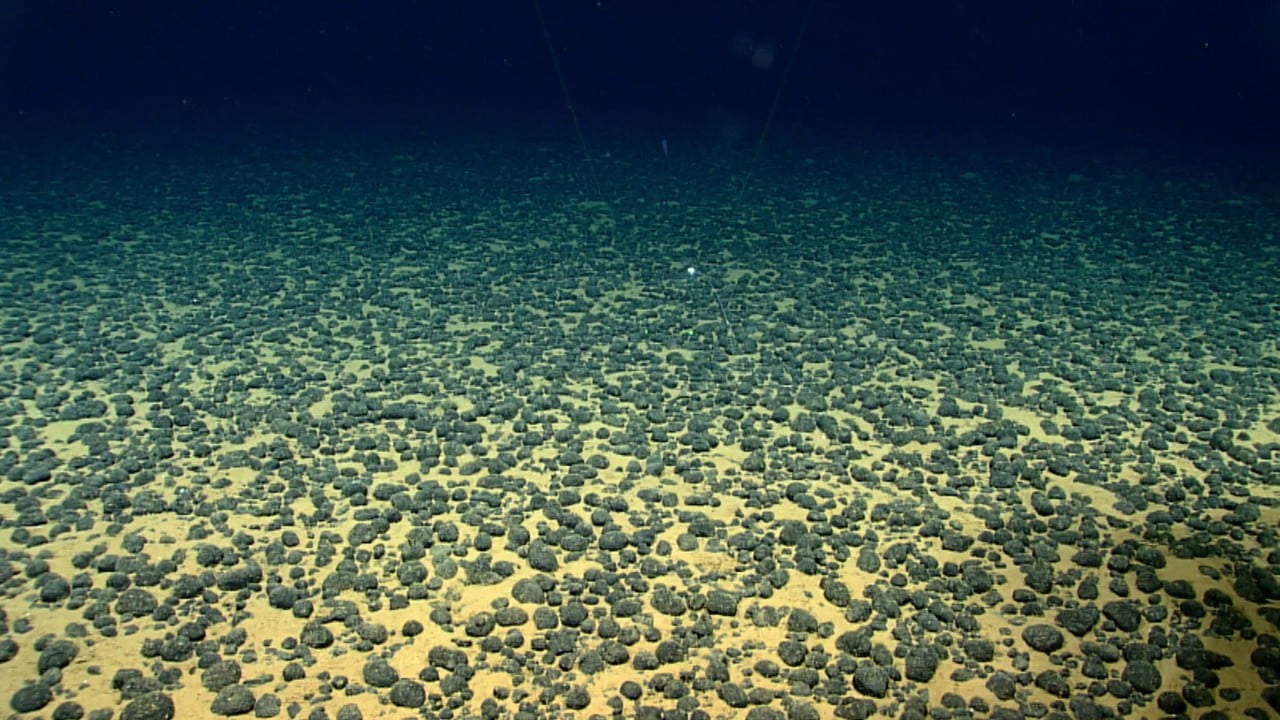
Deep beneath the Pacific Ocean, hidden inside the sediment of the world's most lucrative metal deposit, a Chinese research team just found an alien world of microbes. They pulled up 11,742 distinct viruses from the Clarion-Clipperton Zone. Over 99 percent of them had never been seen by science before.
If you think the deep sea is just a barren wasteland of mud and metal nodules, think again. It is a dense, hyper-complex biological soup. And our race to harvest the ocean floor might be colliding with ecosystems we barely understand.
Inside the Clarion Clipperton Zone Discovery
The Clarion-Clipperton Zone sits between Hawaii and Mexico. It is famous for two things. First, it holds massive reserves of polymetallic nodules packed with cobalt, nickel, copper, and manganese. Second, it is a pitch-dark, high-pressure abyss that defies easy study.
When researchers analyzed sediment core samples from this vast fracture zone, they didn't just find a few stray bacteria. They uncovered a staggering viral diversity. Out of 11,742 viruses logged, 11,662 were entirely new to humanity.
These aren't the kind of viruses that make human headlines for causing pandemics. They are mostly bacteriophages—viruses that infect bacteria and archaea. In the deep ocean, they run the show. They control microbial populations, recycle nutrients, and drive the biochemical cycles that keep the deep-sea biosphere ticking.
Why These Deep Sea Viruses Look Different
Here is what shocked the researchers. These newly discovered viruses share almost nothing in common with viral strains found in other ocean depths or surface waters. They are specialized locals. Evolution down there takes a completely different path.
Think about the extreme conditions. The pressure is crushing. Sunlight is nonexistent. The sediment is soaked in heavy metals. To survive, these viruses and their microbial hosts had to adapt in weird ways. Some scientists believe these deep-sea viruses might actually equip their hosts with genetic tools to handle metal toxicity.
It is a brutal, fascinating environment. You have microscopic entities swapping genes to tolerate high concentrations of copper and nickel, living in a zone that commercial mining companies are desperate to dredge.
The Mining Rush Versus Ecological Reality
Demand for transition minerals is exploding. Electric vehicle batteries need nickel, cobalt, and manganese. Mining companies look at the Clarion-Clipperton Zone and see trillions of dollars in metallic nodules just sitting on the seabed, waiting to be scooped up by remote-controlled robotic tractors.
Proponents of deep-sea mining argue it has a lower carbon footprint than land-based mining. They claim scraping nodules off the mud is cleaner than digging massive open-pit mines in rainforests or inhabited regions.
They are missing the biological picture.
Stirring up the seabed doesn't just kick up dust. It disrupts complex microbial networks that have spent millions of years stabilizing the deep-ocean floor. If you wipe out or destabilize these microbial hosts and their viral regulators, you could trigger a cascading collapse in benthic food webs. We don't know what happens when you introduce industrial heavy machinery into a pristine, virus-rich abyss.
What Comes Next for Deep Ocean Regulations
Governments and international bodies are scrambling to set rules for deep-sea mining before commercial extraction ramps up entirely. But regulations are lagging behind basic science. Every new expedition reveals thousands of species we didn't know existed a month prior.
You can't properly regulate an industry when you haven't even finished cataloging the microscopic life forms living in the dirt you plan to vacuum up.
The discovery of 11,662 new viruses in a single mining prospect zone changes the math. It proves the deep ocean is not a dead desert. It is a living archive of evolutionary history. Before mining companies send heavy machinery down to rip up the metal deposits, we need to pause and look at what we are about to destroy.
Stop treating the deep seabed as an empty warehouse. It's a living ecosystem. And we are breaking it before we even know how it works.