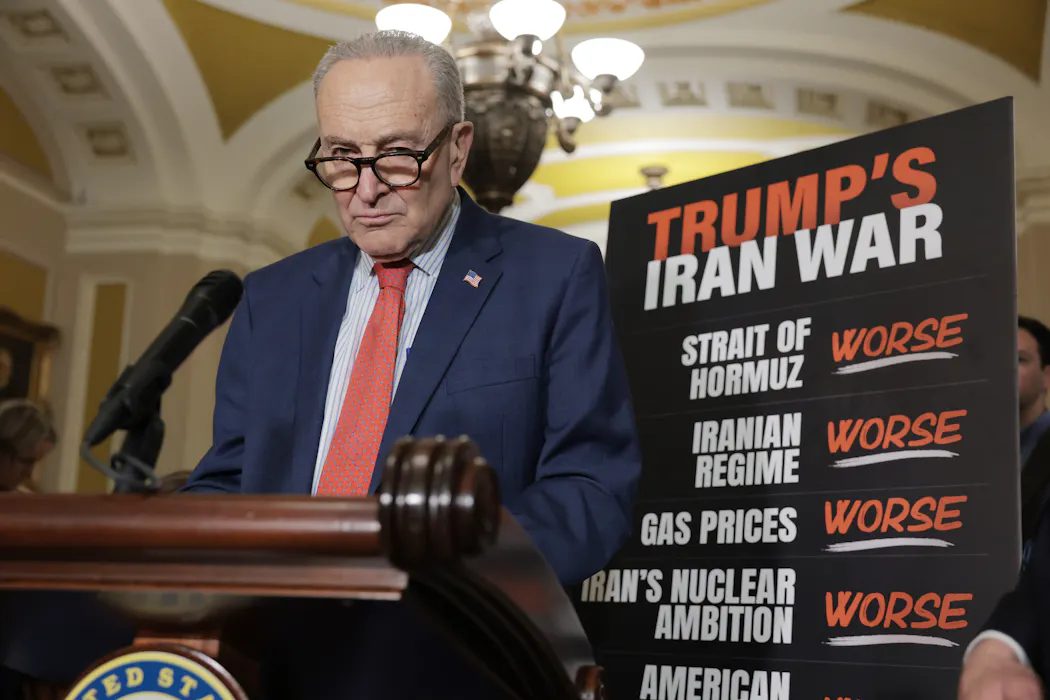
Wars don't start overnight. They creep up through a slow accumulation of threats, funding bills, and backroom authorizations. Right now, a lot of people are sweating the possibility of a direct military conflict between the United States and Iran under a renewed Donald Trump presidency. But executive power isn't absolute. If Democrats manage to control Capitol Hill, they hold a very specific set of constitutional levers that can slam the brakes on an administration marching toward conflict.
Most political commentary misses the mechanics of how this works. People think Congress can just wave a magic wand and issue a cease-and-desist order. It doesn't work that way. Stopping a war requires starving the machine of cash, using procedural blockades, and weaponizing committee oversight.
The Power of the Purse Is Your Real Weapon
The executive branch can move troops and posture carriers in the Gulf, but it can't sustain a prolonged military campaign without funding. This is where congressional control changes the entire math.
Article I of the Constitution gives Congress the sole power to appropriate money. If Democrats hold a majority in either the House or the Senate, they control the committee gavels that write the defense budget. They can strip offensive military funding out of appropriations bills. They can attach riders that explicitly forbid the Department of Defense from using funds for hostilities against Iran without prior congressional approval.
Presidents hate vetoing defense authorization bills, but they'll do it if pushed. However, overriding a veto or letting a continuing resolution stall creates a fiscal crisis that forces the administration to back down. Money talks. Without it, a war stalls out before it leaves the runway.
Revoking Blank Check Authorizations
We're still living under the ghost of past authorizations for use of military force. Presidents love stretching decades-old resolutions to cover completely unrelated conflicts.
If Democrats control Congress, they can introduce and pass a joint resolution specifically targeting Iran, or they can repeal the 2002 Iraq AUMF and any lingering emergency powers that an executive might try to stretch.
Passing a War Powers Resolution is another classic move. Under the War Powers Act of 1973, Congress can direct the president to remove US armed forces from hostilities if those forces haven't been authorized by a declaration of war or specific statutory authorization.
The catch? Veto overrides require a two-thirds majority in both chambers. That's a high bar. But even forcing a floor vote puts vulnerable lawmakers on the record. Public pressure moves needles. When constituents realize their representative voted to back an unauthorized foreign war, political survival kicks in.
The Oversight Grind
Hearings might sound boring, but they grind executive momentum to a halt. Control of congressional committees means subpoena power.
Imagine the House Foreign Affairs Committee or the Senate Foreign Relations Committee launching non-stop investigations into intelligence assessments, cyber operations, and back-channel communications with regional proxies. Whistleblowers get platforms. Classified memos get leaked or legally subpoenaed into the public eye.
When an administration has to spend half its waking hours answering subpoenas and defending its rationale in televised hearings, executing a stealth military campaign becomes a public relations nightmare. Bureaucrats drag their feet. Lawyers demand sign-offs. The sheer friction of congressional oversight slows down a fast-moving war machine.
Controlling Confirmations
If the Senate is in Democratic hands, the confirmation process for key national security posts becomes a choke point.
Ambassadors, undersecretaries of defense, and intelligence chiefs have to face the Senate. Lawmakers can stall nominations indefinitely, demand policy commitments in exchange for votes, or block hawks who advocate for preemptive strikes. An administration trying to manage a tense standoff with Iran needs its team in place. Depriving them of Senate-confirmed leadership creates institutional paralysis.
Why This Isn't a Guarantee
Let's be real for a second. Politics is messy. Even if Democrats control Congress, party unity is notoriously fragile. There are always hawkish Democrats who vote with Republicans on national security issues. Whip counts matter. If a handful of moderate Democrats break ranks, the majority vanishes.
Furthermore, presidents have massive inherent powers as Commander-in-Chief to repel sudden attacks or protect American personnel abroad. An administration can easily manufacture or exaggerate a provocation in the Strait of Hormuz, claiming self-defense to bypass Congress entirely in the opening hours of a conflict.
Congress doesn't stop a war by being polite. It stops a war by making the political and financial cost too high for the White House to bear. If Democrats want to block a confrontation with Tehran, they have to use every dirty procedural trick in the book, hold the budget hostage, and drag every secret motive into the sunlight.
The tools are sitting right there in the rulebook. Whether lawmakers have the spine to use them is a completely different story.