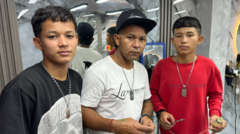
Life doesn't care about your quota of suffering. You pack up what remains of your belongings, cross a border, and try to build a safe routine. Then the ground splits open again.
Imagine surviving a catastrophic natural disaster that flattens your hometown, forces you to abandon your country, and pushes you into an unfamiliar land. You think the worst is behind you. You are wrong. For teenagers who fled Venezuela following the deadly late-June quakes, safety turned out to be short-lived. They barely settled in Colombia before a massive 7.4-magnitude earthquake struck western Colombia, throwing their fragile lives back into chaos.
The Brutal Reality of Displacement
Migration is never easy. When you pack your entire existence into a single backpack, you carry trauma along with your clothes. The teens who survived the Venezuelan tremors watched their neighborhoods turn into rubble. They experienced the paralyzing terror of concrete collapsing and dust choking the air.
Crossing into Colombia meant seeking refuge. It meant finding temporary shelter, trying to enroll in local schools, and figuring out how to eat tomorrow. Host communities stretched thin resources to help them. But geology has no sympathy for refugee status.
When the earth shook across cities like Pereira, Cali, and Quibdo, these young people found themselves reliving their deepest nightmares. The sound of cracking walls is unmistakable. The panic is universal. For someone who already survived a disaster zone, hearing the earth roar a second time breaks something fundamental inside.
Why Border Regions Amplify the Crisis
Disaster response in places like the Choco region or the coffee-producing mountains of Risaralda presents massive logistical hurdles. Much of Choco sits deep in dense jungle, reachable only by boat or plane. Infrastructure is fragile even on a normal Tuesday.
When a major quake hits, local authorities struggle immediately. Communication lines go dead. Roads block up with landslides. For displaced youth living in informal settlements or cheap rented rooms, these vulnerabilities hit hardest. They often live in substandard housing built on unstable slopes or riverbanks because that is all they can afford.
Earthquakes do not treat everyone equally. Wealth buys reinforced concrete and secure engineering. Poverty buys exposure.
The Psychological Toll on Young Survivors
We talk endlessly about physical reconstruction. We count collapsed bridges, destroyed homes, and hospital admissions. We rarely talk about the invisible fracture.
When you strip a teenager of their home, their school, and their friends, you test their resilience. When you do it twice in two months, you risk breaking an entire generation. These kids aren't just dealing with scraped knees and dust in their eyes. They are managing hypervigilance. Every truck rumbling down the street feels like another tremor. Every sudden noise triggers a survival response.
Mental health support in migration contexts is practically non-existent. Aid organizations focus on food, clean water, and medical triage. Therapy is a luxury reserved for stable societies. Yet, ignoring the psychological weight guarantees long-term failure.
What We Need to Do Differently
If you want to understand how regional crises compound, look at how humanitarian aid operates. It is reactive, fragmented, and chronically underfunded.
Communities hosting refugees need structural reinforcement, not just temporary tents. Building codes must be enforced strictly in areas prone to seismic activity, especially where low-income migrants settle. Governments and international bodies must integrate disaster risk reduction with migration management. You cannot separate housing safety from refugee policy.
Stop viewing migration as a static event where people simply arrive and stay put. Human movement intersects with climate change, geological hazards, and economic collapse. Ignoring the overlapping risks leaves the most vulnerable exposed to the next inevitable shock.
Support local grassroots organizations that understand the ground realities. Donate to mutual aid groups working directly in affected Colombian departments rather than waiting for massive international bureaucracies to mobilize slow aid. Pay attention to the human stories behind the statistics, because the ground will keep moving, and nobody should have to survive the unthinkable twice.