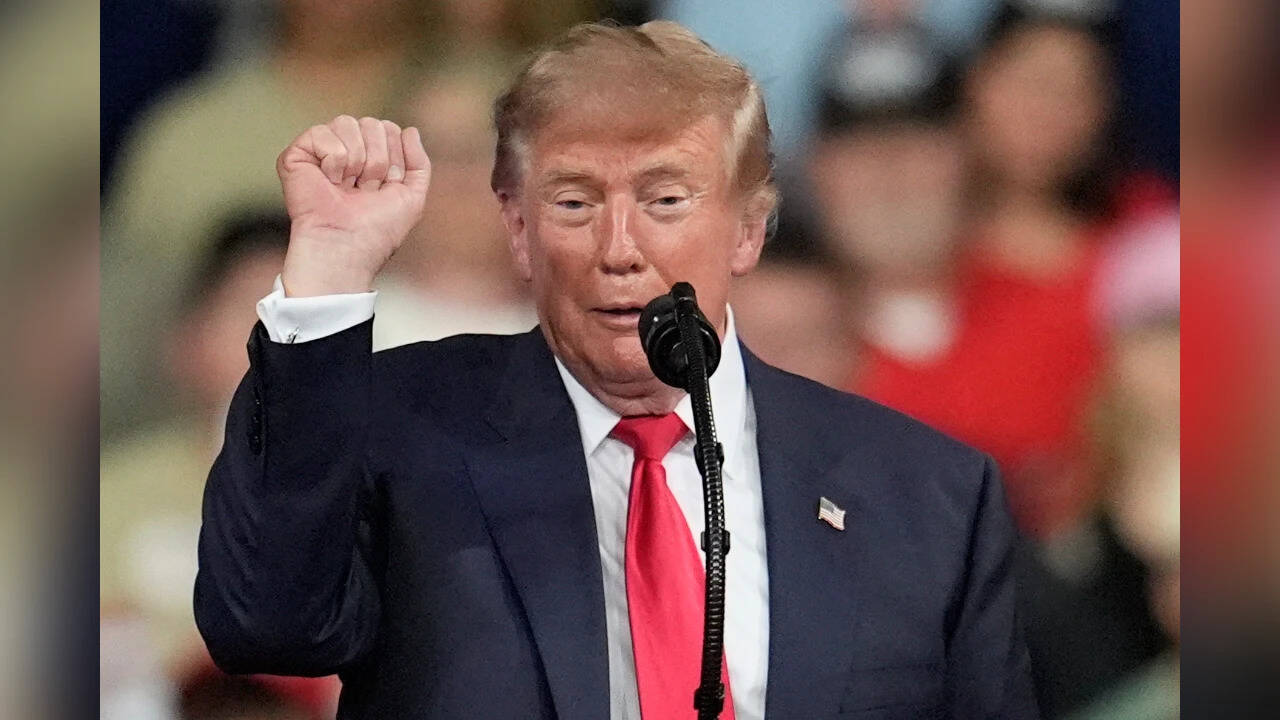
Donald Trump loves a good real estate analogy. When he took the stage at a campaign rally in Perry, Georgia, he didn't hold back. He told the crowd that the United States had secured both Greenland and Venezuela in what he called the greatest real estate deal in history.
If you take those words literally, you will be deeply confused. Neither Greenland nor Venezuela belongs to the United States, and neither territory has undergone any legal transfer of sovereignty. Yet, understanding why he phrases it this way matters because it reveals how political rhetoric collides with hard geopolitical reality. Let's look past the hyperbole and examine what actually happened behind the scenes.
What Trump Actually Meant by the Greenland and Venezuela Deals
When politicians talk about acquisitions, they rarely mean a literal title deed. In Greenland's case, recent diplomatic maneuvers have significantly expanded American footprint and military access without changing the flag flying over Nuuk.
Washington, Denmark, and Greenland reached a tripartite security agreement. This framework allows the United States to potentially establish two additional military bases on the island, building upon the strategic foundation of the Pituffik Space Base (formerly Thule Air Base). For a strategic planner in the Pentagon, expanded radar capabilities, missile defense tracking for the proposed Golden Dome system, and mineral exploration rights look a lot like control, even if Danish sovereignty remains entirely intact.
Venezuela presents a completely different playbook. Following the dramatic events surrounding the removal of former leader Nicolás Maduro and subsequent diplomatic shifts involving interim President Delcy Rodríguez, Washington has heavily emphasized energy access. Trump has repeatedly pointed to Venezuela's massive oil reserves—often citing figures around 65 billion barrels of controlled potential—as an economic win for American interests.
The Reality Check Behind the Rhetoric
Real estate deals involve contracts, deeds, and clear ownership transfers. International diplomacy doesn't work that way.
Denmark's Ministry of Foreign Affairs made it abundantly clear that sovereignty over Greenland has not shifted. A separate memorandum of understanding signed between the US and Denmark regarding maritime industrial cooperation explicitly carved Greenland and the Faroe Islands out of its scope.
You have to look at the context of these statements. Trump was speaking at a high-stakes political rally ahead of the November congressional midterm elections. Framing complex defense pacts and oil negotiations as "real estate deals" is a rhetorical device designed to translate dense foreign policy into simple, transactional wins for everyday voters.
Why These Arctic and South American Moves Actually Matter
Stripping away the campaign trail exaggeration leaves genuine strategic shifts.
- Arctic Dominance: Greenland sits at a critical geographic junction. As ice recedes and shipping lanes open up, rival powers like Russia and China are eyeing northern routes. Securing expanded defense access ensures Washington keeps a tight grip on Arctic security.
- Energy Markets: Venezuela holds some of the largest crude reserves on earth. While infrastructure decay and years of underinvestment mean production is a fraction of its potential, any framework tying those resources closer to Western markets shifts global economic leverage.
Don't mistake campaign speeches for legal documents. The US didn't buy Greenland, and it didn't purchase Venezuela. But the underlying agreements show a aggressive push by Washington to lock down strategic resources and military positions across the Western Hemisphere and the Arctic.
Keep an eye on how these defense implementation talks actually pan out on the ground in Nuuk and Caracas over the coming months. That is where the real story is happening.