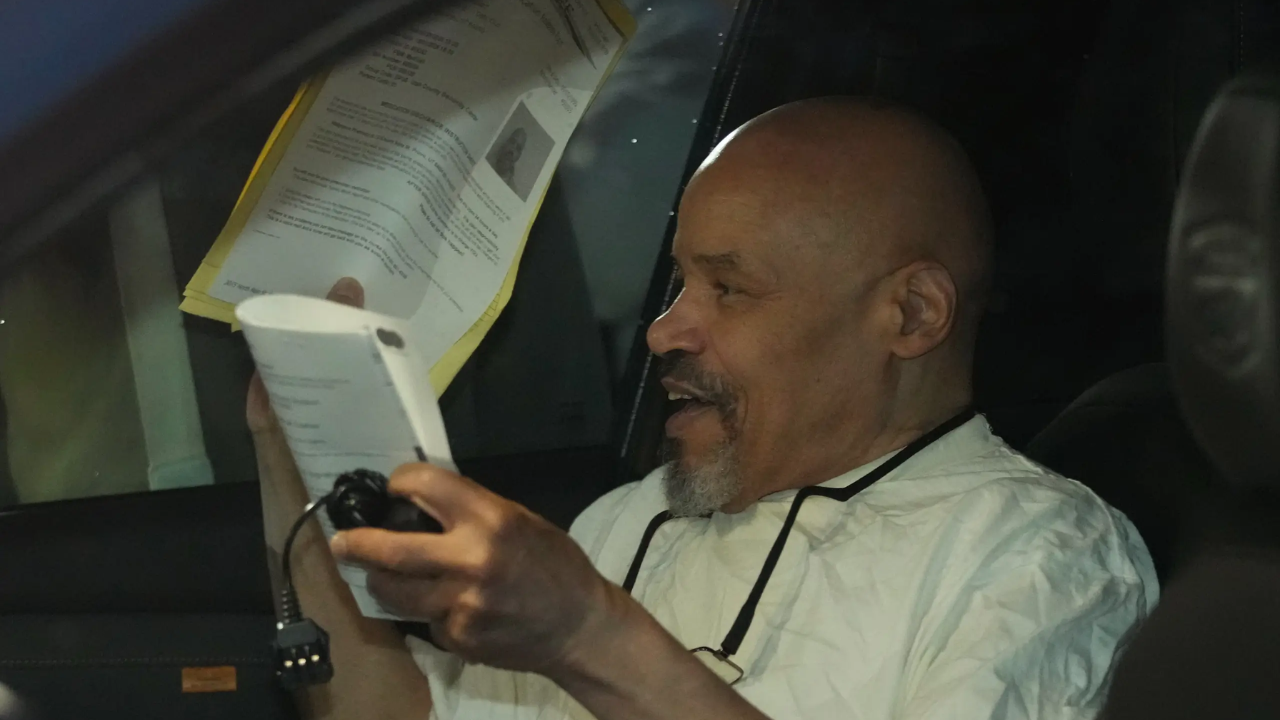
Forty-one years is a lifetime. Imagine losing every single moment between your twenties and your sixties over a crime you didn't commit, only for modern science to finally prove what you shouted from a jail cell decades ago.
Douglas Stewart Carter walked out of the Utah County Jail in Spanish Fork on a Monday evening, tasting freedom for the first time since 1985. A Utah judge ordered him released on bail after new DNA testing definitively excluded him from the bloody evidence left at the crime scene. But let's be honest: bail after four decades isn't justice. It’s a belated acknowledgment that the state's case was built on quicksand, coercion, and systemic misconduct. Learn more on a related topic: this related article.
If you're wondering how someone spends 41 years in prison on a murder charge without physical evidence, the answer lies in a dark era of aggressive interrogations and compromised witness testimony. Carter, who is Black, was originally sentenced to death for the 1985 killing of Eva Olesen, the aunt of the Provo police chief at the time. No fingerprints matched. No hair samples linked him to the house. Instead, prosecutors relied heavily on a signed confession pulled during an intense interrogation in Nashville, Tennessee, alongside testimony from two key witnesses who claimed Carter boasted about the crime.
Those witnesses lied. Years later, defense investigators tracked them down in Mexico, where both admitted under oath that local police officers had fed them details, handed out cash payments, covered utility bills, and threatened them and their children with deportation if they didn't point the finger at Carter. Further reporting by The Washington Post highlights similar perspectives on the subject.
The Scientific Proof That Finally Broke the Case
The legal walls around Carter's wrongful conviction began crumbling years ago, but the final blow came from the laboratory. Forensic reports processed by state prosecutors showed zero genetic match between Carter and the DNA found on the handle of the knife used in the attack. Blood found on a doorknob at the scene also excluded him entirely.
Faced with these results, Utah County prosecutors finally withdrew their notice to seek the death penalty. Judge Derek Pullan granted bail under strict conditions, including mandatory electronic GPS monitoring and a ban on contacting the victim's family. While the state still clings to the argument that a jury could weigh remaining circumstantial evidence, the core narrative used to put Carter on death row has dissolved.
Defense attorney Neal Hamilton didn't mince words about the horrific reality of the situation. He pointed out that if the state of Utah had rushed the execution years ago—as they aggressively tried to do—Carter would have been killed long before investigators uncovered the police misconduct. Now, at 71 years old, Carter is staying at an extended-stay residence near his son, Tyler Anger, who was adopted as an infant and only learned his father's true identity years later. Anger noted to reporters that his father hadn't even set foot on grass in 40 years.
The Long Road to Accountability
Wrongful convictions don't happen in a vacuum. They happen when police departments treat investigations like a race to secure any conviction rather than an objective search for truth. In Carter's case, the Utah Supreme Court formally overturned his conviction last year, explicitly citing widespread, intentional misconduct by investigators and prosecutors.
Yet, accountability remains agonizingly slow. While Carter tries to process decades of state-induced trauma, the victim's family is left grappling with unresolved grief and unanswered questions. During the bail hearing, relatives voiced frustration over the ongoing legal limbo, demanding to know who actually killed Eva Olesen. Defense lawyers have pointed toward alternative suspects from the original 1985 files—including eyewitness accounts of a white man fleeing the scene—suggesting that crucial leads pointing away from Carter were hidden or ignored from the start.
A two-month retrial remains provisionally scheduled for 2027, but defense teams are preparing formal requests to have all pending aggravated murder charges thrown out entirely.
What We Can Learn From This Miscarriage of Justice
If you follow wrongful conviction cases closely, patterns emerge that demand systemic reform. Here is what this case teaches us about the fragility of criminal justice:
- Coerced confessions destroy lives: Confessions obtained under extreme duress or far away from the jurisdiction of the crime are deeply unreliable. Interrogations must be recorded in full to prevent police coercion.
- Witness incentives corrupt outcomes: When law enforcement offers cash, utility help, or immigration threats in exchange for testimony, the resulting statements are toxic.
- Science offers a safety net, but too late: DNA testing is powerful, but it relies on samples being preserved and courts actually listening when new technology proves innocence. Forty-one years is an unforgivable delay.
Douglas Carter's release isn't a happy ending; it's a stark reminder of how easily the machinery of the state can crush an innocent person and look the other way for decades. The focus now must shift toward ensuring that the systemic failures which stole half a lifetime from a man are aggressively investigated and dismantled.