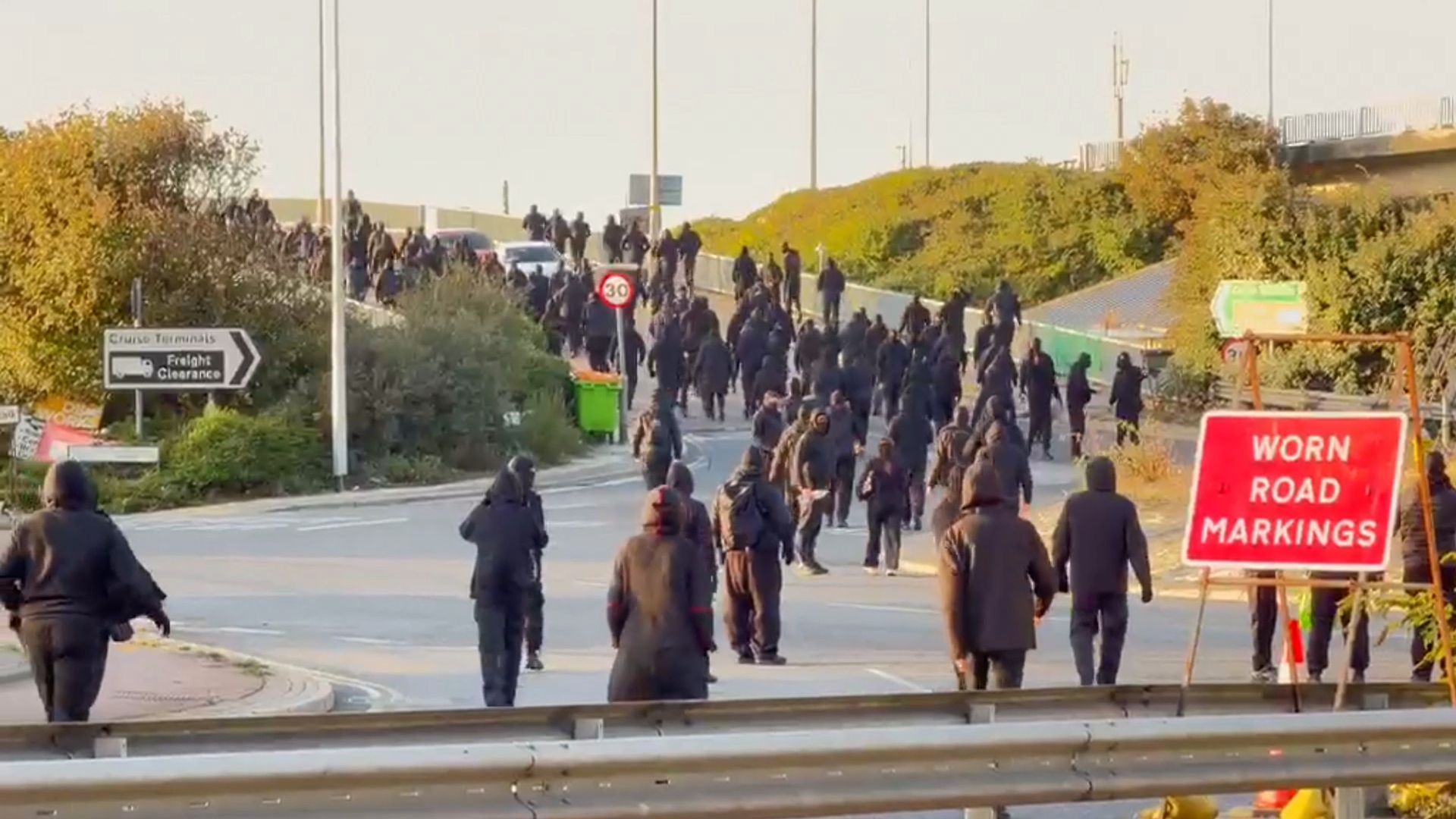
When hundreds of masked individuals clad in black blocked critical traffic routes into the Port of Dover, normal operations ground to an absolute halt. Holidaymakers, freight lorries, and cross-channel ferry services sat paralyzed. Yet, the real shock wasn't the disruption itself. It was how completely caught off guard local authorities appeared to be.
When a mob can successfully take over a major national infrastructure artery without immediate intervention, everyone starts asking tough questions. How did the police miss this? And why are radical networks operating with such apparent impunity?
The Anatomy of a Surprise Blockade
The demonstration materialized quickly on a Saturday morning. Up to three hundred protesters, many wearing balaclavas and dark clothing, formed human chains and stood across arterial roads leading to the Kent ferry terminals. Chants of "stop the boats" echoed across the tarmac as traffic backed up for miles.
Local representatives and council figures didn't mince words about the fallout. Chris Vinson, leader of the Conservative group on Dover District Council, pointed out that the blockade left ordinary drivers stranded for hours while police units scrambled to mount a coherent response.
What makes this worse is the coordination behind it. Senior figures within watchdog groups like Hope Not Hate quickly tied the mobilization to the Patriot Platform, a network spearheaded by Daniel Thomas, widely known as Danny Tommo. Thomas operates as a prominent associate of far-right agitator Tommy Robinson (real name Stephen Yaxley-Lennon). Shortly after the disruption cleared, Robinson and his associates took to social media channels to heavily imply and claim credit for organizing the logistical feat.
The Intelligence Gap That Left Kent Police Flat-Footed
Initially, Kent Police labeled the gathering a "spontaneous protest", suggesting they had no prior warning. That defense didn't hold up under scrutiny. Subsequent internal reviews and media reports revealed that the force actually received non-emergency intelligence late on the preceding Friday evening warning that a demonstration would hit the town.
That piece of information sat unassessed until it was too late. If proper protocols had been triggered immediately, commanders could have mobilized extra resources, blocked access routes, and prevented the blockade from choking off a vital international port.
This kind of oversight fuels public frustration. When intelligence units fail to connect dots sitting right in front of them, response times lag, and extremists exploit the vacuum.
Political Fallout and Double Standards
Politicians from across the spectrum condemned the tactics, though for different reasons. Business Secretary Jonathan Reynolds called out the severe disruption caused to local residents and trade. Meanwhile, local Labour MP Mike Tapp openly questioned whether standard intelligence protocols broke down entirely, demanding answers on why reinforcements weren't pre-deployed.
At the same time, civil liberties groups raised questions about selective policing. Sabby Dhalu from Stand Up To Racism pointedly asked why other activist groups or environmental blockaders face swift mass arrests and aggressive police clearings, while masked anti-migrant mobs managed to control a major highway corridor for hours with zero immediate arrests.
Reform UK figures weighed in as well, with high-profile party voices criticizing the blockade approach while acknowledging public anger over small boat crossings. Predictably, the debate quickly spiraled into wider arguments over face-covering bans in public spaces and how law enforcement handles ideological street movements.
Fixing the Response Protocol
If police forces across the UK want to regain public trust, they need to overhaul how they process late-night intelligence tips on weekends. Ignoring a raw tip because it arrives late on a Friday is operational negligence.
Law enforcement agencies must establish fast-track triage systems for social media intelligence and fringe group organizing. When extremist networks brag online about bypassing security, police cannot afford to be the last to know.
Review your local travel advisory routes if you commute through major transit hubs, and hold local authorities accountable when basic public safety protocols fail.