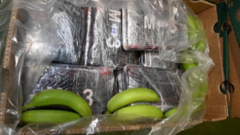
You walk into a grocery store, pick up a yellow bunch of fruit, and rarely think about how it crossed an ocean. Behind that basic supply chain lies a massive vulnerability exploited by international cartels. Border authorities recently intercepted a staggering £232m cocaine shipment hidden inside a commercial load of bananas at the London Gateway Port in Essex.
Let's look at why this keeps happening. Drug networks love using perishable goods like fruit for a very specific operational reason. High-volume cargo moves fast. Ports handle thousands of refrigerated containers every single day. Customs officials can't physically open every single box without destroying the commercial value of the cargo or completely gridlocking global trade.
The Logistics Behind Port Smuggling
Organized crime groups rely on what security experts call the "shield of normality." Bananas move by the millions from South America to European ports like London Gateway or Southampton. A 2.9-tonne shipment of narcotics blends right into the chaotic rhythm of international shipping containers.
When the National Crime Agency (NCA) and Border Force step in, they are hunting for needles in an ocean-sized haystack. In this particular Essex operation, officers uncovered nearly three tonnes of the drug packed neatly inside pallets. Nine men were arrested and subsequently bailed as investigations dug deeper into how the supply chain was compromised at the source.
The economics are simple. If a cartel ships ten containers and nine get caught, the profit from the single successful run can still cover their losses and fund the next attempt.
Why South American Fruit is the Preferred Vehicle
You might wonder why bananas specifically become the vehicle of choice time and time again. It comes down to shelf life and refrigeration. Bananas must travel in refrigerated containers—known as reefers—under strict temperature controls. They also require rapid clearance through customs to avoid rotting on the docks.
Cartels exploit this urgency. They use corrupt insiders at origin ports in South America to pack bricks of class A drugs directly into the pallet structures before the container doors lock and seals go on. By the time the ship reaches the UK or Europe, the illicit cargo is buried deep behind rows of legitimate fruit.
This isn't an isolated incident. Back in February 2024, authorities pulled off what was then a record-breaking bust at Southampton Port, seizing nearly six tonnes of cocaine hidden inside a banana cargo. Data from the Home Office shows that summer enforcement periods have netted over £1bn worth of these substances, proving that maritime trafficking routes remain primary highways for international syndicates.
How Border Enforcement is Fighting Back
Stopping this flow requires more than just luck at the docks. Intelligence sharing needs to happen upstream. Law enforcement agencies focus heavily on source countries in South America, working with local police to catch corrupted plantation managers, transport drivers, and port workers before containers ever touch a cargo ship.
Dave Phillips, a senior investigating officer with the NCA, pointed out the core objective of these massive seizures. Depriving criminal groups of multi-million-pound profits stops that money from fueling wider organized crime networks. Yet, the sheer volume of global trade means smugglers will keep trying new variations of the exact same trick.
Keep an eye on how ports adopt smart-scanning technology and AI-driven container profiling over the next few years. Manual checks and sniffer dogs alone can't keep pace with global shipping volumes. Until automated non-intrusive scanning becomes universal across every major transit hub, the humble fruit box will remain a prime target for high-stakes international smuggling.
£230m cocaine shipment hidden in bananas seized at port by Border Force
This news report details the recent £232 million drug bust by the National Crime Agency and Border Force at London Gateway Port.


