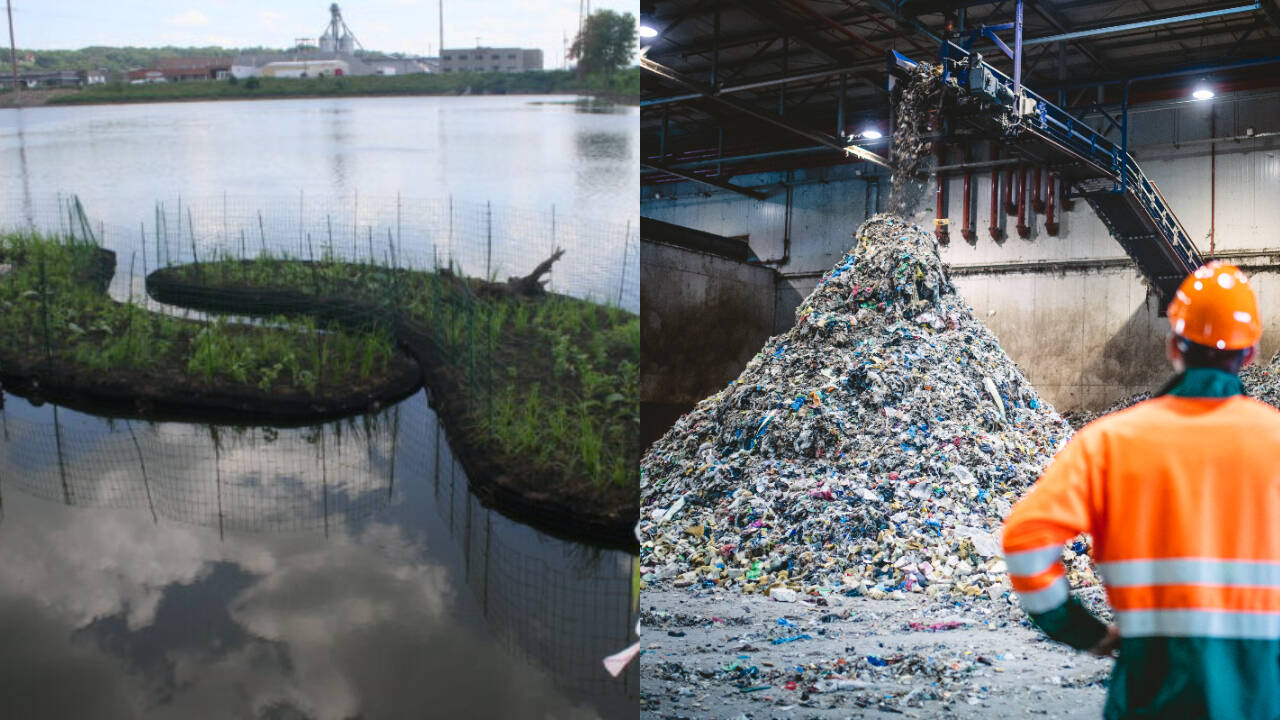
Most cities solve flood problems with concrete walls, heavy machinery, and deep drainage pipes. Dubuque took a different path. Instead of burying a historic waterway deeper underground, the city unpaved a forgotten creek. Then, they built floating ecosystems out of roughly 67,000 recycled water bottles.
It sounds like a gimmick. Honestly, it is an engineering choice rooted in practical urban ecology.
The Problem With Urban Creeks
Urban streams take a brutal beating. When rain hits asphalt and parking lots, it rushes into local waterways all at once. This sudden surge causes severe erosion, washes out riverbanks, and dumps excess nutrients like nitrogen and phosphorus into the water. Left unchecked, these nutrients fuel massive algae blooms and create dead zones downstream.
Traditional civil engineering relies on hard armor—riprap, concrete channels, and steel walls. These fixes move water quickly, but they sterilize the environment. They destroy fish habitats, block wildlife, and turn living creeks into sterile drainage ditches.
Dubuque needed flood protection for the Bee Branch Creek corridor, but city planners wanted something that functioned like a real natural ecosystem.
Turning Waste Into Wetland Foundations
The core structure of the floating project relies on recycled, BPA-free PET plastic—the equivalent of about 67,000 discarded drinking bottles. Manufacturers compressed this material into buoyant mats that serve as artificial foundations.
You might wonder why plastic is used in a conservation project. The reality is that structural plastic provides high buoyancy and durability without rotting or degrading under constant UV exposure. It keeps waste out of landfills and transforms a pollutant into a physical base for plant growth.
The city installed 14 distinct floating islands across a 2,674-square-foot system in 2017. Crews anchored them securely using stainless-steel cables tied to the creek bed. Because these anchors allow movement, the islands rise and fall freely with changing water levels.
How the Floating Islands Actually Work
These aren't decorative garden beds meant to look pretty from a walking path. They perform heavy biological lifting every single day.
Native plants like sedges, blue flag iris, swamp milkweed, and cardinal flowers grow out of the top surface. Their root systems drop straight down into the water column beneath the plastic matrix.
- Nutrient uptake: The plant roots absorb excess nitrogen and phosphorus directly from the water, starving out potential algae blooms.
- Biofilm cultivation: Microbes and beneficial bacteria colonize the submerged plastic matrix and root masses, breaking down pollutants naturally.
- Current dampening: The physical mass of the islands slows down fast-moving water, allowing suspended silt and sediment to drop safely to the bottom.
- Wildlife refuge: Small fish and aquatic invertebrates find safe hiding spots from predators among the dense hanging roots, while birds use the surface vegetation for resting and foraging.
What Other Cities Can Learn
Urban environmental projects often fail because they require endless chemical treatments or expensive mechanical maintenance. Dubuque's approach relies on natural biological cycles once the initial infrastructure is set up.
Of course, these systems aren't completely maintenance-free. Crews perform regular inspections to check buoyancy, clear out debris, and repair protective fencing that keeps local waterfowl from devouring young shoots.
If your town is facing similar stormwater management challenges, look past standard concrete catalogs. Re-examining industrial waste products as structural foundation materials can solve two problems at once.
Stop treating urban waterways like storm sewers. Give them room to breathe.