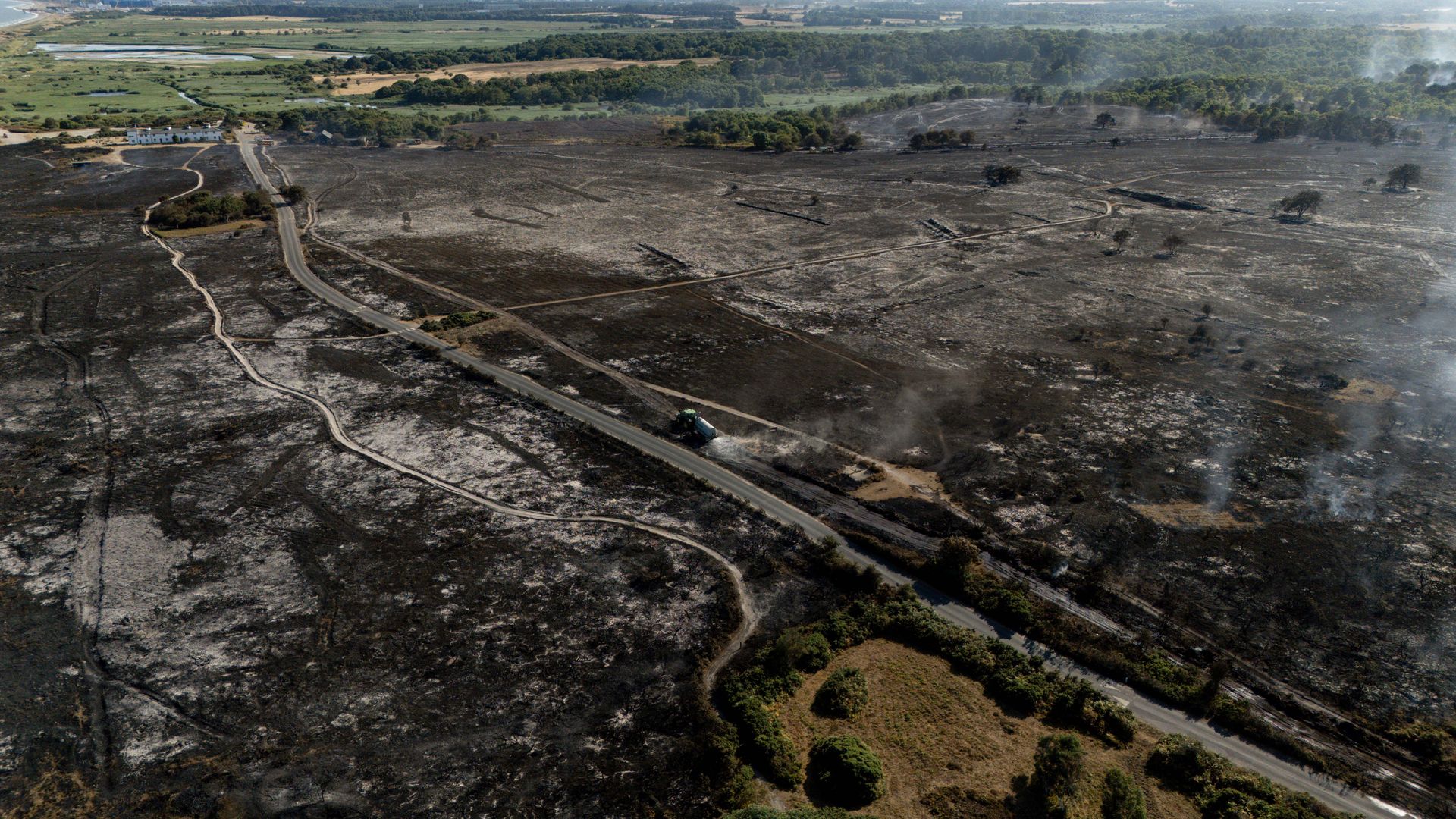
Flames don't care about your holiday plans or your favourite walking spots. When a massive wildfire tore through Suffolk's iconic Dunwich Heath, it didn't just burn dry brush—it wiped out an ecosystem that took decades to recover.
Over 90 firefighters spent days battling a blaze that ballooned to the size of 220 football pitches. Families fled Cliff House Holiday Park as 200 caravans stood in the crosshairs of an unpredictable wall of fire. While emergency crews managed to prevent a catastrophe near the Sizewell nuclear facility and evacuated everyone safely, the physical landscape was left unrecognisable.
Now, the National Trust has launched an emergency public appeal to bring Dunwich Heath back from the ashes. But writing a check isn't enough anymore. We need to understand why Britain's countryside is turning into a tinderbox.
The Shrinking Refuge of Lowland Heath
Most people think wildfires only happen in Mediterranean scrublands or Californian forests. They don't expect them on the breezy coast of Suffolk.
Lowland heath is one of the rarest habitats in the entire country. Over the last 120 years, England has lost a staggering 92% of this landscape. That makes places like Dunwich Heath and the adjacent RSPB Minsmere reserve critical strongholds for wildlife that can't live anywhere else.
We aren't just talking about scenery. This fire scorched the prime breeding ground for:
- Nightjars and skylarks
- The rare Dartford warbler
- Adders, lizards, and slow-worms
- Silver-studded blue butterflies
Just weeks ago, local conservation teams were celebrating. Dartford warbler numbers had finally bounced back from the brutal 2022 heatwaves. Firebreaks had been meticulously cleared, and the heather was thickening into a vibrant purple carpet that drew over 100,000 visitors a year.
Forty-eight hours of intense heat and wind wiped out that hard work.
Why British Wildfires Are Changing
You can't look at the Suffolk blaze as an isolated accident. It sits within a grim pattern. In the fortnight leading up to the Dunwich disaster, roughly 200 wildfires broke out across the UK.
Prolonged dry spells turn dead vegetation into gunpowder. Station Manager Dan Davis and his crews worked through punishing conditions, supported by local farmers, private helicopters dropping water, and countryside teams cutting emergency firebreaks. Heroic efforts saved human lives and buildings, but they couldn't stop the ecological punch.
National Trust Director-General Hilary McGrady didn't mince words, pointing out that the country faces a systemic crisis. When summers get hotter and dry spells stretch longer, standard firefighting tactics are stretched to their absolute limits.
How You Can Help Right Now
The National Trust needs immediate funding to clear debris, stabilise the soil, and begin the slow process of re-seeding native plants. If you want to take action:
- Donate to the Appeal: Visit the official National Trust emergency fundraising page to contribute directly to the Dunwich Heath restoration fund. Every bit helps regrow wildlife corridors.
- Stay Away From Fire Zones: If you are local or visiting the Suffolk coast, stay completely clear of active recovery zones. Let heavy equipment and exhausted crews do their jobs without interference.
- Ditch Disposable BBQs: Most heathland fires start due to human carelessness. Never use portable grills, leave glass bottles, or discard cigarette butts in dry rural areas.
Dunwich Heath will recover, but only if we treat landscape resilience as an urgent priority rather than an afterthought.