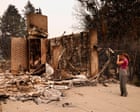
Thick black smoke filled the skies over Spokane as multiple fast-moving blazes tore through residential neighborhoods, forcing tens of thousands to run for safety.
If you're wondering how the eastern Washington wildfires escalated so quickly over the weekend, the answer comes down to a brutal combination of dry brush, rugged local topography, and relentless wind gusts. Authorities confirmed that roughly 60,000 residents faced evacuation orders in and around Washington's second-largest city. At least 600 structures—including homes and businesses—were reduced to smoking chimneys and ash.
The Anatomy of the Spokane Blazes
The crisis didn't stem from just one fire. Three distinct incidents—identified as the Old Trails Fire, the Autumn Lane Fire, and the Fairview Fire—erupted and quickly overwhelmed local defense capabilities. The Old Trails Fire alone sparked near brush and grass west of Spokane, pushed quickly by the wind, and actually crossed the Spokane River to enter the northwestern parts of the city.
Fire behavior across all three fronts was classified as extreme. Officials reported wind-driven runs, short-range spotting, and aggressive crowning that jumped natural barriers with ease.
Why the Terrain Made It Worse
Fighting fires in Spokane means fighting the map itself. The Spokane River cuts deep canyons through the region, creating steep, hilly slopes on both sides.
Benjamin Cossel, a public information officer for the incoming federal response team, explained the physics of the disaster clearly. As temperatures rise during the day, cooler air hugging the valley floor lifts. That shift unlocks fierce wind patterns.
"They push the fire through the canyons, up, up the slopes, and then outside the slopes and around," Cossel noted, describing deeply turbulent wind scenarios.
Steep canyons act like natural wind tunnels. They accelerate gusts and spit embers across neighborhoods before ground crews can establish lines.
Evacuations and the Strain on Resources
Shelters filled up rapidly. The city converted its main convention center into an emergency refuge, housing hundreds of displaced people. Evacuations weren't limited to standard residential zones. Even patients at the local US Veterans Affairs hospital had to be safely moved out of harm's way.
Governor Bob Ferguson stepped in quickly, declaring a statewide wildfire emergency and slapping bans on most outdoor and agricultural burning. State officials noted that the region was already navigating one of its busiest fire years on record, stretching federal, state, and local firefighting resources dangerously thin.
Despite the sheer scale of the destruction, emergency officials shared a small piece of relief: no deaths or missing persons had been reported as of Sunday, though they stressed that rescue and assessment teams were still in the early phases of their work.
What Happens Next
Weather forecasts aren't offering much comfort. Dried-out landscapes combined with high wind gusts mean the threat remains very real. Senator Maria Cantwell warned the public during a joint briefing that the coming days will test the region.
If you live anywhere near the affected zones or travel through eastern Washington, stay glued to local emergency alerts and obey evacuation directives instantly. Pack an emergency go-bag, keep a full tank of gas in your vehicle, and do not wait until smoke is visible down your street to make a move.


