We spend billions of dollars on sophisticated medical infrastructure while missing the simplest biological signals floating right past our faces. When advanced disease-monitoring systems require million-dollar labs, rural and isolated communities get left behind. But solving a complex public health challenge doesn't always demand a government grant or a cleanroom facility. Sometimes it takes an eighth grader, some small computer fans, and standard filter paper.
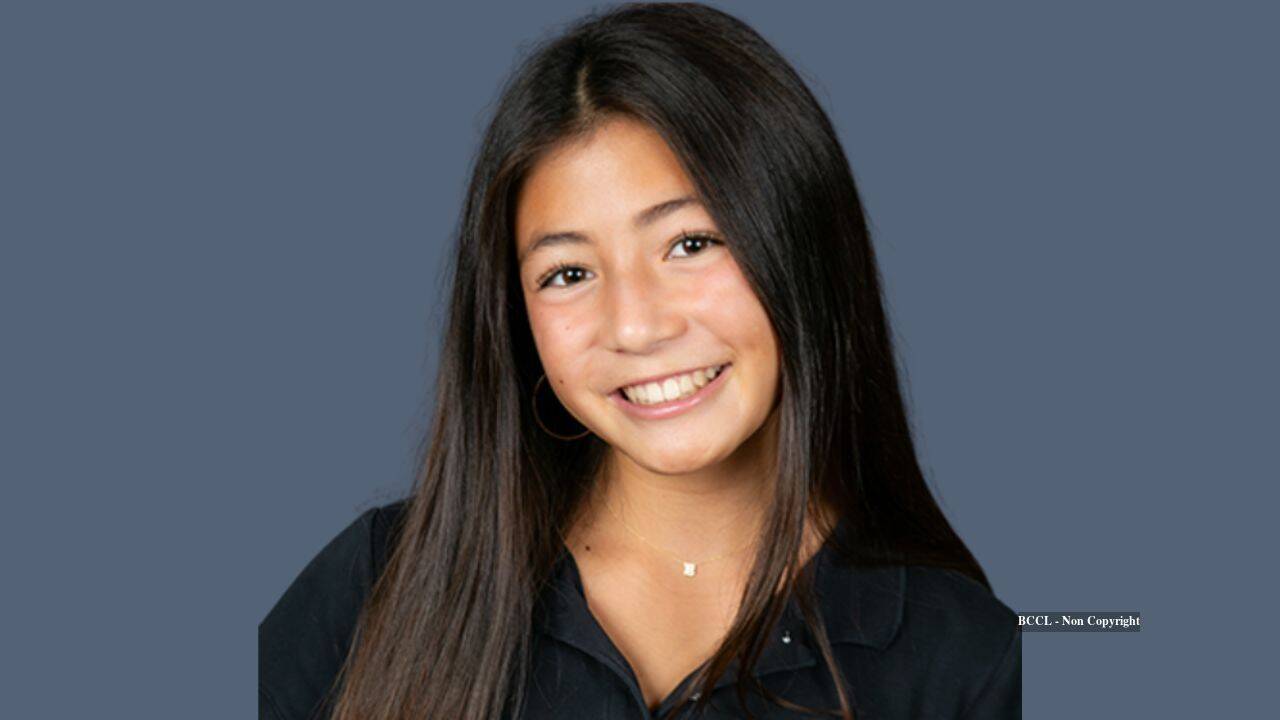
Bailey Quinn Frank, a student at Pine Crest School in Fort Lauderdale, didn't wait for a university research fellowship to start tackling rural health surveillance. She looked at how environmental DNA works—the genetic traces animals and humans leave behind in soil, water, and air—and asked a straightforward question. Could a homemade device capture enough airborne bacterial DNA to map microbial communities without breaking the bank?
Her resulting prototype earned her a spot among the national finalists in the 2026 Thermo Fisher Scientific Junior Innovators Challenge. More importantly, it highlights a glaring flaw in how we think about diagnostics: we over-engineer solutions that the people who need them most can never afford or operate.
Building a Low Cost Air Sampler From Scratch
If you peek inside standard commercial air-sampling equipment, you will find expensive vacuum pumps, calibrated flow meters, and proprietary cartridges that cost thousands of dollars. Bailey took a completely different route. She wired small, everyday fans to draw ambient air across sheets of standard filter paper.
The mechanism relies on basic physics. As the small fan pulls air through the system, particulate matter, including airborne bacteria and suspended DNA fragments, gets trapped in the fibers of the filter paper.
Once collected, the workflow moved from hardware to biology. Bailey purified the DNA extracted from the filter papers. She cultured portions of the samples in petri dishes to track colony counts and growth patterns over a week. For high-resolution data, she utilized 16S rRNA sequencing, a standard genetic profiling method that identifies bacteria by reading specific hypervariable regions of their ribosomal RNA gene.
What the Data Actually Showed
Her samples weren't just random science fair window dressing. She pulled indoor air from two locations and contrasted it against outdoor air. The results drew a sharp line between closed and open spaces.
Indoor air samples showed a heavier concentration of human-associated microbes and a broader diversity of bacterial genera. That makes biological sense. Human skin shedding, respiratory aerosols, and daily interior movement constantly seed indoor air with specific microbial signatures.
Outdoor air samples leaned heavily on environmental sources—soil bacteria, plant-associated microbes, and outdoor particulates.
The takeaway isn't that indoor air is dirty. It's that a rig built out of spare parts can successfully capture and differentiate complex bacterial communities. If a low-cost fan setup can tell the difference between indoor and outdoor microbial profiles, the architecture is sound enough to build upon for targeted pathogen tracking.
Why Rural Health Surveillance Needs a Reset
Public health surveillance usually relies on dense urban medical networks. Hospitals run tests, centralized labs sequence pathogens, and public health agencies map outbreaks.
Rural towns don't have that luxury. Long travel distances to clinics, fewer healthcare workers, and zero local sequencing labs mean that bacterial threats can spread quietly before anyone notices. By the time a rural clinic sends a sample to an urban facility and gets results back, the window for early containment might be closed.
This is where decentralized, ultra-low-cost eDNA sampling changes the conversation. If communities can deploy cheap, reusable air samplers, they can establish baseline microbial monitoring. When an unusual spike in specific bacterial signatures occurs, it acts as an early warning flare.
The Intersection of Empathy and Engineering
Good engineering usually stems from personal frustration. Bailey lives with celiac disease, an autoimmune condition triggered by dietary gluten. Navigating that diagnosis from a young age taught her what it feels like to manage a condition that demands constant vigilance while navigating a world not entirely built for you.
That background shaped her empathy for underserved populations. When you understand what it means to lack accessible tools, you stop building high-end gadgets for elite labs and start building practical gear for everyday people.
Her involvement in organizations like the Technology Student Association also helped bridge the gap between abstract science concepts and hands-on fabrication. Technical confidence doesn't happen by accident. It comes from building things, failing, fixing the wiring, and trying again.
What Comes Next for Low Cost Diagnostics
Prototypes are fun, but scaling them requires moving past the science fair table. The next hurdles for low-cost eDNA samplers involve standardizing air volume measurements, optimizing battery life for remote deployments, and lowering the cost barriers for field-ready sequencing kits.
Yet the proof of concept is already settled. You don't need a million-dollar budget to ask the right questions about public health. You just need curiosity, a willingness to get your hands dirty, and the stubborn belief that the best technology is the kind everyone can actually use.