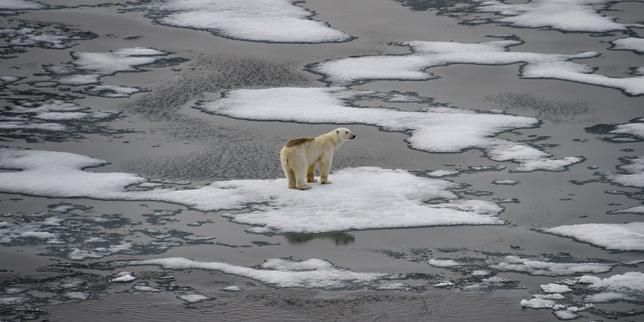
You’re looking at a blackout. Not a power outage, but an information one. The Trump administration just pulled the plug on the Arctic Report Card, a vital annual document that has served as our primary gauge for the planet's northernmost health since 2006.
This isn't just about losing a PDF on a government website. It's about dismantling the tools we use to understand a region heating up four times faster than the rest of the globe. If you want to know why this matters, look at the math. The Arctic acts as the world’s air conditioner. When that ice vanishes, weather patterns worldwide go haywire. By cutting the coordination and synthesis of this report, the government is essentially deciding that ignorance is a valid strategy for climate policy. Don't miss our recent coverage on this related article.
The Real Cost of Information Gaps
Science works on consistency. For twenty years, the Arctic Report Card has been the gold standard. It’s peer-reviewed. It brings together physical and social sciences to give us a clear picture of what’s happening in the atmosphere, the oceans, and the tundra.
When you lose that, you don't just lose data points—you lose the context. NOAA spokesperson Kim Doster stated that the agency will still collect data, but that coordination for the 2026 report is off the table. That’s a massive distinction. You can have all the raw numbers in the world, but if they aren't synthesized, analyzed, and communicated in a way that policymakers and the public can grasp, they become white noise. If you want more about the background of this, NBC News offers an informative breakdown.
Think of it like a medical chart for a patient in the ICU. If the doctor says, "I'll keep checking the blood pressure, but I'm going to stop writing the progress report," you know exactly what that means. You’re being kept in the dark about the patient's condition.
Why This Move Hits Harder Than You Think
You might be asking why this specific report matters so much compared to other climate data. It’s about predictability. The Arctic Report Card doesn't just track melting ice. It tracks primary productivity in the ocean—which dictates the health of our fisheries—and shifts in permafrost that threaten infrastructure.
The administration’s decision is part of a pattern. It’s a recurring theme:
- Dismissing government scientists.
- Scrubbing climate findings from public websites.
- Withholding updates on weather disasters.
This isn't an isolated incident. It’s a systematic attempt to make the evidence of a warming world harder to find. Experts like Rick Thoman, an Arctic climate specialist, haven't minced words, calling this "devastating news." When people who have spent their entire careers monitoring these systems tell you this is a disaster, you should listen.
What Happens Now
The 21st edition of the report is currently in limbo. While some researchers are scrambling to figure out if they can pull together a version without federal coordination, the logistical support—hosting the data, running the press rollouts, and connecting the findings to national security and economic planning—is largely gone.
If you’re wondering how this affects you, consider your food security and your local weather. As the Arctic warms, it disrupts the jet stream. That means more extreme heatwaves, longer droughts, and unpredictable winters for the lower 48 states. By ignoring the Arctic, we aren't protecting the economy; we're walking into a storm blindfolded.
Take Action to Stay Informed
If you want the real story on climate, you can't rely on the government's curated silence anymore. Here is how you can stay ahead of the curve:
- Follow the scientists directly. Many of the authors of the Arctic Report Card are independent researchers. Follow them on professional social networks where they publish their findings and breakdowns.
- Support academic monitoring. Watch for reports from organizations like Climate Central or independent university consortiums that fill the gaps left by federal retreats.
- Check state-level data. While the federal government might be pulling back, many states and international partners are doubling down on local monitoring. Look for regional environmental reports that still value accuracy.
We are entering an era where data is increasingly politicized. If you value the truth, you have to do the work to find it yourself. The government might have stopped reporting on the fire, but that doesn't mean the ice has stopped melting.