Europe is tired of playing nice while its industrial core gets hollowed out. Behind closed doors in Paris and Berlin, leaders are finally admitting what manufacturers have known for years: the continent's traditional trade defenses are too slow, too bureaucratic, and entirely unequipped for modern economic warfare.
When your trade deficit with a single partner hits roughly one billion euros every single day, standard diplomatic hand-wringing doesn't work anymore. That stark reality explains why France and Germany recently pushed a joint proposal to Ursula von der Leyen demanding a radical new legal instrument. They want the power to strike back immediately, mirroring tactics used globally to protect domestic markets from predatory state-backed overcapacity.
Why the Old Trade Playbook Broke
For decades, Brussels relied on lengthy anti-dumping investigations that took up to a year or more to conclude. By the time a bureaucratic committee proved market distortion and levied tariffs, the local industry in question was often half-dead.
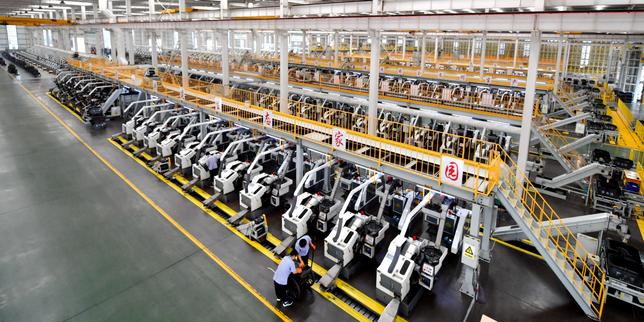
China’s massive state subsidies have supercharged industrial sectors from electric vehicles to chemicals, flooding European markets with cheap output. Companies operating locally simply cannot compete against state-backed pricing structures. While European firms face strict environmental regulations, high energy bills, and stringent labor laws, imports arrive subsidized and discounted.
The resulting industrial bleeding sparked panic in capitals across the bloc. When European trade chief Maros Sefcovic travels to Beijing for high-stakes talks, he carries an increasingly blunt message. The status quo is dead.
Building a Faster Bazooka
The French-German proposal isn't subtle. Paris and Berlin want an instrument that allows the European Union to inflict a counter-injury comparable to whatever damage is inflicted upon its own economy.
If a foreign nation suddenly cuts off raw material supplies or weaponizes market dominance, Brussels needs the legal authority to act overnight. Think of it as Europe's version of the American Section 301 authority, but tailored for a twenty-seven-nation bloc. Proposals include the immediate exclusion of goods and services from a hostile market straight off the internal market.
Critics worry about a slippery slope into full-scale protectionism. But proponents argue that standing still guarantees total industrial dependency. When trade policy turns into economic coercion, defensive instruments must match the speed of the threat.
The Retaliation Trap and What Comes Next
Pékin isn't sitting quietly while Europe builds its new defense wall. China's commerce ministry recently launched its own anti-dumping probes into key European chemical imports, proving that trade friction cuts both ways. Past disputes have already targeted iconic European products like cognac, reminding regional exporters that retaliation hits home quickly.
Yet the political momentum in Europe has shifted. National governments that used to prioritize free-trade purity now accept interventionist measures as necessary self-defense.
If you run a business or manage supply chains within the bloc, expect higher friction, more customs audits, and rapid regulatory shifts. Monitor your material sourcing closely and build redundancy into your vendor networks before new restrictions hit your bottom line.