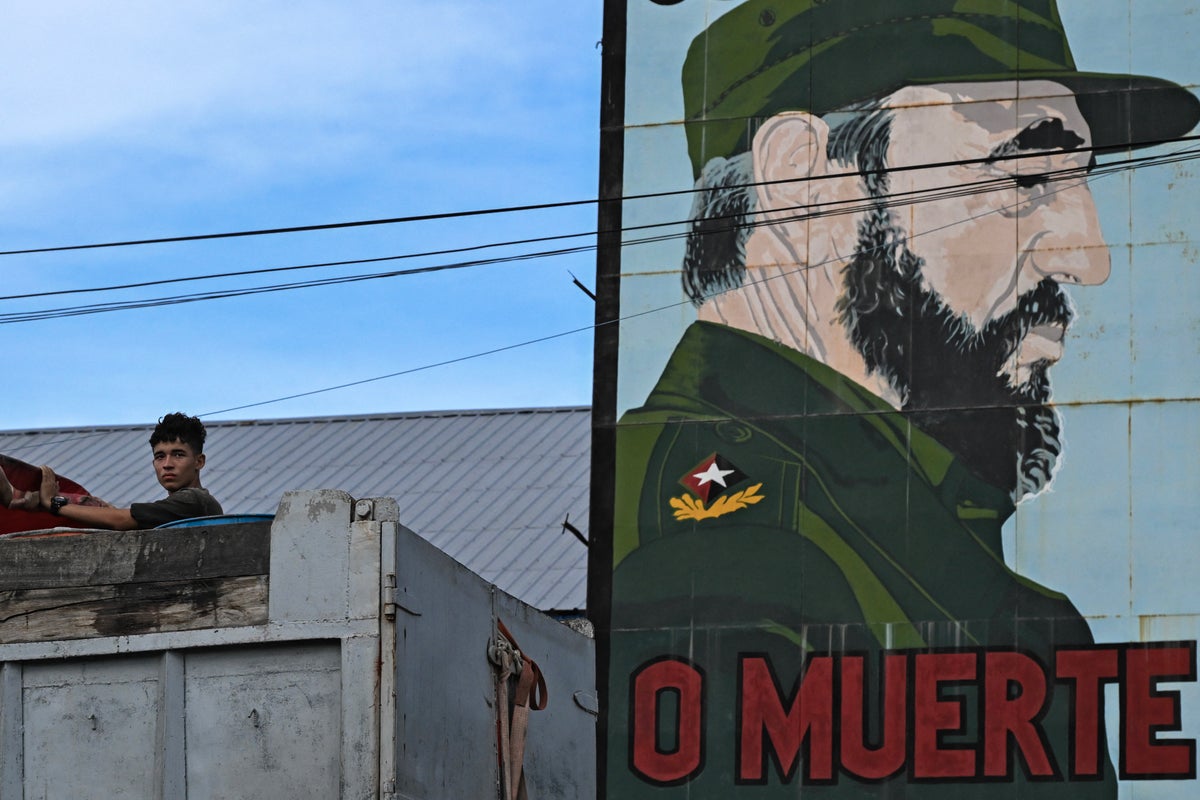
Cuba stands at a brutal crossroads as the island marks what would have been Fidel Castro’s 100th birthday. While state organizers roll out international colloquiums and speeches celebrating his anti-colonial defiance, ordinary citizens deal with empty storefronts, rolling blackouts, and an economy battered by tightening sanctions. You can't understand modern Cuba without looking directly at how the shadow of El Comandante still dictates daily survival on the streets of Havana.
The timing of this centenary highlights a stark generational split. To the current government led by Miguel Díaz-Canel, invoking Castro isn't just about nostalgia. It functions as a political shield. Officials present his rigid blueprint as the ultimate survival guide against Washington's oil embargo and financial restrictions. Thousands of foreign activists flew into Havana this week to honor a leader who once shaped the entire anti-imperialist left across the Global South.
Step outside the conference halls, though, and you get a completely different reality.
The Economic Pressure Cooker
The financial collapse facing the island today makes the historic hardships of the 1990s look manageable by comparison. When the Soviet bloc vanished, Cuba lost eighty percent of its trade overnight, triggering the infamous Special Period. Today's crisis hits from a different angle. Fuel shortages, soaring inflation, and a shattered tourism sector have forced a massive exodus of young professionals.
Critics argue that the structural flaws built into Castro's centralized economic model created this permanent state of vulnerability. By nationalizing nearly every sector and choking off private initiative for decades, the system left little room to adapt when global markets shifted. People aren't debating abstract political theory while waiting hours for basic rations. They are trying to survive an immediate cash crunch.
Education and Healthcare Under Siege
You can't talk about Castro's legacy without addressing the social safety net. For decades, the revolution's greatest selling points were universal healthcare and near-total literacy. Infant mortality dropped dramatically in the decades following 1959, and Cuba built a respected biotechnology sector that eventually produced its own domestic vaccines.
Honest assessment requires acknowledging how badly those systems are fraying now. Hospitals lack basic medicines, syringes, and stable electricity. Doctors trained to serve as global medical diplomats now face severe shortages inside their own neighborhood clinics. The pride of the revolution-era social contract is buckling under the weight of current economic neglect.
The Diaspora Perspective
For millions of Cubans living abroad, particularly in Florida, celebrating Castro's centenary feels grotesque. To the exile community, he remains the architect of authoritarian rule who crushed political dissent, emptied the nation's coffers, and forced families apart. The deep bitterness shared by the diaspora hasn't softened with time or distance. Every public monument or official banner praising the revolution triggers sharp reminders of lost properties, political prisoners, and a closed society.
Yet, domestic defenders maintain that without Castro's defiance, Cuba would have simply reverted to an impoverished playground for foreign corporate interests, much like it was before 1959.
Moving Past the Myth
Centenaries force nations to pick a narrative, but Cuba's future depends on letting go of rigid dogmas. The leadership in Havana wants to use Castro's ghost as a permanent anchor. Younger generations want electricity, jobs, and the freedom to shape their own economic futures without state interference.
To break out of this cycle, authorities have to move beyond recycled revolutionary slogans. Real reform requires opening up local enterprise, trimming bureaucratic dead weight, and fixing a broken distribution grid. If the government keeps leaning entirely on a century-old legacy, the country risks sliding further into darkness.


