The mercury hit 48.8 degrees Celsius in Floridia back in August 2021. That number—119.8 degrees Fahrenheit—set a record for the highest temperature ever officially verified in continental Europe. It wasn't just a weather anomaly. It was a warning shot. Five years later, the Sicilian town of 20,000 residents is living through the aftermath. They aren't just dealing with hot days anymore. They are trapped in a seasonal existence that mimics the stifling isolation of a lockdown.
If you think extreme heat is just about wearing more sunscreen, you’ve got it wrong. In Floridia, the heat dictates social structure. It dictates survival.
Life after the record
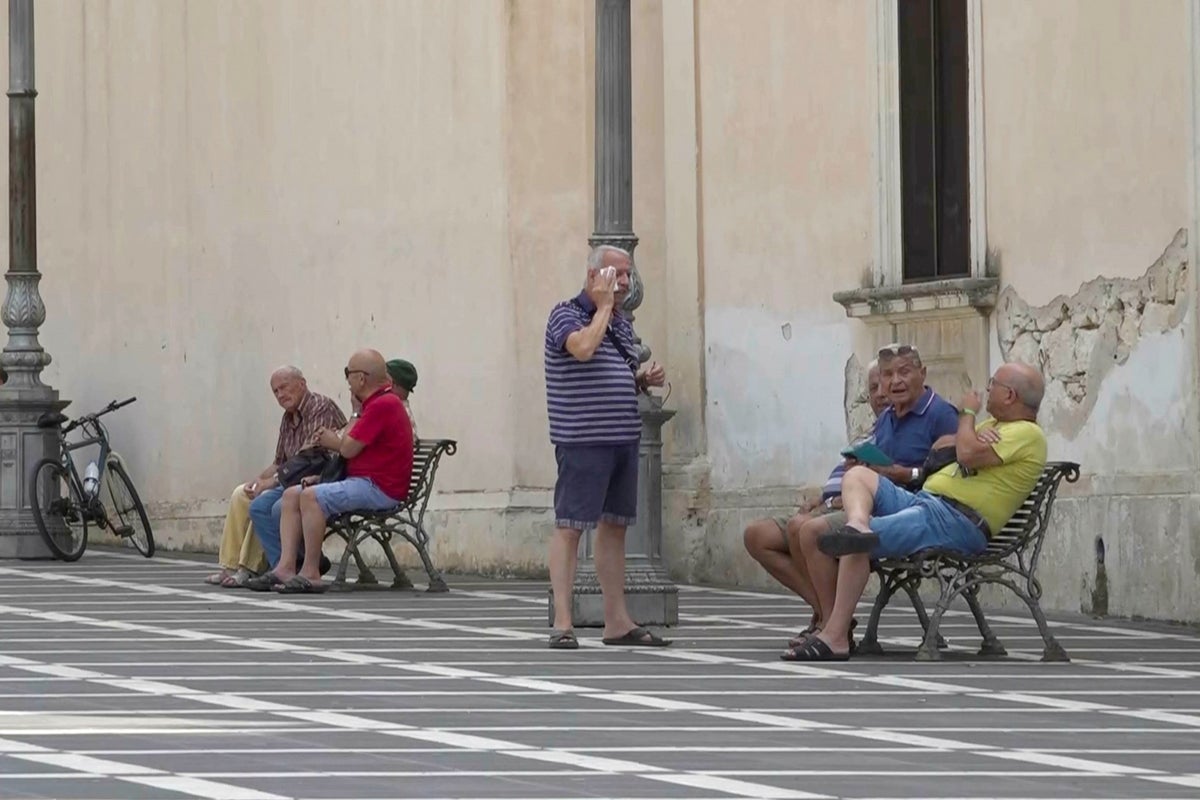
When that record broke, most people in Floridia assumed it was a freak event. A one-off. It turned out to be a structural change. The streets, once lively, are now deserted for large portions of the day. The local tradition of pigghiari u frescu—families moving their chairs to the sidewalk to catch a breeze and chat—is dying. It’s too dangerous to be outside.
People are effectively self-isolating. If you have kids, you know the struggle is acute. Parks sit empty until the sun finally drops, and even then, the ground radiates heat. Parents are forced to keep their children inside, turning homes into bunkers. It’s a quiet, forced withdrawal from public life that locals are now calling another kind of lockdown.
Beyond the peak
Scientists keep telling us that the "record" isn't the problem. They’re right. The real disaster is the creeping average.
Individual heat spikes are spectacular and grab headlines, but they aren't the primary driver of environmental collapse. It’s the consistency. Data from the Reuters Climate Monitor shows that August 2026 saw temperatures in Floridia hovering over 4 degrees Celsius above the historical norm.
We aren't talking about one bad day. We are talking about months of stress.
The most concerning shift is what happens at night. Historically, the Mediterranean provided cooling relief once the sun dipped below the horizon. That safety net is gone. We are seeing a surge in what meteorologists call "super-tropical nights." These are periods where temperatures don't fall below 25 or even 30 degrees Celsius. When your body never gets the chance to cool down, the physical toll is massive. It hits the elderly and the vulnerable hardest. It’s not just uncomfortable. It’s a health emergency.
The silent collapse of the land
Climate change is an economic killer. Look at agriculture in Sicily. It’s a primary pillar of the local economy, and it's being dismantled piece by piece.
Take the honey industry. Five years ago, in the immediate wake of that record heat, local beekeepers saw their production drop by 80 percent. Thousands of beehives simply collapsed. Bees are highly sensitive to thermal stress, and when the flowers they rely on wither, the bees die. It’s a chain reaction.
Beekeepers like Francesco Pappalardo aren't looking at the horizon for better weather anymore. They are looking at the summer as a season of anxiety. They know that every degree of warming chips away at their livelihood. It’s not just honey, either. Soil moisture levels are plummeting. Droughts are becoming longer. Fires are becoming more frequent. Legambiente reports show that Sicily now accounts for roughly 70 percent of southern Italy’s total burned land area during the peak of summer.
What you need to know about heat adaptation
You might be reading this from a cooler climate, thinking it doesn't affect you. That is a dangerous assumption. Climate trends move, and the patterns established in Floridia are spreading. Here is the reality of adapting to a warming world:
- Infrastructure is failing. Cities built for stable, temperate climates are crumbling under the stress of 40-degree heat. Roads buckle. Power grids experience surge failures. If your local council isn't talking about retrofitting public spaces with shade and reflective materials, they are behind the curve.
- Nighttime is the new battleground. If your bedroom doesn't cool down, your health will decline. Passive cooling—heavy shutters, cross-ventilation, and planting trees to shade walls—is far more effective than just cranking an air conditioner, which only pumps more heat into the street.
- Agriculture is pivoting or dying. In Sicily, the loss of pollinators is forcing a conversation about land use that should have started decades ago. If you grow anything, you need to be testing heat-resistant crop varieties now, not when the drought hits.
The road ahead
Floridia isn't a curiosity. It’s a laboratory for our future.
The residents of this town are showing us what happens when you stop fighting the environment and start surviving it. They are learning that adaptation is expensive, exhausting, and often involves sacrificing parts of the culture that made life worth living in the first place.
If you are in a region currently enjoying "normal" weather, pay attention. The shift from "mild" to "hostile" is faster than you think. Start by hardening your home against heat. Advocate for more urban canopy in your neighborhood. Most importantly, drop the idea that we can return to the climate of the late 20th century. We are living in a new era, and the time for half-measures passed years ago.
Stop waiting for the "record" to break. It already has. Now we just have to live through the consequences.


