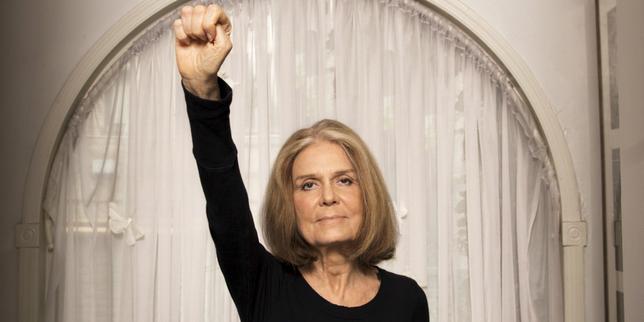
Gloria Steinem didn't want to be a symbol. She wanted to be a journalist.
Yet history had other plans. When Steinem passed away at her New York City home at the age of 92, she left behind an architectural blueprint for modern social change. You can trace nearly every major conversation about gender equality, bodily autonomy, and workplace rights back to the work she started in the turbulent decades of the 1960s and 1970s.
Most people remember her trademark aviator glasses and the streaked hair parted straight down the middle. They picture the iconic magazine covers and the endless stream of college campuses she visited on the road. But beneath the recognizable silhouette lay a relentless reporter who used her press credentials to expose realities society preferred to ignore.
The Investigative Journalist Who Refused to Sit Quietly
Long before she became synonymous with second-wave feminism, Steinem was simply trying to make a living writing stories that mattered. Journalism in the mid-century American landscape was a boys' club where women were relegated to covering fashion, home economics, or social society pages. Steinem blew past those boundaries.
Her defining early break came in 1963 when she took a job as a Playboy Bunny at the Playboy Club in Manhattan. She didn't do it for clicks or controversy. She wanted to see how the corporate machine treated its lowest-level female employees.
The resulting exposé, published in Show magazine, laid bare the grueling working conditions, the low wages, and the constant humiliation faced by women behind the satin ears and cotton tails. It turned her into an overnight sensation, but it also pigeonholed her. Editors suddenly only wanted her to write about "women's issues," a category the establishment treated as a soft genre rather than hard news.
Steinem turned that limitation into a weapon.
How Ms. Magazine Upended the Publishing Industry
By 1972, the media landscape was failing half its audience. Major publications were entirely run by men who viewed women's liberation as a punchline or a passing fad. Steinem and a collective of peers decided to build something entirely different.
They launched Ms. magazine.
It was a radical experiment. The publication featured articles on domestic abuse, reproductive rights, and equal pay written by women, for women. Corporate advertisers balked. They threatened to pull funding because the editorial content was too controversial.
Steinem and her co-founders stood their ground. They relied on reader subscriptions and alternative revenue streams to keep the doors open. Ms. proved that women wanted substance, not just recipes and makeup tips. It changed the entire economic model of women's media.
Life on the Road and the Power of Eye-to-Eye Organizing
Steinem loathed formal public speaking, yet she spent decades living out of a suitcase. She crisscrossed the United States, speaking in gymnasiums, union halls, and community centers.
She often credited her years traveling in India during her twenties for shaping her activist philosophy. Walking from village to village with just a single sari and a notebook, she learned what Mahatma Gandhi taught: real persuasion happens eye to eye.
She brought that grassroots mentality back to the American feminist movement. She co-founded the National Women's Political Caucus in 1971 to get more women elected to public office. She helped establish the Women's Action Alliance to back grassroots legal and social efforts. She didn't sit in an ivory tower issuing declarations. She sat in circles with everyday women, listening to their grievances and connecting personal struggles to political systems.
What People Often Get Wrong About Her Legacy
Critics over the decades tried to frame Steinem as an out-of-touch elitist or a rigid dogmatist. The reality was far more complex.
Unlike some contemporaries who drifted away from their radical roots as they aged, Steinem kept showing up. She expanded her advocacy to include racial justice, indigenous rights, and opposition to violence against women in all its forms. She recognized early on that a women's movement that only served wealthy white women was a failure.
She also championed personal freedom in every aspect of life. When critics questioned her choices—such as marrying entrepreneur David Bale late in life in 2000—she shrugged off their expectations with trademark wit. She famously pointed out that she hadn't given up her freedom; she had simply found a partner who didn't require her to live by traditional rules.
The Unfinished Work Left Behind
Steinem's death marks the end of an era for the pioneers who hauled civil rights legislation into the American mainstream. Yet her passing arrives at a moment when many of the rights she fought for are back on the chopping block.
Reproductive freedom is restricted. Workplace equity remains an ongoing battle. Political polarization threatens the very foundations of democratic participation.
Steinem always insisted that feminism wasn't a static achievement. It was a daily practice. You don't inherit equality; you defend it.
The best way to honor her legacy isn't by posting tributes on social media. It is by picking up the work she left scattered across the floor, stepping outside your comfort zone, and demanding a fairer world.