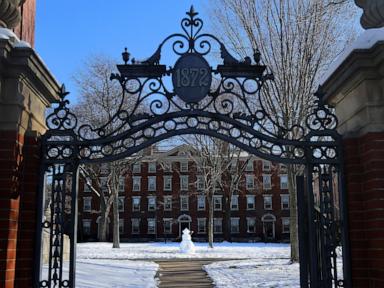
The federal government has a long history of policing civil rights on campus, but a new whistleblower complaint suggests the recent crackdown on antisemitism was less about protecting students and more about filling the treasury. If you’ve followed the news regarding Ivy League universities being sued or losing federal funding, you might assume it was driven by a clear-cut legal crusade against discrimination. The reality, according to former Justice Department attorney Haley Van Erem, looks much more like a political shakedown.
Van Erem’s disclosure, filed with congressional leaders this week, paints a picture of a Justice Department task force operating without guardrails. Her account claims that investigations into schools like Harvard, Brown, and Columbia were "predetermined," meaning the conclusions were already written before the evidence was even collected.
The mechanics of the alleged cash grab
You don't need a law degree to understand why this matters. Title VI of the Civil Rights Act is supposed to prevent discrimination at schools that take federal money. It’s a serious tool meant for serious violations. However, the whistleblower complaint alleges that the Trump administration’s multi-agency task force—formed in early 2025—turned this process into a weapon.
Instead of gathering facts and determining if a violation actually occurred, the task force reportedly operated under a different mandate: get the settlement. In the case of Brown University, investigators allegedly found no evidence of a Title VI violation. Yet, according to the complaint, leadership didn’t want to issue a "no violation" letter. They pushed for a settlement instead.
Think about the leverage here. By freezing or threatening to freeze massive chunks of research funding—sometimes totaling hundreds of millions of dollars—the administration effectively forced universities into a corner. When you're "over a barrel," as one official reportedly described Harvard’s position during negotiations, you’re not really negotiating. You’re capitulating to survive.
When politics overrides the evidence
One of the most concerning parts of this revelation is how quickly these investigations moved. At Columbia, investigators were reportedly given only a few hours to review documents that formed the basis of major federal findings. Much of the evidence cited wasn't even verified; it was pulled from news reports and pending lawsuits.
Van Erem’s own experience is telling. She spent nearly a decade in the DOJ’s Civil Rights Division before being moved to this task force. She eventually left the agency in May 2025, stating she was "unwilling to be made vulnerable to further participation in politically motivated investigations." It’s hard to ignore that warning. When career lawyers start jumping ship because they can’t stomach the work, it’s a sign the institutional process is broken.
Why this matters for the future of higher education
The long-term danger here is the erosion of trust in federal oversight. When the Department of Justice uses a critical civil rights law as a pretext for "ideologically-motivated assaults," as one federal judge recently phrased it, it cheapens the law itself.
Real antisemitism on college campuses is a genuine problem. Students deserve to feel safe and protected from harassment. But when the government uses that real pain to extract cash or score political points, they don't actually solve the problem. They just create a circus.
If you’re wondering where this goes next, look at the judicial response. Just days before these whistleblower allegations went public, a federal judge in Boston dismissed a Trump administration lawsuit against Harvard, noting that the government failed to prove any institutionalized noncompliance. The courts are starting to push back.
The next step is likely an intense congressional review. Representative Jamie Raskin has already initiated an inquiry into these allegations, and with the details now public, there will be immense pressure for the DOJ to explain its internal processes. Watch for more details on the funding freezes that happened outside the standard legal procedures. That is where the most significant overreach appears to have occurred.
If you want to understand how these battles play out, pay attention to the procedural irregularities. When the government skips the hearing, ignores the evidence, and heads straight for the bank account, it isn't law enforcement. It's something else entirely.
Judge dismisses Harvard lawsuit
This video provides important context regarding the recent federal court ruling that dismissed the Trump administration's lawsuit against Harvard, which mirrors the arguments raised in the whistleblower's report about the lack of evidence in these investigations.