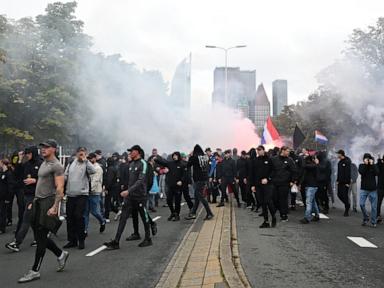
Things turned violent fast. Dutch riot police had to clear out hundreds of far-right demonstrators in The Hague after an anti-immigration rally spiraled into chaos. Fireworks flew. A police car burned. Justice Minister David Weel called it out immediately, demanding a harsh response to disgusting scenes involving Nazi salutes and antisemitic chants.
If you're paying attention to European politics, you know this wasn't an isolated event. It fits right into a growing pattern of volatility across the continent. Migration tensions are boiling over. Street politics are getting uglier. Let's break down what actually happened and why it matters right now.
The Breaking Point at Malieveld
The trouble kicked off at Malieveld, a massive open field in The Hague that has hosted countless demonstrations over the decades. Local authorities quickly banned a planned march against immigration and asylum policies as things turned sour. Protesters threw projectiles and fireworks directly at law enforcement.
When a crowd starts torching vehicles and flashing extremist symbols, policing strategies change instantly. Authorities had to step in with full force to restore order. It's a textbook example of how quickly peaceful-sounding grievances can be hijacked by bad actors looking for a fight.
Why Migration Policy Is Fueling Street Clashes
You can't separate these riots from the broader political atmosphere in the Netherlands. Immigration is the central lightning rod of Dutch politics. Governments struggle to manage housing shortages, integration pressures, and shifting public sentiment.
When mainstream political channels feel blocked or slow, frustration spills onto the pavement. Some groups use legitimate public debates about asylum policy as cover for extremism. Justice Minister David Weel labeled the behavior of these specific demonstrators as completely unacceptable, pointing to abhorrent displays of hate speech that crossed every legal and moral line.
- Protesters hurled fireworks and heavy objects at police officers.
- A police vehicle was set ablaze during the skirmish.
- Authorities shut down the planned march to prevent further escalation.
The Growing Shadow of Extremism
Let's be honest about what happened with the crowd makeup. Observers noted specific elements pushing far-right ideologies, turning a political demonstration into a public safety crisis. When fringe elements adopt football-hooligan tactics, cities pay the price.
Local officials are now facing massive pressure. They have to balance the constitutional right to protest with the absolute duty to protect public safety. Every time a protest turns into a riot, the political middle ground shrinks a little bit more.
What Comes Next for Dutch Security
The Dutch government isn't going to tolerate this kind of lawlessness. Expect harsher crackdowns on unauthorized assemblies. Politicians across the spectrum are under pressure to show strength against street violence.
If you live in Europe, you're watching a slow-motion transformation of public discourse. Street clashes are replacing parliamentary debate in the minds of the most radical factions. That's a dangerous path.
The smoke has cleared from Malieveld, but the underlying tensions remain entirely unresolved.
Anti-immigration demonstration in The Hague turns violent
This video provides footage and reporting on the anti-immigration demonstrations and subsequent clashes in The Hague.
http://googleusercontent.com/youtube_content/1