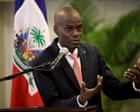
Five years after gunmen stormed a private residence in Port-au-Prince and shot Jovenel Moïse dead, the fallout refuses to end. US federal authorities just transported eighteen new suspects out of Haiti on a military plane to face American justice in Florida. This latest sweep pushes the total number of indicted individuals to thirty.
You might wonder why US courts are handling a murder trial for a foreign leader. The answer lies in the origins of the plot. Federal prosecutors maintain that the conspiracy was largely hatched on American soil, utilizing Florida-based security firms, foreign mercenaries, and illicit funding schemes that violated US neutrality laws.
The July 2021 assassination left Haiti structurally hollowed out. Jovenel Moïse was 53. His security detail didn't lift a finger to protect him. That single night triggered a catastrophic collapse in governance. Today, armed gangs control roughly eighty percent of the capital city. Kidnappings, extortion, and rampant violence dictate daily life for millions of citizens who feel utterly abandoned by the international community.
The wheels of justice turn slowly, but they do turn. Back in May, a Miami federal court convicted four men linked to a Florida private security contractor known as CTU. These individuals were lured into the operation with promises of lucrative state contracts once Moïse was removed from power. They now face potential life sentences.
FBI special agents and federal prosecutors have made it clear that the investigation isn't closed. Eighteen fresh defendants arriving in the southern district of Florida proves that cross-border enforcement remains active. Yet, convicting conspirators in Miami courtrooms doesn't fix the humanitarian disaster unfolding on the ground in the Caribbean.
Haiti currently operates without a president. The nation faces a monumental test scheduled for December, when officials hope to hold long-overdue presidential and legislative elections, along with a constitutional referendum. Whether these votes can actually happen depends entirely on a security apparatus that remains deeply underfunded and overmatched.
A UN-backed armed force meant to help local police push back against ruthless gangs has stalled. Planned to reach a robust capacity of 5,500 uniformed personnel, the force barely scraped together a fraction of that number by mid-year. Troops from countries like Chad, Jamaica, Guatemala, and Sri Lanka find themselves fighting an uphill battle against heavily armed criminal syndicates funded by illicit economies.
If you are tracking international law and foreign policy developments, look past the initial headlines about mercenary groups. Pay close attention to how cross-border legal jurisdiction functions when local judicial systems collapse. The ability of US courts to prosecute foreign assassination plots sets a fascinating, aggressive precedent for international criminal accountability.
Watch the upcoming December election dates closely. Keep an eye on security updates regarding the UN-backed deployment. That is where the real story of Haiti's immediate future will be decided.