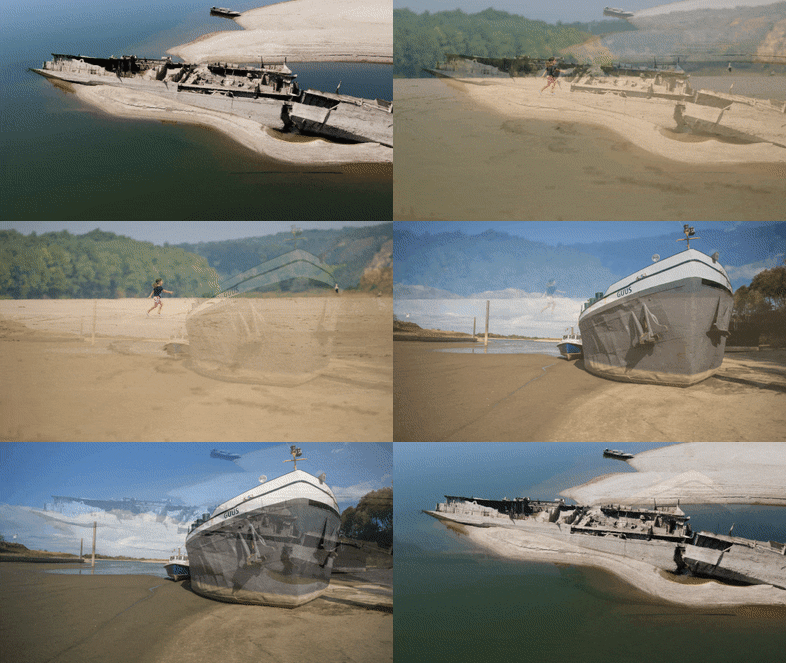
You can walk straight across parts of the Danube right now. That single fact tells you everything you need to know about the hydrological crisis unfolding across Europe. When vital commercial waterways shrink to muddy trickles, the fallout goes far beyond dry riverbeds and exposed stones. It hits supply chains, energy grids, and historical remnants buried for centuries.
The Reality on the Ground
Europe is running dry. Sustained heat waves and persistent high-pressure weather systems have trapped heat over the continent, turning watersheds into dust bowls. On the Rhine, water levels at the critical Kaub chokepoint plummeted to roughly 25 centimeters, hovering dangerously close to all-time lows recorded since tracking began in 1880.
Meanwhile, the Danube—Europe's second-longest river—has dropped to multi-decade lows in countries like Romania, Slovakia, and Hungary. Cargo barges sit idle because they can't carry full loads without running aground. Freight costs are spiking, and heavy industries dependent on river transit are scrambling for expensive alternatives by rail and road.
Unearthing the Past
Receding waters act like a planetary time machine, though the trigger is grim. As riverbeds shrink, they leave behind artifacts that remind us of past conflicts and ancient eras.
During severe droughts, stretches of the Danube near Prahovo in Serbia expose sunken World War II German warships packed with unexploded ordnance. These rusted hulls narrow the navigable channel and pose real hazards. In other regions, dropping water levels have revealed prehistoric megaliths like Spain's Dolmen of Guadalperal and ancient woolly mammoth bones buried deep in Bulgarian riverbanks.
It's fascinating history, but it serves as a stark warning sign. The past is only visible because present conditions are abnormal.
Why This Breaks Modern Infrastructure
Most of Europe's industrial architecture was built in the twentieth century under the assumption of reliable, steady water flow. That era is gone.
Power generation takes a massive hit when rivers fail. Nuclear and thermal power plants rely on massive volumes of river water for cooling. When water levels drop and ambient temperatures rise, power stations face strict regulatory caps on how much warm water they can discharge back into the environment. To avoid overheating ecosystems, facilities from France to Hungary are forced to scale back electricity output just when energy demand is peaking.
Agriculture faces an equally brutal squeeze. Italy's longest river, the Po, has dwindled dramatically. This leaves the fertile Po Valley without reliable irrigation, while encroaching saltwater from the Adriatic Sea ruins delta soils for farming and drinking water.
Where We Go From Here
Adapting to this new normal requires ditching short-term thinking. Governments and logistics companies are investing in specialized shallow-hull vessels and upgrading grid flexibilities, but infrastructure upgrades take years. Until water management policies catch up with a rapidly warming climate, Europe's economic engines will remain vulnerable to every spike in summer temperatures.


