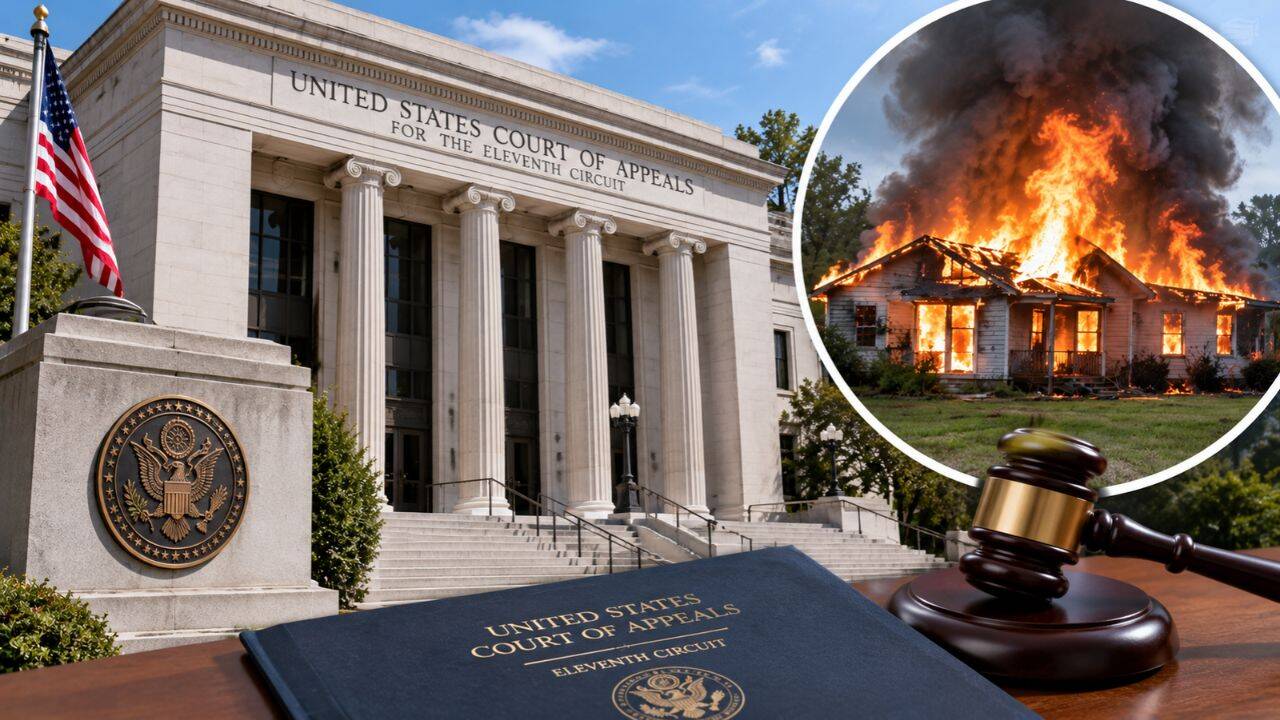
When a family feud gets so toxic that a father and daughter actively warn their insurance provider that the other is going to burn down their shared property, disaster isn't just a possibility. It's a guarantee waiting for a match.
This isn't a dark fiction plot. It's the real-life legal nightmare of Dennis Renfroe and his daughter, Sherry Lambert, who co-owned a $500,000 home in Centre, Alabama. Their relationship had deteriorated so badly over a shared investment account and property control that Lambert had previously secured a restraining order against her father. They hadn't spoken outside of court proceedings for five years. Also making headlines recently: Why Germany Buying Ukrainian Missiles Changes European Defense Forever.
Just weeks before their home went up in flames, a state court ordered the property to be sold at auction, with proceeds split between them. Then, the house burned down. The ensuing legal battle that landed in the US Court of Appeals for the Eleventh Circuit exposes the chilling intersection of family law, property disputes, and property insurance loopholes.
Red Flags Ignored by Insurers
Long before the smoke cleared, both parties were pointing fingers at the insurance company's underwriting desk. In January 2020, Dennis Renfroe contacted USAA General Indemnity Company to secure coverage, warning them that he suspected his daughter was preparing to burn the house down. He cited furniture being moved in and out as his primary evidence. More details regarding the matter are explored by Al Jazeera.
Lambert didn't stay quiet either. Once she found out her father had taken out the policy, she called the insurer with a stark warning of her own. She claimed her father was planning to destroy the property, pointing to an alleged history of past house fires associated with him.
Despite receiving explicit warnings from both named insureds that arson was practically inevitable, the insurer went ahead and issued a $500,000 policy anyway. Underwriters often chase premiums without looking closely at the human powder kegs attached to the deeds. When a carrier issues a property policy amidst active, documented hostility between co-owners, they're basically handing out a ticket to a courtroom circus.
The Fire and the Finger-Pointing
A few weeks after the policy went live, the house burned to the ground. An independent investigator concluded the fire's characteristics were consistent with arson, though they couldn't definitively rule out an accidental cause.
Naturally, neither Renfroe nor Lambert took responsibility. Instead, they doubled down on accusing each other. Court documents later revealed a trail of previous fires tied to both individuals, creating an opaque web of suspicion. Renfroe admitted to two previous house fires, while Lambert testified about three others, including one at a former home they shared together.
When Renfroe filed his insurance claim, USAA denied it. They leaned on a standard policy provision excluding losses intentionally caused by any insured person. Under this clause, even if an innocent co-owner had nothing to do with the fire, they could still be barred from collecting if another person covered under the same policy pulled the trigger or struck the match.
The Legal Ping-Pong Match
Renfroe sued USAA for breach of contract and bad faith. The federal district court in Alabama initially sided with Renfroe on certain points, ruling that the policy's innocent-insured exclusion violated Alabama public policy. A jury awarded Renfroe $425,000, which the court later reduced to roughly $226,727.
Both sides appealed, leading to the pivotal Eleventh Circuit ruling. The appeals court dismantled the lower court's reasoning. The judges found that Alabama law didn't prohibit insurers from using exclusions for intentional acts by co-insureds, noting that state law specifically carves out protections for domestic abuse victims, proving the legislature knew how to ban such clauses if they wanted to, but hadn't done so for standard property disputes.
The appeals court also upheld the dismissal of Renfroe's bad-faith claim against USAA. The insurer had enough circumstantial evidence—including cell tower data placing Renfroe near the property at the time of the fire, a severed gas line connected to a space heater, and Renfroe's past experience as a pipefitter—to establish a reasonable, arguable basis for denying the payout. The Eleventh Circuit vacated the breach-of-contract judgment against the insurer and sent the case back down for further proceedings.
Lessons From a Half Million Dollar Disaster
This messy legal saga offers harsh lessons for anyone navigating co-ownership disputes, asset division, or property insurance:
- Never ignore co-ownership toxicity. If you share a property with someone you are actively litigating against, standard insurance contracts can trap you. Co-owners need separate legal and financial strategies.
- Insurers protect their balance sheets. Warning an insurance company that your co-owner might commit arson doesn't guarantee protection; it often just gives the carrier more grounds to deny claims or drop coverage entirely.
- Courts defer to contract text. Public policy arguments against insurance exclusions rarely win unless statutory protections—like domestic abuse laws—explicitly apply.
Property disputes solved through the court system require swift action, clear partition actions, and immediate separation of financial liabilities. Leaving a shared asset uninsured or under a contested joint policy while litigation drags on is an invitation for catastrophe.