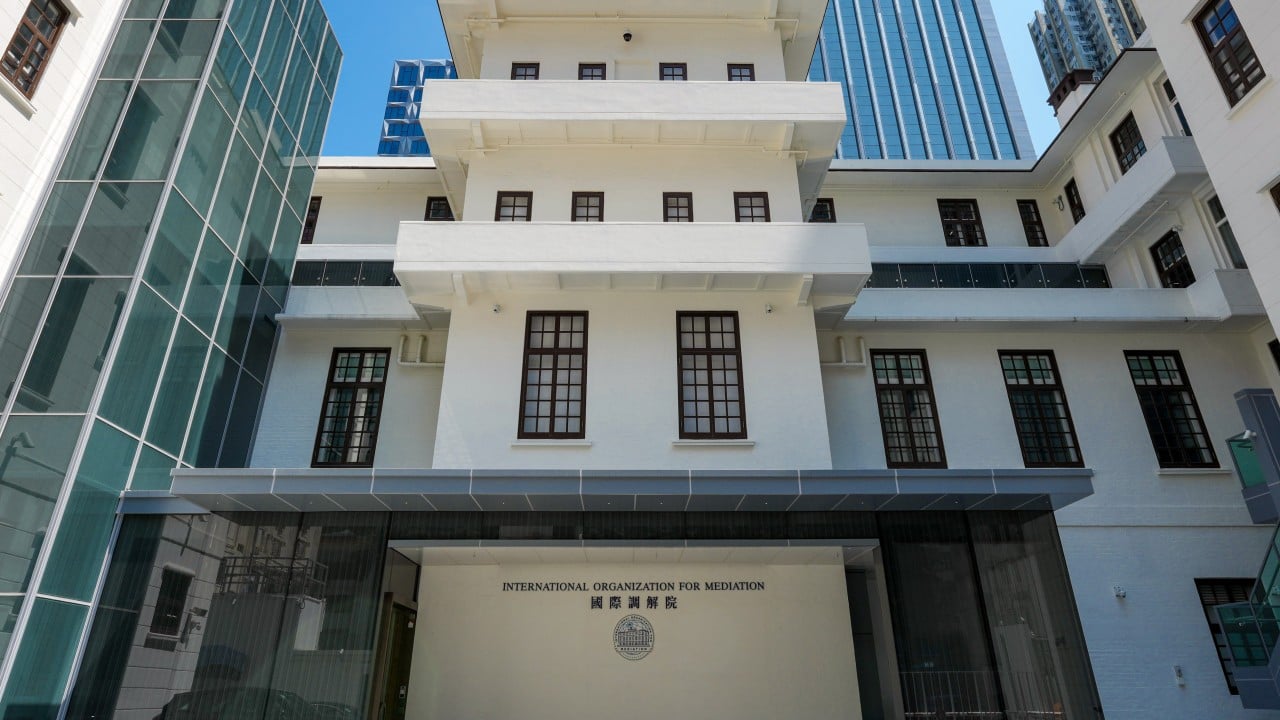
Traditional courts take years and drain millions in legal fees. When cross-border trade collapses or infrastructure projects stall, waiting for a traditional verdict isn't a viable strategy. That reality is why the International Organization for Mediation (IOMed) in Hong Kong was built, and a year into its existence, the world's first intergovernmental mediation body is starting to prove its weight.
Marking its first anniversary, the organization announced it successfully resolved its second major case—an infrastructure dispute out of Malaysia—while fielding more than a dozen active inquiries. Secretary-General Teresa Cheng revealed the milestone during a reception in Hong Kong, pointing to steady growth in global confidence as signatory states climb from initial numbers up to 48, with 18 contracting states now on board.
If you thought intergovernmental disputes could only be settled through slow-moving international tribunals or costly arbitration, IOMed is rewriting the playbook.
Why Mediation Is Winning Over Traditional Arbitration
Arbitration mimics litigation too closely. It has judges, adversarial posturing, and strict winners and losers. Cross-border commercial and state-level disputes rarely survive that kind of friction without burning bridges.
IOMed takes a different route. By focusing purely on mediation, it gives parties a structured environment to hammer out mutually agreeable terms without a binding, externally imposed verdict. That approach matters immensely for long-term commercial ties and state-to-state relations, especially across the Global South.
When IOMed handled its first case—a maritime charterparty matter—it proved that complex international commercial issues could be resolved outside traditional courtrooms. The recent settlement of the Malaysian infrastructure dispute adds further proof that the framework isn't just theory on paper. It's actively moving real, high-stakes files across the finish line.
Expanding Global Reach and Political Backing
Building a brand-new international legal institution from scratch is notoriously difficult. Skeptics often question whether a state-backed mediation body headquartered in Hong Kong can maintain true neutrality. Yet, the numbers tell a different story about international buy-in.
Signatory states have jumped from 33 to 48 over the past twelve months. Hong Kong Chief Executive John Lee has strongly backed the initiative, noting that local government contracts are increasingly incorporating IOMed services. Meanwhile, over 300 administrative and preparatory meetings have taken place at the headquarters over the past year, showing intense behind-the-scenes activity that goes far beyond headline-grabbing settlements.
The upcoming IOMed Forum, scheduled for December 2026 under the theme "Mediation for Peace and Prosperity — The New Frontier," will test how well the organization can attract global practitioners and further cement Hong Kong's status as a premier hub for dispute resolution.
What This Means for Global Businesses
You might wonder how an intergovernmental mediation body affects private enterprises or regional commerce. The answer is simple: predictability and speed.
When major infrastructure projects or international trade contracts run into roadblocks, the cost of uncertainty spikes. Having an accessible, treaty-backed mediation framework gives commercial players and governments a neutral venue to resolve disputes before they spiral into full-blown trade wars or abandoned projects.
The organization's ability to clear cases efficiently within its first year shows that international mediation is moving from a nice-to-have diplomatic ideal into an active, practical tool for modern commerce. If you're managing cross-border assets or complex trade agreements in the region, keeping an eye on IOMed's panel developments and case outcomes is no longer optional. It's smart risk management.
Watch for the upcoming forum in December to see which new states ratify the convention and how the organization expands its mediator panels. The infrastructure is built. Now comes the real test of scaling international trust.