Geopolitical crosswinds are blowing hard across international markets, and financial leaders aren't pretending otherwise. When Financial Secretary Paul Chan pointed out that global economic risks are firmly tilted to the downside due to trade policy friction and political strain, he wasn't just dropping diplomatic jargon. He was naming the exact storm Hong Kong is trying to navigate.
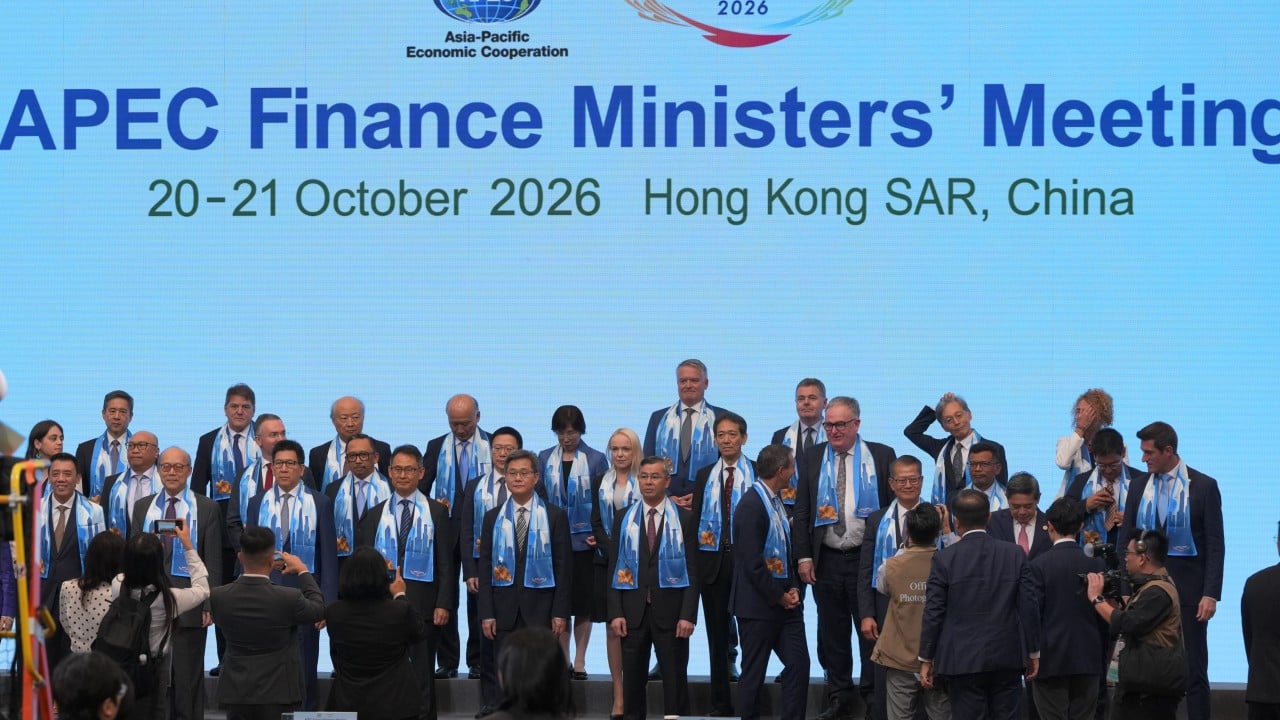
Yet, instead of pulling back, top officials are doubling down on outreach. Chief Executive John Lee and his economic team are putting Hong Kong's financial strengths front and center at the Asia-Pacific Economic Cooperation meetings. They want the world to know the city remains open for business, even as macroeconomic clouds gather overhead.
If you look past the standard press releases, a deeper strategy emerges. Hong Kong is trying to prove its worth as an indispensable connector between mainland China and global capital markets. But can a traditional trade gateway keep thriving when protectionist walls are going up everywhere else?
The Reality Behind the Downside Risks
Let's be honest about the current financial climate. Global economic resilience looks uneven at best. Trade uncertainty isn't a temporary blip; it's the new baseline. When supply chains fracture and cross-border investments face intense scrutiny, international financial centers feel the squeeze immediately.
Paul Chan highlighted that unpredictable policies and shifting trade rules make investors nervous. Capital doesn't like chaos. When governments throw up new barriers instead of keeping channels open, money gets trapped or sidelined.
Hong Kong knows this vulnerability all too well. As an open economy heavily reliant on external trade and capital flows, it absorbs external shocks quickly. Downside risks mean slower IPO pipelines, tighter lending conditions, and cautious institutional investors holding onto cash. You can't spin your way out of a volatile macroeconomic cycle. You have to build actual defenses.
Why the Apec Stage Matters Now
This brings us to why city leaders are treating the current Apec gathering as a critical proving ground. Lee and Chan aren't just attending to shake hands for the cameras. They are pushing four specific priorities: fiscal policies supporting livelihoods, digital infrastructure financing, inclusive finance, and young talent development.
The pitch is simple. Hong Kong relies on a common law legal framework, a low and simple tax regime, free flows of capital, and deep professional services networks. No other city matches that exact blend of mainland integration and global connectivity.
When Chan talks to business leaders about making digital infrastructure investable through transparent rules and predictable policies, he is addressing real investor pain points. Investors want to know that contracts will be enforced, power and data networks will function, and regulations won't shift overnight. Providing those guarantees is how you attract private capital when global confidence is fragile.
Navigating the Chokepoints
Of course, claiming you are a bridge is easier than keeping the traffic moving. Hong Kong faces steep competition from other regional hubs vying for talent and capital. Listing sentiment has faced choppy waters, and global funds are reallocating portfolios based on shifting geopolitical alignments.
To stay relevant, the city has to look beyond traditional banking and stockbroking. That means leaning into green finance, streamlining regulations to help startups and angel funds, and upgrading cross-border infrastructure like the newly revamped Huanggang Port to keep the Greater Bay Area tightly integrated.
You don't survive structural economic shifts by standing still. You adapt by offering practical solutions that other markets can't easily replicate.
The upcoming months will test whether diplomatic charm and structural advantages can outweigh mounting global protectionism. Hong Kong is putting its cards on the table, betting that economic pragmatism will eventually cut through the geopolitical noise. Time will tell if the rest of the world is willing to play along.